




🐟
CityAlight is one of those Christian music groups whose songs seem to grow more meaningful the more you sing them. Emerging from the ministry of St. Jude’s Anglican Church in Sydney, Australia, CityAlight has built an international following with worship music that is deeply rooted in Scripture and centered on the person and work of Jesus Christ.
What makes CityAlight particularly special is the combination of beautiful, accessible melodies and remarkably rich theology. Their songs aren’t simply designed to sound good in a worship setting—they are written to give believers something substantial to sing. Themes of grace, redemption, God’s faithfulness, the sufficiency of Christ, and the hope of eternity run throughout their music, often expressed in language that is both poetic and remarkably easy for a congregation to embrace.
Songs such as “Yet Not I but Through Christ in Me,” “Christ Is Mine Forevermore,” and “Good and Gracious King” have become favorites in churches around the world. But CityAlight’s catalog goes well beyond a handful of familiar songs. There is a depth and consistency to their songwriting that makes exploring their music especially rewarding. At FishWorship, we’re always looking for Christian music that gives us something worth singing—and CityAlight gives us plenty.
🐟
🎤 See CityAlight Live: Official Events Calendar
🐟
🎵Essential Songs
“Yet Not I but Through Christ in Me”
Apple Music subscribers: Sign in above to hear the full song.
“Yet Not I but Through Christ in Me” is one of CityAlight’s most recognizable and enduring songs, and it is a beautiful example of what makes their songwriting so distinctive. Released in 2018 on the Yet Not I EP, the song was written by CityAlight’s Jonny Robinson and Rich Thompson together with American songwriter Michael Farren.
The song’s central idea comes from the words of Paul in Galatians 2:20: the Christian life is no longer fundamentally about what we can accomplish on our own, but about Christ living and working in us. That truth became the foundation for the song after a sermon prompted Thompson and Robinson to consider what it means for Christians to “labour in rest”—to faithfully work and persevere while recognizing that it is ultimately Christ who supplies the strength. The song took approximately twelve weeks to write as the writers carefully developed and revised its words.
What makes the song particularly powerful is the way it traces the Christian life from beginning to end. It starts with the grace of Christ and the believer’s identity in Him, moves through seasons of weakness and darkness, celebrates forgiveness and freedom from sin, and ultimately looks toward the day when the believer will stand before Christ. Rather than treating Christian faith as a momentary emotional experience, “Yet Not I” presents it as an entire life lived in dependence upon Jesus.
That progression is especially evident in the song’s treatment of suffering and weakness. The Christian is not promised an easy road; instead, the song acknowledges the reality of dark nights and difficult valleys while proclaiming that the believer is not abandoned. There is something deeply encouraging in the idea that even our weakness can become an occasion for Christ’s power to be displayed. The song therefore manages to be both humble and confident: humble because it takes the focus away from ourselves, and confident because its hope rests entirely in Christ.
And then there is that wonderfully memorable title phrase: “Yet not I, but through Christ in me.” It is a remarkably concise expression of the song’s entire message. The Christian works, perseveres, follows, suffers, rejoices, and continues toward the finish line—but Christ is the source, strength, and hope behind it all. By the final verse, that same truth becomes a promise that God will continue renewing His people until they finally reach their eternal home.
This is also why “Yet Not I” works so well as a congregational song. CityAlight has a remarkable ability to take substantial Christian theology and put it into melodies that ordinary congregations can actually sing together. The song doesn’t require an elaborate musical presentation to make its impact; its power is in the truth being proclaimed. That combination of theological depth, memorable melody, and congregational accessibility has helped make it one of CityAlight’s signature songs.
For FishWorship, “Yet Not I but Through Christ in Me” is a particularly fitting example of why CityAlight’s music deserves attention. It isn’t simply a worship song about how we feel about Jesus. It is a carefully constructed declaration of what Christians believe about grace, perseverance, salvation, sanctification, and eternal hope—all gathered around one profoundly simple truth: Christ is enough, and the Christian life is ultimately lived through Him.
🐟
“Only a Holy God”
Apple Music subscribers: Sign in above to hear the full song.
“Only a Holy God” is one of the songs that helped establish CityAlight’s distinctive voice: theologically rich worship music built around simple, memorable melodies that a congregation can readily sing together. Released in 2016 as the title track of CityAlight’s first full-length album, the song was written by Michael Farren, Jonny Robinson, Dustin Smith, and Rich Thompson.
From its opening question, the song takes the listener on a journey through the attributes of God. Who commands the hosts of heaven? Who makes earthly kings bow? Who can speak and cause darkness to tremble? Rather than beginning with the worshipper’s circumstances or emotions, “Only a Holy God” begins by directing our attention toward God Himself. The repeated answer—“Only a Holy God”—becomes both the theme and the foundation of the entire song.
The verses continue to build that picture of God’s holiness, beauty, majesty, glory, and power. There is an almost hymn-like quality to the way the song asks one question after another, each one drawing attention to something that belongs uniquely to God. His glory is incomparable, His rule is just, His power reaches even to the resurrection of the dead, and His name remains undefeated. It is a remarkably concise way of leading a congregation through a series of profound truths about who God is.
Then the song turns wonderfully personal. After spending the first three verses looking upward at God’s majesty, the final verse asks a very different set of questions: Who can rescue me from my failing? Who would give His only Son? Who invites me to call Him Father? The answer remains exactly the same—Only a Holy God. That progression is one of the song’s greatest strengths. The God who is infinitely holy and majestic is also the God who comes near to sinners, provides salvation through His Son, and welcomes His people into His family.
The chorus captures that response in a simple invitation: come, behold Him, cry out, sing holy, and worship. It isn’t merely a statement about God’s holiness; it is a summons to respond to it. And because the melody is so accessible, that invitation works particularly well when the song is sung by a congregation rather than simply performed by a worship team.
There is also something timeless about the song’s language. Although “Only a Holy God” is a modern worship song, its approach is remarkably close to that of a classic hymn: begin with who God is, consider His character and works, and then respond in worship. That helps explain why the song has remained such an important part of CityAlight’s catalog since its 2016 release. The song was recorded as part of the ten-song Only a Holy God album, which also includes “Christ Is Mine Forevermore,” “Good and Gracious King,” “Blessed Assurance,” and “Shepherd.”
Perhaps the most beautiful thing about “Only a Holy God” is that it never separates God’s holiness from His grace. The same God whose majesty causes us to stand in awe is the God who rescues us, gives His Son for us, and allows us to call Him Father. That makes the song more than a declaration that God is holy. It is an invitation to come and worship the Holy God who has made Himself known and has drawn His people near.
For FishWorship, “Only a Holy God” is an excellent representation of what makes CityAlight so compelling. It is musically approachable without being musically shallow, and the lyrics are simple enough for a church to sing while carrying enough theological substance to reward repeated listening. More than a song about worship, it is itself an act of worship—turning our eyes away from ourselves and toward the One who alone is worthy.
🐟
“Christ Is Mine Forevermore”
Apple Music subscribers: Sign in above to hear the full song.
“Christ Is Mine Forevermore” is one of CityAlight’s most beloved songs and one of the clearest expressions of the ministry’s approach to worship songwriting. Written by Jonny Robinson and Rich Thompson, the song was released in 2016 as part of CityAlight’s Only a Holy God album. CityAlight’s own catalog dates the song to June 30, 2016, and the group has continued to make its music and resources available for congregational use.
At first glance, the title might make the song sound like a simple declaration of Christian joy. But “Christ Is Mine Forevermore” is actually much more honest about the Christian life than that. Its opening acknowledges the tension between knowing that we were made to walk with God and the very real temptation to pursue worldly treasure instead. From there, the song repeatedly contrasts the difficulties of life with what the believer possesses in Christ: hope when we fall, peace in sorrow, strength in weakness, and ultimately the promise of eternal life.
That pattern is one of the song’s greatest strengths. Each verse presents something difficult or uncertain and then responds with something that is secure because of Christ. There are tears and seasons of darkness, but there is also heavenly peace. There are valleys where God’s purposes may not be immediately visible, but there is the assurance that suffering is not wasted. There is the reality of walking through a hostile world, but there is also the confidence that Christ will ultimately deliver His people safely home.
The song therefore doesn’t offer the believer an escape from suffering. Instead, it puts suffering into the larger story of God’s work. That is particularly evident in the acknowledgment that there will be times when we simply cannot see the earthly good in what we are experiencing. Yet the song doesn’t leave us there. It declares that Christ is completing His work in us. There is a quiet but powerful confidence in that idea: even when we cannot understand what God is doing, we can still trust that He is doing something.
The final movement of the song changes the perspective completely. The believer is described as a pilgrim on a narrow way, but the destination is the “Zion city” where the believer will ultimately walk beside the King. The language of pilgrimage gives the song an almost hymn-like quality, reminding us that Christians are not ultimately at home in this present world. The treasure we are looking for is not something this world can provide; it is found in Christ Himself and reaches its fullness in eternity.
And that leads naturally into the song’s memorable refrain: “Christ is mine forevermore.” It is difficult to imagine a more concise summary of the song’s message. The Christian’s circumstances may change. Sorrow comes and goes. Seasons of darkness come and go. Even our own faithfulness can falter. But Christ remains. The believer’s hope is therefore not ultimately grounded in having an easy life or understanding every circumstance. It is grounded in belonging to Jesus.
There is also a beautiful progression in the song from the present to the eternal. It begins with numbered days here on earth, moves through sorrow and struggle, describes the believer as a stranger and pilgrim, and finally looks toward the place where the believer will walk beside the King. In that sense, the song doesn’t merely tell Christians to endure difficult circumstances. It reminds them where the journey is headed.
That combination of honesty and hope is a big part of what makes “Christ Is Mine Forevermore” such an effective congregational song. CityAlight describes its overall vision as writing songs with “biblically rich lyrics and simple melodies” for the Christian church to sing, and this song is an excellent illustration of that philosophy. The melody is approachable, but the ideas behind it are substantial enough to give a congregation something to contemplate long after the final note has been sung.
For FishWorship, “Christ Is Mine Forevermore” is one of those songs that demonstrates why CityAlight deserves a place among the most meaningful contemporary Christian songwriters. It doesn’t pretend that following Christ eliminates sorrow, uncertainty, hardship, or even persecution. Instead, it asks a more important question: What do we have in Christ that remains true through all of those things? The answer is the same from beginning to end—hope, peace, strength, forgiveness, an eternal home, and ultimately Christ Himself.
And perhaps that is why the song’s title is so powerful. It isn’t merely that Christ is mine today. He is mine in the valley, mine in the struggle, mine when I don’t understand, mine when this earthly journey is finished—and, by His grace, mine forevermore.
🐟
“The Goodness of Jesus”
Apple Music subscribers: Sign in above to hear the full song.
“The Goodness of Jesus” is one of CityAlight’s most tender and comforting songs. Released in 2018 as part of the Yet Not I EP, it was written by Fiona Aghajanian, Harrison Druery, Michael Farren, Jaywan Maxwell, Jonny Robinson, and Rich Thompson. It is a wonderful example of CityAlight’s ability to take a profound Christian truth and express it with a melody and lyric that feel remarkably simple and accessible.
The song begins not with a declaration, but with an invitation: come to Jesus if you are weary; come if you are anxious. That immediately gives the song a pastoral quality. Rather than assuming that the Christian life is free from exhaustion, worry, or tears, “The Goodness of Jesus” acknowledges those realities and points the listener toward Christ as the place of rest. The song’s message is not that our troubles aren’t real, but that we don’t have to face them without Jesus.
That theme of rest becomes the thread running through the entire song. The invitation is repeated in different forms as the song moves from weariness and anxiety to the things the world cannot ultimately provide, and finally to the believer’s hope in Jesus. The answer to each of these needs is not a technique, an achievement, or a change in circumstances. It is Christ Himself.
There is something particularly beautiful about the way the song describes Christian satisfaction. It doesn’t suggest that Jesus simply makes an otherwise satisfactory life a little better. Instead, it contrasts what the world offers with what is found in Christ. The imagery of living water points toward the biblical promise of a source that truly satisfies rather than leaving us continually searching for something else. The result is a picture of Jesus as the believer’s complete source of joy, peace, hope, and contentment.
The final verse brings that message into the realm of confidence. Jesus is described as the One who is faithful to what He has promised, with grace overflowing from His heart. That is important because Christian rest isn’t ultimately based on how consistently we feel peaceful or how successfully we manage our circumstances. It is based on the character and promises of Jesus. Because He is trustworthy, we can rest in Him.
The chorus provides the song’s simple but profound response: the goodness of Jesus is enough. The desire expressed in the song is to remain there “come what may”—not merely when life is comfortable, but through whatever circumstances may come. That gives the song a quiet strength. It is not an escape from difficulty; it is a declaration that Christ remains sufficient in the middle of it.
Musically, “The Goodness of Jesus” fits beautifully within CityAlight’s broader approach to congregational worship. The song is slow and uncomplicated, allowing the words to carry much of the weight. CityAlight provides congregations with lyrics, chord charts, lead sheets, and piano arrangements for the song, reinforcing its intended usefulness in gathered worship.
For FishWorship, this is one of the songs that demonstrates another side of CityAlight. “Only a Holy God” gives us awe. “Christ Is Mine Forevermore” gives us perseverance and eternal hope. “Yet Not I but Through Christ in Me” gives us dependence upon Christ. “The Goodness of Jesus” gives us rest. It reminds the weary believer that there is no need to manufacture our own peace when Jesus Himself is the source of it.
Perhaps that is what makes the song so easy to return to. There are seasons when we need a song that challenges us, and there are seasons when we need a song that teaches us. But sometimes we simply need to be reminded to come to Jesus, rest in His goodness, and remember that He is enough. CityAlight captures that invitation beautifully here.
🐟
“God Is for Us”
Apple Music subscribers: Sign in above to hear the full song.
“God Is for Us” is one of CityAlight’s most encouraging songs, built around a simple but powerful truth: the believer does not walk through life alone. Released in 2018 as part of the Yet Not I EP, the song was written by Michael Farren, James Ferguson, Tiarne Kleyn, Jesse Reeves, Jonny Robinson, James Tealy, and Rich Thompson. It sits alongside “Yet Not I but Through Christ in Me,” “Ancient of Days,” and “The Goodness of Jesus” on one of CityAlight’s most influential projects.
The title immediately points toward one of the great declarations of Romans 8: “If God is for us, who can be against us?” But CityAlight doesn’t turn that biblical truth into a promise that Christians will never experience difficulty. Instead, the opening verse acknowledges the reality of battles, darkness, and valleys. The difference is that the believer enters those places with God by their side. He goes before them, leads the way, and provides the refuge that they cannot provide for themselves.
That distinction is important. “God Is for Us” isn’t ultimately a song about winning every earthly battle. It is about knowing who is with us regardless of what the battle looks like. There may still be a valley to walk through and a night to endure, but God’s presence changes the meaning of those circumstances. The Christian’s security isn’t found in the absence of hardship; it is found in the presence and faithfulness of God.
The second verse makes the message even more personal. It moves from external circumstances to our own failures: stumbling, falling, and even turning back. And yet the song insists that God’s love remains sure. He does not abandon or forsake His people, but continues to encourage them with what the song calls His “never ending grace.” That is a wonderful complement to the confidence of the chorus. The God who is for us isn’t only present when we are strong and faithful; His grace meets us when we are weak as well.
The chorus then turns that assurance into a congregational declaration. The imagery of the Father’s love as a “strong and mighty fortress” recalls the language of the Psalms and classic hymnody, while the repeated question brings the song back to its biblical foundation. It is easy to imagine a congregation singing those words together because the melody and lyric are uncomplicated, while the underlying truth is enormous.
The bridge takes that confidence even further. It reaches beyond the immediate circumstances of life and declares that neither height nor depth can separate God’s people from His love. Even death itself cannot ultimately defeat them because the God who gave His Son to set them free continues to hold them in His love. The song therefore moves from the struggles of everyday Christian life toward the much larger assurance of salvation.
That progression is what makes “God Is for Us” more substantial than a simple encouragement song. It begins with battles and valleys, moves through personal failure, and ultimately arrives at the unbreakable love of God. There is a remarkable amount of theology packed into a song that is so easy to sing. That’s very much in keeping with CityAlight’s stated goal of creating worship music with “biblically rich lyrics and simple melodies” for the Christian church.
It is also interesting that “God Is for Us” has remained part of CityAlight’s musical ministry well beyond its original 2018 release. CityAlight has continued to provide congregational resources for the song, including full scores, lead sheets, piano arrangements, and chord charts. In 2026, the song was also included among the Mandarin translations featured on Home | 家, CityAlight’s live Singapore project.
For FishWorship, “God Is for Us” represents another important facet of CityAlight’s songwriting. “Only a Holy God” calls us to stand in awe of who God is. “Christ Is Mine Forevermore” reminds us what it means to belong to Christ through suffering and pilgrimage. “The Goodness of Jesus” invites the weary to find rest in Him. And “God Is for Us” gives us the confidence to keep walking—not because the road will always be easy, but because the God who walks it with us will never abandon His people.
There is something wonderfully reassuring about that message. We may stumble. We may face the night. We may find ourselves walking through valleys we would never have chosen. But the Christian’s hope isn’t ultimately found in being strong enough to handle all of those things. It is found in knowing that God is for us, His love is greater, and nothing can separate us from Him.
🐟
“Ancient of Days”
Apple Music subscribers: Sign in above to hear the full song.
“Ancient of Days” is one of CityAlight’s most majestic worship songs, drawing its inspiration from the biblical picture of God as the eternal King whose rule extends far beyond the rise and fall of earthly kingdoms. Released in 2018 on the Yet Not I EP, the song was written by Jonny Robinson and Rich Thompson. Its title comes directly from the book of Daniel, where God is described as the “Ancient of Days,” a name that emphasizes His eternal nature and sovereign authority. (cityalight.com)
The biblical imagery behind the song is especially important. In Daniel 7, the prophet receives a vision in which earthly kingdoms and rulers appear and disappear, while the Ancient of Days remains enthroned. CityAlight takes that picture and brings it into a modern worship setting. Nations change. Human rulers come and go. The circumstances of our own lives can change dramatically. But God remains exactly who He has always been.
That gives the opening verse an almost sweeping, panoramic quality. It speaks of the Ancient of Days being enthroned in glory, with kingdoms rising and falling while His kingdom remains forever. The song is therefore not primarily concerned with what is happening around us at any particular moment. Instead, it invites us to step back and see history from God’s perspective. What looks enormous and permanent to us is ultimately temporary; God’s reign is the thing that endures.
The second verse brings that eternal perspective directly into the experience of God’s people. The song acknowledges that there will be times when believers face hardship and uncertainty. Yet the promise is that God remains faithful even when His people cannot see the whole picture. The phrase “His kingdom shall reign forever” becomes an anchor throughout the song. Our circumstances may change, but God’s kingdom does not.
One of the song’s most powerful elements is its treatment of God’s promises. “Ancient of Days” doesn’t offer reassurance by pretending that suffering won’t happen. Instead, it places suffering within the larger certainty of God’s sovereignty. The believer can face trials because the God who has promised to remain faithful is not subject to the instability that characterizes everything else in creation.
The song also looks forward to the return of Christ and the ultimate victory of God’s kingdom. That gives “Ancient of Days” an unmistakably eschatological dimension. Its hope isn’t limited to getting through today’s circumstances. It looks toward the day when God’s purposes will be fully revealed, His enemies will be defeated, and His people will rejoice in His eternal kingdom.
Musically, the song’s simple structure reinforces that message. Rather than requiring elaborate musical ornamentation, it allows the words to carry the weight. That makes it particularly effective in a congregational setting, where the repeated declarations about God’s eternal reign can become something more than lyrics on a screen—they become a shared confession of faith. CityAlight’s stated aim of combining biblically rich lyrics with simple melodies is particularly evident here. (cityalight.com)
There is also an interesting connection between “Ancient of Days” and some of CityAlight’s other essential songs. “Only a Holy God” asks us to behold God’s holiness and majesty. “God Is for Us” reminds us of His nearness and faithful love. “Ancient of Days” gives us another dimension: God is eternal and sovereign over everything. Together, those songs paint a much fuller picture of the God CityAlight’s music continually calls us to worship.
For FishWorship, “Ancient of Days” is one of the clearest examples of CityAlight taking a substantial biblical theme and turning it into something a congregation can sing with confidence. It reminds us that our faith isn’t ultimately anchored in the stability of governments, cultures, circumstances, or even our own ability to understand what God is doing. The kingdoms of this world may rise and fall, but the throne of God remains.
And that is the enduring hope at the heart of the song: the Ancient of Days is still on the throne. Whatever changes around us, His kingdom remains, His promises stand, and His people can look forward with confidence to the day when His eternal reign is fully revealed.
🐟
“Good and Gracious King”
Apple Music subscribers: Sign in above to hear the full song.
“Good and Gracious King” is one of CityAlight’s earliest and most enduring worship songs, appearing on their 2016 Only a Holy God album. Written by Jonny Robinson and Rich Thompson, the song brings together themes that appear repeatedly throughout CityAlight’s music: the holiness of God, human need, the grace of Christ, and the invitation to come boldly before the Father. (cityalight.com)
The song opens with a question that immediately establishes its central theme: “I approach the throne of glory.” That is a remarkable place to begin. The throne represents God’s majesty and holiness, while the singer is conscious of his own weakness and need. The song doesn’t minimize that contrast. Instead, it asks the natural question that follows: how can someone who is needy and imperfect approach such a holy God?
The answer is grace. Rather than approaching God because we have earned the right to be there, we approach Him because He has invited us. That makes the song fundamentally about the character of God rather than the worthiness of the worshipper. He is the good and gracious King, and His grace provides the basis for our approach.
The chorus draws heavily on the language of the Lord’s Prayer, asking God to hear the cries of His people and provide what they need. There is something wonderfully childlike about that posture. The believer isn’t required to arrive before God with everything figured out or with a carefully constructed presentation of personal accomplishments. We come as people who need Him.
That theme becomes particularly powerful in the verses that follow. The song acknowledges that God’s grace is not something we can manufacture for ourselves. We come “empty-handed,” bringing nothing that could purchase God’s favor. Yet instead of finding rejection, we find mercy. The contrast is central to the Gospel: the One sitting on the throne is holy beyond our comprehension, yet He is also gracious enough to welcome sinners who come to Him through Christ.
The song also emphasizes the generosity of God’s character. He isn’t merely willing to tolerate His people; He delights in giving grace. That changes the emotional tone of the song. What could have been a song primarily about human unworthiness becomes a song about the astonishing generosity of God. Our need is real, but His grace is greater.
That is part of what makes “Good and Gracious King” work so well in a congregational setting. The melody is straightforward, while the lyrics give a congregation a theological framework for prayer and worship. The song doesn’t require the worshipper to manufacture an emotional response. Instead, it gives the congregation words with which to respond to what God has already revealed about Himself.
The song also fits naturally alongside several of CityAlight’s other essential songs. “Only a Holy God” focuses our attention on God’s holiness and majesty. “Christ Is Mine Forevermore” explores what it means to belong to Christ through the difficulties of life. “The Goodness of Jesus” invites weary believers to find rest in Him. “Good and Gracious King” brings those themes together around the simple act of coming before God and asking Him for grace.
For FishWorship, this is one of the songs that demonstrates why CityAlight’s catalog can feel simultaneously modern and timeless. There is nothing particularly complicated about its musical construction, yet its central image—the sinner approaching the throne of a holy God and finding grace—is one that reaches directly into the heart of the Christian Gospel. It sounds like a modern worship song, but its theology could just as easily have found a home in a hymnbook.
Perhaps the most beautiful thing about “Good and Gracious King” is that it doesn’t leave us dwelling on our own inadequacy. It acknowledges our need only long enough to point us toward the One who meets it. We approach empty-handed, but we don’t leave empty-handed. We come needing mercy, and we encounter grace.
That is the invitation at the heart of the song: come to the throne—not because you have earned the right to be there, but because the King is good, the King is gracious, and He has invited you to come.
🐟
“It Was Finished Upon That Cross”
Apple Music subscribers: Sign in above to hear the full song.
“It Was Finished Upon That Cross” is one of CityAlight’s most powerful songs about the finished work of Jesus Christ. Released in 2021, the song was written by Jonny Robinson, Rich Thompson, and Nigel Hendroff. Its title echoes Jesus’ declaration from the cross in John 19:30—“It is finished”—and the entire song builds upon the profound truth contained in those three words: Christ’s work of redemption was completed at Calvary. (cityalight.com)
The song begins by looking back at what Christ accomplished. The believer’s debt has been paid, sin has been defeated, and death no longer has the final word. But rather than presenting these truths as abstract theological concepts, CityAlight writes them from the perspective of someone who personally benefits from Christ’s finished work. The result is a song that feels both doctrinal and deeply personal.
One of the song’s central themes is freedom. The believer is no longer attempting to earn God’s acceptance or somehow pay the debt created by sin. That debt has already been dealt with through Christ. The song repeatedly points away from human effort and toward the completed work of Jesus, which gives it a close theological relationship to some of CityAlight’s other best-known songs. Like “Yet Not I but Through Christ in Me,” it reminds us that the Christian life ultimately rests on what Christ has done rather than what we can accomplish on our own.
The song also makes an important connection between Christ’s death and resurrection. The cross was not a tragic ending. Because Jesus rose again, the believer can look at the grave differently. Death remains a real part of the human experience, but for those who belong to Christ, it is no longer the final destination. The resurrection becomes the foundation for hope beyond the present life.
That hope is particularly evident as the song moves toward the future. The believer can face the remaining years of life knowing that Christ has already secured the ultimate outcome. There may still be struggles, temptations, and suffering, but the central work has been accomplished. The Christian doesn’t have to live as though salvation is something that might eventually be achieved. It is something Christ has already purchased.
This gives the song a wonderful sense of rest. The Gospel is not presented as an invitation to try harder so that perhaps one day we will be good enough. Instead, the song invites us to look at the cross and recognize that Jesus has done what we could never do for ourselves. That is a particularly powerful message in a culture where so much of life is measured by achievement and performance.
Musically, “It Was Finished Upon That Cross” follows the CityAlight approach of pairing substantial biblical themes with a melody that works naturally in congregational worship. The song does not need elaborate production to communicate its message. Its strength comes from the words and from the repeated declaration that Christ’s work is complete. CityAlight provides congregational resources for the song, including lead sheets, chord charts, and piano arrangements, reflecting its usefulness beyond a recorded performance. (cityalight.com)
There is also a beautiful relationship between the title and the way the song treats the Christian’s past, present, and future. The past is covered by Christ’s finished work. The present can be lived in the freedom that work provides. And the future can be faced with confidence because death itself has been defeated through Jesus’ resurrection. Everything ultimately points back to the cross.
For FishWorship, “It Was Finished Upon That Cross” is an important addition to CityAlight’s Essential Songs because it places the Gospel itself at the center of the collection. “Only a Holy God” calls us to behold God’s holiness. “Good and Gracious King” invites us to approach Him for grace. “Christ Is Mine Forevermore” explores the hope of belonging to Christ. But here, CityAlight takes us directly to the event on which that hope rests: the cross of Jesus Christ.
And that is why the title is so powerful. Jesus didn’t say that His work was almost finished. He didn’t leave the final part of salvation for us to accomplish. It was finished upon that cross. The believer’s hope rests not in an unfinished task, but in a completed work—and that is a truth worth singing.
🐟
“Jesus Strong and Kind”
Apple Music subscribers: Sign in above to hear the full song.
“Jesus Strong and Kind” is one of CityAlight’s most accessible and warmly inviting songs. Released in 2019, it was written by Colin Buchanan, Michael Farren, Jonny Robinson, and Rich Thompson. The song is built around a wonderfully simple idea: whatever our need may be—thirst, weakness, fear, or being lost—Jesus invites us to come to Him.
The simplicity of the song is part of its strength. Each verse begins with the words “Jesus said,” followed by a different human need. If we thirst, we should come to Him. If we are weak, He is our strength. If we are afraid, He is our shield. The song doesn’t suggest that Christians will never experience these things. Instead, it gives us a consistent response to them: come to Jesus. That makes the song feel almost like a musical invitation to prayer.
There is also something particularly biblical about the way the song presents Jesus. The ideas behind its verses echo several of Jesus’ own invitations in Scripture—coming to Him when we are weary, finding satisfaction in Him, and trusting Him as our source of life and strength. Yet the song avoids becoming complicated or overly academic. The theology is there, but it is expressed in language that a child can understand and an entire congregation can sing together.
The chorus brings those individual needs together with a simple declaration of God’s character: He is good and faithful, He keeps His people day and night, and we can always run to Jesus. That phrase “always” is particularly important. We don’t come to Christ only when we have reached the end of our resources. We don’t have to wait until our circumstances become desperate enough. The invitation is always open because Jesus is always faithful.
The final verse adds a beautiful Gospel-centered turn. Up to that point, the repeated instruction has been for us to come to Jesus. But when we are lost, the direction changes: He comes to us. The song then points directly to the cross as the evidence that Jesus will come for His people. That gives the song more depth than its deceptively simple structure might initially suggest. Our hope isn’t ultimately based on our ability to find our way back to God; it rests on the God who comes looking for us.
That combination of simplicity and theological substance helps explain why “Jesus Strong and Kind” has found such a natural place in both church worship and ministry to younger believers. CityAlight later included the song on Simple Songs for Young and Old and created a version that combines it with the familiar “Jesus Loves Me.” The song has also been performed with Colin Buchanan and included in the 2024 Sing! The Great Commission live project with Keith & Kristyn Getty.
For FishWorship, “Jesus Strong and Kind” is a wonderful reminder that theological depth doesn’t require complicated language. Some of the most important truths of the Christian faith can be expressed very simply: Jesus satisfies. Jesus strengthens. Jesus protects. Jesus comes for the lost. And behind all of those promises stands the same faithful Savior.
That may be what makes the song so endearing. It doesn’t tell us to become stronger before coming to Jesus. It doesn’t tell us to overcome our fear before approaching Him. It simply says, in every circumstance, come to Him. Because Jesus is strong enough for our weakness, kind enough for our need, and faithful enough to receive us when we come.
🐟
“There Is One Gospel” (Live)
Apple Music subscribers: Sign in above to hear the full song.
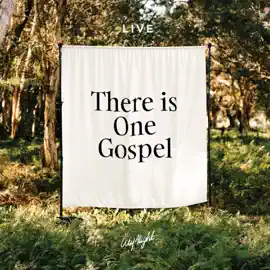
“There Is One Gospel” is one of CityAlight’s clearest declarations of what lies at the very center of the Christian faith. Written by Jonny Robinson and Rich Thompson, the song was released in 2022 and became the title track of the There Is One Gospel live album. CityAlight describes the purpose of the song as providing a way for believers around the world to unite around the shared Gospel handed down from the apostles and made possible through the saving work of Jesus.
The song begins with a declaration of personal faith: “There is one Gospel on which I stand.” From there, it traces the Gospel story through God’s plan, Christ’s saving work, the cross, the empty tomb, and the promise of resurrection. What makes the song particularly effective is that it doesn’t treat the Gospel as merely a collection of doctrines to believe. It describes the Gospel as the foundation on which the believer actually stands. It is the believer’s story, hope, peace, joy, and deepest need.
The second verse moves directly to the cross, where justice and mercy meet. That phrase captures an enormous theological truth in very few words. The cross is where sin is dealt with and salvation is accomplished, but it is also where God’s mercy toward sinners is displayed. Because Christ has done what we could never do ourselves, the believer no longer has to boast in personal accomplishments or carry the crushing weight of sin. The song’s emphasis is consistently on what Jesus has accomplished, not on what we might accomplish for Him.
From there, the song turns toward the resurrection. The empty tomb is presented as the source of Christian hope because Jesus did not remain in the grave. He lives, and because He lives, the believer has freedom and the promise of resurrection as well. That gives the song a wonderful forward-looking quality. The Gospel isn’t only about what happened in the past; it establishes the hope with which Christians face the future.
The fourth verse expands the focus beyond the individual believer to the church. “And in this Gospel the church is one” is an especially important statement in a song intended for congregational worship. CityAlight’s original description specifically emphasized the desire for the song to unite believers whether they are gathered in a small group, their own local church, or alongside Christians from different backgrounds. The live recording makes that purpose particularly evident: this is not simply one singer declaring a personal belief, but a congregation standing together around a shared confession.
That communal quality is one of the things that distinguishes the Live recording from simply listening to the song as an individual. Released in July 2022, There Is One Gospel (Live) is an eight-song live project, with “There Is One Gospel” serving as its centerpiece and title track. The performance gives the song an energy and sense of participation that reinforce its message: we do not walk alone.
For FishWorship, “There Is One Gospel (Live)” is a fitting representation of CityAlight because it brings together nearly everything that makes their songwriting distinctive. There is substantial theology, but it is expressed in language that a congregation can immediately grasp. There is a strong emphasis on Scripture, but the song never feels like a theological lecture. And there is a deeply personal confession of faith that continually expands outward until it encompasses the whole church.
The final picture is one of believers continuing together toward home, still singing the same Gospel that rescued them. That gives the song a fitting sense of completion. We stand in the Gospel now, we walk together in the Gospel, and ultimately we will still be singing about that same Gospel in glory. The Gospel isn’t simply where the Christian journey begins—it is what carries us all the way home.
🐟
“Your Will Be Done” (Live)
Apple Music subscribers: Sign in above to hear the full song.
“Your Will Be Done” is one of CityAlight’s most prayerful and deeply reflective songs. Written by Jonny Robinson and Rich Thompson, it was released in 2020 and later appeared on CityAlight’s There Is One Gospel (Live) project. At its heart is a prayer that echoes the words Jesus taught His disciples: that God’s will would be done “as in heaven, so on earth.”
The song begins with an honest acknowledgment of one of the great struggles of the Christian life: our hearts naturally tend to turn toward ourselves. The opening prayer asks God to redirect that tendency and help us seek His kingdom first. It is a remarkably straightforward confession. Rather than presenting obedience as something that comes naturally to us, the song recognizes that we need God’s help even to desire His will above our own.
From there, “Your Will Be Done” looks directly to Jesus in the Garden of Gethsemane. The song reflects on the enormous weight of Christ’s obedience as He faced the cross and prayed to His Father. That connection gives the song considerably more depth than a general prayer about accepting God’s plans. Christian surrender is ultimately modeled on Christ’s own obedience—the One who willingly bore sin and went to the cross in accordance with the Father’s will.
The third verse brings that truth into the believer’s own experience. There will be times when we are lost, broken, afraid, or filled with doubt. The answer isn’t to pretend those feelings don’t exist. Instead, the song responds with a decision to trust the good Father and bow before the great King. And because Jesus rose, the believer can look beyond present struggles toward resurrection, restoration, and the day when God’s people will stand together before Him.
The final verse broadens the prayer from “I” to “we.” Now the church is sent into the world, asking God to lead His people and use them so that His glory and name might be seen. That progression—from personal surrender, to Christ’s obedience, to resurrection hope, and finally to the mission of the church—is one of the song’s greatest strengths. It takes the familiar words “Your will be done” and turns them into a prayer for the whole Christian life.
The live recording makes that communal dimension particularly fitting. There Is One Gospel (Live) places the song alongside other CityAlight songs centered on the Gospel, Christian hope, and the unity of the church. The live arrangement allows “Your Will Be Done” to function not simply as a song about surrender, but as a shared prayer spoken through music.
For FishWorship, I think this is one of CityAlight’s most meaningful songs because it doesn’t make surrender sound easy. It acknowledges self-centeredness, fear, doubt, suffering, and the cost of obedience. Yet it continually brings the believer back to the character of God: He is a good Father, an unchanging God, and the King whose purposes can ultimately be trusted.
And perhaps that is the most beautiful part of “Your Will Be Done.” It begins with a prayer to surrender my will, but it ends with the entire church lifting its voice together. The Christian life becomes a continual prayer: not that God would simply make His plans fit ours, but that He would reshape our hearts so that, whatever comes, we can sincerely pray, “Father, not my will but Yours be done.”
🐟
“His Glory and My Good” (Live)
Apple Music subscribers: Sign in above to hear the full song.
“His Glory and My Good” is a beautiful expression of one of the great themes running throughout CityAlight’s music: learning to trust God even when we cannot immediately understand what He is doing. Written by Jonny Robinson, Rich Thompson, and Ben Fielding, the song was released in 2024, with the live recording appearing as a single on May 17 of that year.
The song begins by looking at Jesus. The more the believer sees the glory of God revealed in Christ, the more satisfied he becomes. That is an important place to begin because it establishes the song’s central perspective: our good isn’t ultimately found in getting everything we want from God, but in knowing and becoming more satisfied in God Himself. As our eyes are lifted toward Him, our understanding of what is truly good begins to change.
The second verse takes that truth into the difficult territory of trials. The song doesn’t suggest that every hardship will make immediate sense. Instead, it acknowledges the “road not understood” and asks the believer to continue following Jesus in faith. Even the thorn can be used by God to turn our hearts toward Him. There is a quiet confidence here that God’s purposes are good even when His methods remain beyond our understanding.
That leads to the song’s central declaration: “His glory is my good.” It is a remarkably concise statement of Christian trust. God’s glory isn’t presented as something that comes at our expense. Rather, because God is perfectly good, what brings Him glory ultimately serves the deepest good of His people. The believer can therefore praise Him even in circumstances that are painful or confusing, trusting that God is accomplishing something greater than what can presently be seen.
The third verse takes that confidence directly to the cross. What appeared to the world as weakness—the crucifixion of Jesus—was actually the place where salvation was accomplished. The charge against the believer was nailed to the cross, and Christ’s death became the means of redemption. The song therefore grounds its confidence in God’s goodness not merely in an optimistic view of life, but in the historical reality of what Jesus accomplished.
The final verse takes the idea of surrender even further, asking whether we would gladly become “nothing” so that Christ might become more. It points toward the eternal kingdom and ultimately toward the day when believers will stand before the Father with the faithful who have gone before them. The journey that began with learning to behold Christ ends with joyful praise in His presence.
The live recording adds another dimension to that message. Released in 2024 as a five-and-a-half-minute live single, it has the character of a song meant to be shared by a congregation rather than simply listened to privately. CityAlight has also provided congregational resources for the song, including piano, vocal, guitar, lead-sheet, and chord arrangements.
For FishWorship, “His Glory and My Good” is a particularly meaningful addition to the CityAlight Essential Songs because it addresses something every Christian eventually has to wrestle with: Can I trust God when His purposes don’t look like what I expected? CityAlight’s answer isn’t to promise that every circumstance will be pleasant. Instead, the song points us back to Christ and reminds us that God is working even on roads we don’t understand.
And perhaps that’s what makes the title so powerful. God’s glory and our good aren’t two competing destinations. When our good is defined by knowing Christ, becoming more like Him, and ultimately being brought safely into His presence, we can begin to see even the difficult parts of the journey differently. His glory is our good—and knowing that gives us reason to trust Him, follow Him, and praise Him even when we cannot yet see where the road leads.
🐟
💿Essential Albums
Only a Holy God
Apple Music subscribers: Sign in above to hear the full album.
Only a Holy God is the 2016 debut full-length album from CityAlight, and it remains one of the foundational recordings in the group’s catalog. Released in 2016 with ten songs, the album introduced the combination of biblically rich lyrics, memorable melodies, and congregational accessibility that would become a defining characteristic of CityAlight’s music.
The album opens with “Saved My Soul” and then moves into its title track, “Only a Holy God,” immediately establishing the theological center of the project. From there, the album explores a remarkably broad range of Christian themes: belonging to Christ, God’s faithfulness, assurance, grace, knowing God, His care as Shepherd, and the wonder of God’s love. The complete track list includes “Saved My Soul,” “Only a Holy God,” “Christ Is Mine Forevermore,” “Blessed Assurance,” “Good and Gracious King,” “All My Ways Are Known to You,” “I Want to Know You,” “What Love, My God,” “Shepherd,” and “Grace.”
Several of the songs have gone on to become especially important parts of CityAlight’s catalog. “Only a Holy God,” “Christ Is Mine Forevermore,” and “Good and Gracious King” are all among the songs that most clearly established the group’s songwriting identity. What is striking when listening to the album as a whole is how consistently it keeps the focus on God rather than on the worshipper’s emotional experience. Even when the songs become deeply personal, they continually point back to God’s character, Christ’s work, and the promises of Scripture.
There is also a wonderful sense of balance throughout the album. “Only a Holy God” calls us to stand in awe of God’s majesty and holiness, while “Good and Gracious King” reminds us that this same holy God invites us to approach Him for grace. “Christ Is Mine Forevermore” considers the Christian journey through suffering and uncertainty, while “Blessed Assurance” expresses the confidence believers can have in Christ. Other songs turn toward God’s intimate knowledge of His people, His shepherding care, and the believer’s desire to know Him more deeply. The result is an album that feels less like a collection of unrelated worship songs and more like a sustained exploration of what it means to know and follow God.
That consistency is particularly significant when considering when the album was released. CityAlight was still establishing its musical identity, yet Only a Holy God already displayed many of the qualities that would become hallmarks of the group’s later work. The songwriting is straightforward without being simplistic, the melodies are accessible without being disposable, and the lyrics are substantial enough to continue revealing more with repeated listening. CityAlight’s current catalog still identifies the project as its 2016 album and continues to provide congregational resources for its songs.
For FishWorship, Only a Holy God is an especially easy album to recommend because it provides such a strong introduction to CityAlight’s musical and theological approach. If someone knows CityAlight primarily through “Yet Not I but Through Christ in Me” or “There Is One Gospel,” going back to this earlier album reveals where much of that distinctive sound began. It is also an album that rewards listening beyond the familiar songs. The deeper cuts help demonstrate that CityAlight’s strength has never been limited to producing one or two standout worship songs.
Nearly a decade after its 2016 release, Only a Holy God still feels remarkably focused. There is no need for musical excess or lyrical complication. The songs repeatedly bring us back to the same fundamental realities: God is holy, Christ is sufficient, grace is abundant, and we are invited to know and worship Him. That combination makes the album not merely an important starting point for CityAlight, but a lasting example of what thoughtful, congregational Christian music can be.
🐟
Yet Not I – EP
Apple Music subscribers: Sign in above to hear the full album.
Released in 2018, Yet Not I is the CityAlight EP that arguably put the Australian worship collective on the wider Christian music map. At just six songs and about 28 minutes, it is a relatively small project, but there is an extraordinary amount of substance packed into it. From beginning to end, Yet Not I is centered on some of the most enduring themes in Christian faith: God’s faithfulness, Christ’s finished work, the believer’s hope, perseverance through suffering, and the assurance that our lives ultimately rest not on our own strength, but on Christ.
The centerpiece is, naturally, “Yet Not I but Through Christ in Me.” The song captures the theological heartbeat of the entire EP in its title: the Christian life is not ultimately about what we accomplish for Christ, but about Christ living and working through us. Its four verses move through grace, darkness, weakness, forgiveness, freedom from sin, and finally the hope of standing before Christ’s throne. The repeated declaration—“Yet not I, but through Christ in me”—becomes more than a memorable chorus; it becomes a confession of dependence. It is easy to understand why the song has become one of CityAlight’s signature compositions.
But the strength of Yet Not I goes well beyond its title track. “God Is for Us” draws on the assurance of Romans 8, declaring God’s presence and faithfulness even when His people face difficulty. “Ancient of Days” lifts our eyes toward the eternal sovereignty of God, reminding us that earthly kingdoms and circumstances are temporary while God’s reign endures. “Jesus Is Alive” centers on the resurrection, while “The Goodness of Jesus” turns toward Christ as the refuge and satisfaction of weary believers. The EP closes with “I Will Trust My Saviour Jesus,” bringing the project back to the simple but profound response that runs through so many of these songs: trust Him.
What makes the EP particularly effective is the way these songs complement one another. There is a progression from confidence in God’s character to confidence in Christ’s work and, finally, confidence in the believer’s response to life’s circumstances. Even songs that address suffering never leave the listener there. “Ancient of Days” places suffering beneath the sovereignty of God; “God Is for Us” places fear beneath God’s presence; “The Goodness of Jesus” places weariness beneath Christ’s sufficiency; and “Yet Not I” places human weakness beneath Christ’s strength. The recurring message is remarkably consistent: look away from yourself and look to Jesus.
Musically, the EP also demonstrates what makes CityAlight distinctive. The songs are accessible enough for a congregation to sing together, yet the lyrics are substantial enough to reward personal listening and repeated reflection. There is no need for elaborate musical production to carry the message. The songwriting itself does the heavy lifting. That combination of simplicity and theological depth would become one of the defining characteristics of CityAlight’s catalog.
For FishWorship, Yet Not I deserves its place among CityAlight’s Essential Albums because it contains an unusually concentrated collection of songs that have continued to matter well beyond their original release. Three of its songs—“Yet Not I but Through Christ in Me,” “God Is for Us,” and “Ancient of Days”—are among CityAlight’s most recognizable compositions, while “The Goodness of Jesus” and “I Will Trust My Saviour Jesus” demonstrate that the EP has much more to offer than its famous title track. Six songs, one remarkably consistent message, and a simple truth at the center of all of them: our hope is Christ, and our strength is Christ—not us, but Christ in us.
🐟
There Is One Gospel (Live)
Apple Music subscribers: Sign in above to hear the full album.
Released in 2022, There Is One Gospel (Live) captures CityAlight doing what the group has always done particularly well: taking the truths of the Christian faith and putting them into songs that a congregation can actually sing. The album contains eight live recordings and runs about 36 minutes, with songs addressing perseverance, the Gospel, Christ’s return, sorrow and hope, God’s love, surrender, and the hope of eternity. Rather than feeling like a showcase for the musicians, the live setting reinforces the idea that these songs belong to the church.
The title track is the obvious centerpiece. “There Is One Gospel” is a sweeping declaration of what Christians believe and where their confidence rests. Written by Jonny Robinson and Rich Thompson, the song moves from the Gospel as the believer’s foundation, to the cross where justice and mercy meet, to the empty tomb and the promise of resurrection, and finally to the unity of the church. That final movement is particularly fitting for a live recording: the Gospel is not merely my story. It is the story that unites the church as we walk together toward home.
The surrounding songs broaden that confession beautifully. “Every Step” opens the album with a declaration of God’s presence through every part of the Christian journey. “On That Day” turns our attention toward the return of Christ, while “Psalm 42 (I Will Praise Him Again)” gives voice to the believer who is struggling yet chooses to hope in God. “This Is the Day” celebrates God’s faithfulness, and “Known and Loved” reminds us of the deeply personal nature of God’s care. Then comes “Your Will Be Done,” a prayer of surrender, followed by “There Is Hope,” which brings the album toward its conclusion with the assurance that Christian hope ultimately rests in God.
What I particularly appreciate about There Is One Gospel (Live) is that it doesn’t pretend the Christian life is free from difficulty. There is room here for confidence, but also for sorrow. There is praise, but also the honest cry of Psalm 42. There is anticipation of Christ’s return, but also the need to surrender our own plans to God’s will. And running through all of it is the Gospel itself—the finished work of Jesus, His resurrection, His presence with His people, and the promise that He will ultimately bring His church safely home.
That makes the live setting more than a production choice. These songs were made for voices beyond the CityAlight singers. The title song itself moves from personal confession—standing in the Gospel—to the explicitly communal declaration that “the church is one” and that “we do not walk alone.” Hearing these songs in a live context helps bring that reality into focus: Christian worship is something we do together.
For FishWorship, There Is One Gospel (Live) belongs among CityAlight’s Essential Albums because it captures the group at a point where its songwriting had become remarkably mature without losing its simplicity. There are songs here for the confident believer, the struggling believer, the hopeful believer, and the believer simply trying to keep walking. And underneath every one of them is the same foundation: there is one Gospel, one Savior, one hope, and one story that carries God’s people all the way home.
🐟
Rise My Soul (Live) – EP
Apple Music subscribers: Sign in above to hear the full album.
Released in September 2024, Rise My Soul (Live) is a four-song EP that captures CityAlight in a particularly concentrated form. At just under eighteen minutes, it is not a large project, but its four songs fit together remarkably well. The EP moves through some of the central truths of the Christian faith—Christ as the Way, Truth, and Life; the believer’s battle and blessing; the resurrection of Jesus; and the ultimate hope of going home. And because these are live recordings, the songs have the unmistakable feel of congregational declarations rather than simply studio performances.
The project begins with “The Way, the Truth, and the Life,” pointing directly to Jesus as the answer to the deepest questions of faith and life. It is followed by “The Battle and the Blessing,” which explores the remarkable reality that although Christians did not bear Christ’s wounds or walk His road to Calvary, they nevertheless share in His victory. That idea is very much at home in CityAlight’s songwriting: the Christian life is not presented as an easy road, but neither is the believer left to face that road without hope. The battle is real, but so is the blessing that comes through Christ.
Then comes the EP’s title song, “Rise My Soul, the Lord Is Risen,” and this is where the project reaches its joyful center. Written by Jonny Robinson, Rich Thompson, Matt Boswell, and Matt Papa, the song begins at the empty tomb and builds its message around the resurrection of Jesus. But it does something especially beautiful with that truth: the resurrection is not merely something that happened to Jesus; it changes the way the believer faces life. The song moves from “Rise my soul” to “Rest my soul” and “Peace my soul,” before ultimately declaring that the believer is raised and seated with Christ. Trials are described as brief and temporary, while the hope of glory is permanent.
The EP closes with “Welcome Home,” bringing the resurrection theme to its ultimate destination. The song looks toward the believer’s future with Christ, connecting the reality of Jesus’ resurrection with the promise of eternal life. That makes the sequencing of the EP particularly effective: we begin by looking to Jesus, acknowledge the battles of following Him, celebrate His resurrection, and finally look ahead to the home that awaits His people. Even in four songs, there is a genuine sense of movement.
For FishWorship, Rise My Soul (Live) is a wonderful example of why a project doesn’t have to be lengthy to be meaningful. CityAlight takes four songs and builds a concise meditation on faith, struggle, resurrection, and hope. The live setting reinforces the communal nature of the message, while the songwriting gives each song enough theological substance to stand on its own. And at the heart of the whole EP is the truth expressed so beautifully in its title song: Christ is risen, death is defeated, hope remains, and because He lives, His people can rise.
🐟