
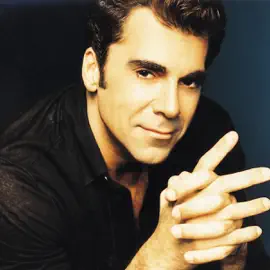
Carman was one of the most influential and recognizable figures in contemporary Christian music, combining music, evangelism, and theatrical performance in a way few artists had ever attempted. Born Carman Licciardello, he became known simply as Carman, and his energetic concerts, elaborate stage productions, and unmistakable personality made him a household name among Christian music fans throughout the 1980s, ’90s, and beyond.
With songs such as “The Champion,” “Revival in the Land,” “Mission 3:16,” and “Who’s in the House,” Carman brought an almost larger-than-life presentation to Christian music. His performances frequently incorporated drama, storytelling, humor, and visual spectacle alongside his music, allowing him to communicate the Gospel to enormous audiences. His ministry was particularly notable for reaching young people and for taking Christian music well beyond the traditional church setting.
Carman’s influence extended far beyond record sales. He became one of the biggest concert attractions in Christian music history, performing for massive crowds and helping demonstrate that Christian artists could create ambitious, arena-sized productions without sacrificing their message. His music often addressed themes of faith, spiritual warfare, salvation, and the victory of Christ, delivered with the same boldness and enthusiasm that characterized his live shows.
Although Carman passed away in 2021, his music and ministry continue to be remembered by generations of Christian music listeners. For many fans, Carman wasn’t simply a recording artist—he was an experience, and his unique combination of evangelism, entertainment, and unapologetically Christian music left a lasting mark on the genre.
🎵Essential Songs
“The Champion”
Apple Music subscribers: Sign in above to hear the full song.
“The Champion” is arguably the song that best captures everything that made Carman such a singular figure in Christian music. Released on his 1985 album The Champion, the nearly nine-minute title track turns the story of Christ’s victory over Satan into an elaborate, theatrical showdown. Rather than presenting the Gospel in a conventional worship-song format, Carman told it as a dramatic story, complete with characters, narration, and a larger-than-life musical presentation.
The song became Carman’s first No. 1 Christian single, and its success helped establish him as one of the most distinctive voices in contemporary Christian music. The album itself became his first RIAA Gold-certified recording. Carman’s official site describes the 1985 release of “The Champion” as the moment that solidified his place in music history and defined the soul-winning ministry that remained at the center of his career.
What makes “The Champion” especially memorable is that it is unmistakably Carman. It isn’t subtle, understated, or conventional—and that was precisely the point. Carman understood that the Gospel could be communicated through drama, spectacle, storytelling, and entertainment while still delivering a straightforward message of Christ’s victory. The song became a defining example of his ability to turn a Christian message into an event, a quality that would become central to his legendary live performances and enormous evangelistic concerts.
More than four decades later, “The Champion” remains the song most closely associated with Carman. For longtime Christian music fans, hearing that opening narration can instantly bring back an era when Carman was pushing the boundaries of what a Christian concert could look and sound like. It wasn’t merely a song—it was Carman’s declaration of who he was as an artist, an entertainer, and, above all, an evangelist.
🐟
“Sunday’s On the Way”
Apple Music subscribers: Sign in above to hear the full song.
“Sunday’s On the Way” is one of the earliest songs to reveal what would become the unmistakable Carman style: take a familiar biblical truth, tell the story in an imaginative and entertaining way, and leave the listener with a message that is impossible to miss. Released in 1983 as the title track of Carman’s first live album, the song centers on the resurrection of Jesus and the realization that what looked like defeat on Friday was actually victory waiting to happen.
The song is particularly memorable for its humorous storytelling. Carman imagines Satan anxiously trying to determine whether Jesus really is going to remain in the grave, turning the events between Good Friday and Easter morning into a dramatic—and often downright funny—conversation. It was an early example of what became known as Carman’s “story songs,” a style that became a major part of his live ministry and concert performances.
But underneath the humor is a message that gives the song its lasting appeal. The refrain takes the darkness of Friday and transforms it into a word of encouragement: what looks hopeless today doesn’t mean the story is over. The resurrection becomes a metaphor for the believer facing difficult circumstances—there may be a Friday, there may be a Saturday, but Sunday is coming.
“Sunday’s On the Way” also represents an important moment in Carman’s early career. The song became his first significant Christian radio hit, reaching No. 5 on the Christian CHR chart and No. 39 on Christian AC, while the album itself reached No. 13 on the Billboard Christian Albums chart.
In many ways, “Sunday’s On the Way” was the blueprint for what Carman would become: part musician, part storyteller, part comedian, and completely committed to communicating the Gospel. Long before the elaborate productions of The Champion, The Standard, and Mission 3:16, Carman was already demonstrating that a Christian message could be both deeply meaningful and enormously entertaining.
🐟
“Revival in the Land”
Apple Music subscribers: Sign in above to hear the full song.
“Revival in the Land” is one of the songs that most completely captures Carman at the height of his ministry. Released as the title track of his 1989 album Revival in the Land, the song is a dramatic call for spiritual awakening, combining Carman’s trademark storytelling with an energetic, almost cinematic presentation. The album itself became Carman’s first No. 1 Christian album and remained at the top of the chart for an extraordinary 33 weeks.
As with “The Champion,” Carman doesn’t simply sing about revival—he turns the song into a production. The opening unfolds as a conversation between Satan and one of his demons, who realize that something is happening that they cannot stop. The story then explodes into a call for Christians to wake up, stand firm in their faith, and recognize that God is moving. That combination of drama, humor, spiritual warfare, and music was quintessential Carman.
Musically, the song builds toward a sweeping declaration that revival is not confined to one church, denomination, or country. Carman envisioned the movement reaching across the world, giving the song an unmistakably global evangelistic perspective. The track is also a good example of the broader sound of the album, which incorporated contemporary Christian pop, R&B, gospel, praise music, and hip-hop elements.
“Revival in the Land” also became more than just a song. Carman turned the concept into a long-form video production, which won GMA Dove Awards and was certified Platinum. His official career history lists the album as RIAA Gold and notes its remarkable 33-week run at No. 1.
For a Carman retrospective, “Revival in the Land” belongs near the top of the list. It shows him at the point where his music, evangelism, theatrical storytelling, and massive-scale Christian entertainment had all come together. And like so much of Carman’s best work, the message is wonderfully direct: don’t sit on the sidelines waiting for revival—get ready to be part of it.
🐟
“I Got the Joy”
Apple Music subscribers: Sign in above to hear the full song.
“I Got the Joy” is Carman at his most exuberant. Originally appearing on his live album Shakin’ the House…Live and later included on Revival in the Land, the song is built around a simple but powerful idea: Christian joy isn’t dependent on circumstances—it comes from knowing what God has done. Carman turns that message into an invitation for the entire audience to join in, creating a song that feels less like a performance and more like a celebration.
The song is filled with the language of victory, praise, and freedom from worry and doubt. Rather than presenting joy as something quiet or private, Carman portrays it as something that naturally spills over into singing, shouting, dancing, and celebrating. That exuberant approach was perfectly suited to his concerts, where audience participation was such an important part of the experience.
“I Got the Joy” also shows Carman’s ability to draw from the traditions of gospel and praise music while giving them his own contemporary Christian treatment. The song was performed with Commissioned and the Christ Church Choir on Shakin’ the House…Live, adding an unmistakable gospel dimension to the live version.
By the time it appeared on Revival in the Land, “I Got the Joy” fit perfectly into an album centered around spiritual awakening and victorious Christian living. It would eventually become one of the songs selected for Carman’s Greatest Hits collection, a strong indication of how well it represented the joyful, celebratory side of his ministry.
For a Carman artist page, “I Got the Joy” is an important inclusion because it shows another side of the man behind the elaborate story-songs and theatrical productions. There was plenty of drama in Carman’s music, but there was also an enormous amount of simple, infectious joy—and this song may be the best example of it.
🐟
“Satan, Bite the Dust!”
Apple Music subscribers: Sign in above to hear the full song.
“Satan, Bite the Dust!” is Carman at perhaps his most unapologetically over-the-top. Released on his 1993 album Addicted to Jesus, the song takes the familiar Christian theme of spiritual warfare and turns it into a Western-style showdown. Carman casts himself as a sheriff sent to confront Satan and his “posse,” using humor, dialogue, swagger, and a deliberately larger-than-life presentation to make a serious spiritual message entertaining and memorable.
The song is a perfect example of Carman’s ability to turn a theological idea into a miniature piece of Christian theater. Rather than simply singing about resisting evil, he creates an entire scenario in which Satan is confronted head-on. The accompanying video took that concept even further, portraying Carman as a cowboy-style hero facing off against demons in what the Houston Chronicle described as a saloon shootout with “wrinkle-faced, pointy-fanged demons.”
Beneath all the humor and theatrics, however, is a very direct message about the believer’s identity and authority through Christ. The song emphasizes that Christians don’t have to live in fear of evil because their strength comes from Jesus. Carman’s larger-than-life language was intentional: he wanted his audience to see spiritual warfare as something Christians could face with confidence rather than intimidation.
“Satan, Bite the Dust!” also illustrates why Carman connected so strongly with younger Christian audiences. His songs could sound like rock, gospel, rap, country, comedy, or a Saturday-morning cartoon—all within the same ministry. Addicted to Jesus itself reached No. 1 on the Christian albums chart, and “Satan, Bite the Dust!” became one of the album’s signature songs.
For a Carman artist page, this is an essential song because it is almost impossible to separate the song from the personality of the man who performed it. Nobody else would have thought to turn spiritual warfare into a Wild West showdown quite like Carman—and nobody else could have delivered it with quite the same combination of humor, confidence, spectacle, and unmistakable Christian conviction.
🐟
“Addicted to Jesus”
Apple Music subscribers: Sign in above to hear the full song.
“Addicted to Jesus” is one of the most memorable examples of Carman’s willingness to take a familiar cultural idea and turn it completely on its head. Released in 1991 as the title track of Addicted to Jesus, the song uses the language of addiction to make a very different point: while people can become consumed by entertainment, material things, unhealthy habits, and destructive choices, Carman wanted his listeners to become completely consumed by their relationship with Jesus.
The song is especially notable for its collaboration with dc Talk, then one of Christian music’s rising young acts. The combination was almost tailor-made for the early ’90s: Carman brought his theatrical evangelistic style, while dc Talk brought a contemporary rap and hip-hop edge that helped push the song toward a younger audience. Toby McKeehan, Michael Tait, and Kevin Max’s involvement gave the track an unmistakably different sound from much of Carman’s earlier work.
The accompanying video pushed the concept even further, using breakdancing and deliberately exaggerated imagery to create something that looked and felt very different from traditional Christian music videos of the era. Carman wasn’t trying to make Christian music look more conventional; he was doing the opposite. He took the vocabulary of contemporary youth culture and redirected it toward a very straightforward message about following Christ. His official site continues to feature “Addicted To Jesus” among his signature music videos.
The song also sits at the center of one of the most important albums of Carman’s career. Addicted to Jesus reached No. 1 on the Christian albums chart and was certified Gold, while the accompanying long-form video also earned Gold certification. Carman’s official history notes that the album was recognized as Contemporary Christian Album of the Year by Billboard in 1993, further establishing just how significant this period was in his career.
For the Carman artist page, “Addicted to Jesus” is essential because it captures Carman’s ability to stay unmistakably himself while embracing a completely new musical generation. It is energetic, humorous, evangelistic, and just a little bit outrageous—and that combination is precisely what made Carman such an important trailblazer in Christian music.
🐟
“Who’s in the House”
Apple Music subscribers: Sign in above to hear the full song.
“Who’s in the House” is Carman at his most energetic, playful, and unapologetically contemporary. Released in 1993 on The Standard, the song takes the call-and-response style of hip-hop and youth culture and redirects it toward a simple proclamation: “Jesus Christ is in the house today.” With its infectious repeated hook and audience-participation feel, it was practically designed to get an entire crowd shouting along.
The song’s approach was particularly effective because Carman never tried to disguise its Christian message. The verses move through the story of Jesus—His birth, death, and resurrection—before turning the focus toward what Jesus means to the believer: hope for the hopeless, a friend to the friendless, and the answer when life goes wrong. The result is a song that feels like a celebration while still delivering a very direct Gospel message.
Musically, “Who’s in the House” represents an important part of The Standard. AllMusic noted that the album moved Carman toward more song-oriented material and new musical directions, with shorter, more contemporary songs replacing some of the extended story productions that had characterized earlier records. “Who’s in the House” fit that direction perfectly, incorporating a distinctly rap/hip-hop-influenced approach while remaining unmistakably Carman.
The song also became one of the standout tracks from The Standard, reaching No. 23 on the Christian CHR chart and receiving a Dove Award nomination for Rap/Hip-Hop/Dance Recorded Song of the Year. The album itself became Carman’s third No. 1 Christian album and eventually his best-selling album, making “Who’s in the House” an important part of one of the most successful periods of his career.
And perhaps more than almost any other Carman song, “Who’s in the House” demonstrates why his concerts were such an experience. It was a song built to be shouted, danced to, and shared with thousands of other people. In fact, it appeared as the encore at a 1993 Standard tour concert in Little Rock. For Carman, getting an audience excited was never the ultimate goal—the excitement was a way of getting everyone to proclaim exactly who the celebration was about: Jesus.
🐟
“Great God”
Apple Music subscribers: Sign in above to hear the full song.
“Great God” is one of the clearest expressions of straightforward praise in Carman’s catalog. Released on his 1993 album The Standard, the song steps away from the elaborate storytelling and character-driven productions that had become part of Carman’s trademark and simply focuses on proclaiming who God is. The song describes God as righteous, sovereign, holy, merciful, and completely in control, building its central message around the greatness of God.
Musically and lyrically, “Great God” has the feel of a contemporary praise anthem, with Carman repeatedly returning to the declaration that God is the righteous King and ruler over everything. The song’s final section expands that praise into a grand proclamation of blessing, glory, wisdom, thanksgiving, honor, power, and might. It is a good example of Carman demonstrating that his larger-than-life personality didn’t always require an elaborate storyline—the message itself could be the centerpiece.
“Great God” was also part of an important shift in Carman’s music during the The Standard era. AllMusic noted that the album moved toward shorter, more song-oriented material and new musical directions, rather than relying as heavily on his extended story songs. “Great God,” at just over four minutes, fits that approach while still carrying the energy and theatrical sensibility that defined Carman’s performances.
The song was released as a Christian radio single and reached No. 20 on the Christian CHR chart in 1994. It later became one of the songs most frequently associated with The Standard and appeared on several Carman retrospective collections.
For the FishWorship page, “Great God” is an important Carman selection because it shows the worshiper behind the showman. There is no elaborate battle, courtroom, cowboy, or dramatic character required here. Carman simply points the audience toward God and gives them a song they can proclaim together: God is great, He is King, and He is worthy of praise.
🐟
“America Again”
Apple Music subscribers: Sign in above to hear the full song.
“America Again” is one of the most serious and direct songs in Carman’s catalog. Released on his 1993 album The Standard, the nearly six-minute track moves away from the playful energy of songs like “Who’s in the House” and “Great God” and instead delivers a passionate call for spiritual renewal in America. The song became a Christian AC radio hit, reaching No. 28 on the chart, and was later nominated for Song of the Year at the Dove Awards.
Carman uses the song to examine what he viewed as America’s spiritual decline, beginning with references to the nation’s founding and its historical relationship with Christianity. From there, the song becomes increasingly urgent, addressing issues such as violence, family breakdown, drug abuse, abortion, pornography, and the removal of Christian influence from public life. Whatever one thinks of Carman’s historical or political conclusions, there is no mistaking the passion behind his message: he believed that America’s deepest problems were ultimately spiritual problems.
The song’s central answer is equally direct. Carman repeatedly points his listeners toward Jesus Christ and calls Christians to repentance, renewed faith, and active involvement in their communities. That message fit perfectly within the larger theme of The Standard, an album that challenged Christians not simply to believe privately but to live out their faith boldly. The album became Carman’s third No. 1 Christian album and eventually his first Platinum-certified recording.
“America Again” was also important to Carman personally. He regarded the accompanying video as one of the most significant projects he had ever undertaken, describing its purpose as reestablishing God as the centerpiece of American life. The song was even included in the setlist during Carman’s massive The Standard tour, positioned among the more dramatic portions of his concert presentation.
For a Carman retrospective, “America Again” is important because it shows the evangelist behind the entertainer. Carman could make an audience laugh, dance, shout, and sing, but he could also stop the show and deliver an unmistakably serious challenge. “America Again” was that challenge—a passionate appeal for Christians to wake up, stand firm in their faith, and seek spiritual renewal in the nation they called home.
🐟
“Mission 3:16”
Apple Music subscribers: Sign in above to hear the full song.
“Mission 3:16” is a classic example of Carman taking a familiar idea and turning it into a full-scale production. Released in 1998 as the title track of his album Mission 3:16, the song takes its name from John 3:16 and transforms the familiar Gospel message into a call to action. Rather than simply reminding listeners of God’s love for the world, Carman challenges Christians to take that message beyond the walls of the church and share it with others.
The song’s presentation draws heavily from the world of spy movies and action films, complete with a dramatic, mission-oriented concept. That theatrical approach was quintessential Carman. He wasn’t content simply to sing about evangelism—he wanted the listener to feel as though they had been recruited for a mission. The result is energetic, playful, and unmistakably evangelistic, while keeping the central message focused on the Gospel.
“Mission 3:16” also represented an important stage in Carman’s career. By 1998, he had already spent more than a decade developing the combination of music, drama, humor, and evangelism that made his concerts so distinctive. The Mission 3:16 album continued that approach with songs including “People of God,” “Jesus Is the Lamb,” “The Courtroom,” “We Are Not Ashamed,” and “The Prayer Anthem.” The album was nominated for a Grammy for Best Pop/Contemporary Gospel Album, and Carman’s accompanying Mission 3:16 video was nominated for a Dove Award for Long Form Video of the Year.
Perhaps most significantly, the idea behind “Mission 3:16” wasn’t merely a clever title or a theme for an album. It represented Carman’s lifelong understanding of his role as an evangelist. On October 31, 1998, he used the Mission 3:16 event to lead what his official biography describes as the world’s largest altar call, with more than 75,000 people responding to the Gospel.
For a Carman retrospective, “Mission 3:16” is an excellent final song to include because it brings together so much of what defined his ministry: spectacle, creativity, humor, music, Scripture, and an uncompromising desire to see people come to Christ. By the late 1990s, Carman wasn’t simply making Christian music—he was using every creative tool available to him to turn the Gospel into a mission that his audience could join.
🐟
🎬Featured Video
“1955”
“1955” is one of the most unusual and memorable songs in Carman’s catalog. Appearing on his 1991 album Addicted to Jesus, the song looks backward to a very different era of American life, using the year 1955 as the setting for a celebration of old-fashioned revival Christianity. Carman paints a picture of tent revivals, families gathering together, enthusiastic evangelists, and ordinary people openly sharing their testimonies of what God had done in their lives.
But “1955” isn’t really about nostalgia for a particular year. It’s about a spiritual atmosphere. Carman contrasts the simplicity and boldness of the revival culture he remembers with the increasingly complicated world around him, ultimately asking whether that same passion for Jesus could be found again. The song captures his fascination with the old-fashioned revival meeting—the kind of gathering where people weren’t embarrassed to testify, pray, praise God, and publicly declare their faith.
Musically, the song is one of Carman’s most entertaining departures. It has a distinctly retro, rockabilly and revival-meeting flavor, allowing him to become part storyteller, part evangelist, and part time-traveling tour guide. The accompanying video leans heavily into that concept, recreating the look and feel of the 1950s. Interestingly, Carman even changed a lyric specifically for the video, replacing a reference to “Uncle Miltie” with Howdy Doody because it made the visual production easier to create. Carman himself later explained that this was the only time he had specifically changed a lyric to accommodate a music video.
What makes “1955” such a wonderful choice for FishWorship’s Featured Video, though, is that there is something deeper going on underneath all the fun. Carman wasn’t simply saying that the 1950s were better. He was asking us to consider what might happen if Christians once again approached their faith with that same level of conviction, enthusiasm, and willingness to share it.
And there’s a particularly nice connection to FishWorship here. Carman spent his career finding creative ways to make the old truths fresh and accessible—and that’s exactly what this song does. “1955” takes the sound and spirit of an earlier generation of Christian music and presents it in a way that a completely different generation could enjoy. That’s a pretty perfect philosophy for FishWorship, which makes “1955” not just an entertaining Featured Video, but a surprisingly meaningful choice for Carman’s page.
🐟
💿Essential Albums
The Champion
Apple Music subscribers: Sign in above to hear the full album.
Released in 1985, The Champion was the album that firmly established Carman as one of the most distinctive—and ambitious—artists in contemporary Christian music. Following his early success with Sunday’s On the Way and Comin’ on Strong, Carman took another major step forward, combining contemporary pop production with theatrical storytelling, dramatic arrangements, and an unmistakably evangelistic message. The album reached No. 3 on the Billboard Christian Albums chart and became Carman’s first RIAA Gold-certified recording.
The album’s nine songs demonstrate just how broad Carman’s creative vision already was. “Prepare to Die” opens the record with a dramatic retelling of David and Goliath, while songs such as “Revive Us, Oh Lord,” “A Little Bit More Conviction,” “Fear Not My Child,” and “Love Can” explore faith, courage, revival, and God’s love. The album builds toward its nearly nine-minute title track, “The Champion,” an elaborate musical confrontation between God and Satan that would become the defining song of Carman’s career.
What makes The Champion especially important is that it captures Carman before the massive arena productions and record-breaking concerts that would come to define his later ministry. The ingredients were already there: drama, humor, music, storytelling, Scripture, and a desire to communicate the Gospel in ways that reached people beyond the traditional church environment. Carman wasn’t interested in making Christian music fit neatly into an established mold—he was beginning to create a mold of his own.
And then there is the title track. “The Champion” became Carman’s first No. 1 song, and the success of the album helped propel him into the forefront of Christian music. The official Carman site specifically identifies the 1985 release of the song as the moment that solidified his place in music history and defined the soul-winning ministry that would remain at the center of his career.
For anyone wanting to understand Carman’s impact on Christian music, The Champion is essential listening. It isn’t simply an album containing one of his greatest songs—it is the record where the Carman formula truly came together. The showman, storyteller, musician, and evangelist were all beginning to emerge as one unforgettable artist.
🐟
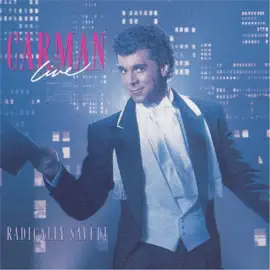
Carman Live: Radically Saved
Apple Music subscribers: Sign in above to hear the full album.
Released in 1988, Carman Live: Radically Saved captures the part of Carman’s ministry that perhaps mattered most to him: the live experience. By this point, Carman had developed a reputation as one of Christian music’s most compelling concert performers, and this album gives listeners a taste of the energy, humor, musicianship, and evangelistic enthusiasm that made his shows so distinctive. Rather than simply recreating his studio recordings onstage, Carman built the album around mostly new material, specifically wanting to capture the excitement and spontaneity of his concerts.
The album moves through a remarkable variety of styles. “Lord of All,” “Radically Saved,” and “No Way, We Are Not Ashamed” bring the energetic contemporary sound for which Carman was becoming known, while “Soap Song” demonstrates his playful sense of humor and gift for storytelling. “Jericho: The Shout of Victory” turns the biblical story of Jericho into another dramatic Carman production, while the extended “God of All Nations” medley gives the album a sweeping global perspective. The result is much more than a conventional live recording—it feels like a condensed Carman concert.
Radically Saved became one of the biggest albums of Carman’s early career, reaching No. 2 on the Billboard Christian Albums chart. The title song became his second No. 1 Christian radio hit, followed by “Lord of All,” which reached No. 2. The album was eventually certified Gold by the RIAA, while the accompanying long-form concert video also earned Gold certification and won the GMA Dove Award for Long Form Video of the Year.
Perhaps the most important thing about Radically Saved is that it demonstrates just how much Carman was already becoming a phenomenon beyond the recording studio. He was building concerts around audience participation, humor, theatrical presentation, and a very direct Gospel message. The album preserves that unusual combination and provides an important bridge between the Carman of The Champion and the massive-scale evangelistic productions that would follow with Revival in the Land and The Standard.
For anyone exploring Carman’s catalog, Carman Live: Radically Saved is essential because this is where you really begin to hear the live performer come alive. The songs are energetic, the presentation is unmistakably Carman, and the underlying purpose never gets lost: entertain the audience, involve the audience, and ultimately point the audience toward Jesus.
🐟
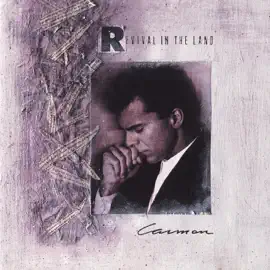
Revival in the Land
Apple Music subscribers: Sign in above to hear the full album.
Released in 1989, Revival in the Land was a landmark album in Carman’s career and the record that established him as one of the biggest names in contemporary Christian music. The album became his first No. 1 Christian album, ultimately spending an extraordinary 33 weeks at the top of the Billboard Christian Albums chart, and it was certified Gold by the RIAA. It also earned Billboard’s recognition as Contemporary Christian Album of the Year.
The album contains some of the songs that best demonstrate the range of Carman’s ministry. “God’s Got an Army” and “I Got the Joy” bring an exuberant praise-and-celebration feel, while “This Blood,” “Saved, Delivered and Healed,” and “Jesus Is the Light” deliver more straightforward declarations of faith. Then there are the unmistakably Carman productions: “A Witch’s Invitation,” “The Resurrection Rap,” and the six-and-a-half-minute title track, “Revival in the Land.” The album’s ten songs blend pop, R&B, hip-hop, gospel, and praise music into a remarkably energetic package.
What makes Revival in the Land particularly important is the way Carman’s music and ministry had begun to merge into something much larger than a traditional Christian album. The songs weren’t simply recordings—they were vehicles for storytelling, evangelism, spiritual challenge, and entertainment. The album’s long-form video expanded that concept even further, earning both GMA Dove Awards and RIAA Platinum certification.
The title track is the perfect centerpiece. Like “The Champion” before it, “Revival in the Land” turns a spiritual message into an elaborate dramatic production. But this time, the focus isn’t simply on a confrontation between good and evil; it’s on the call for God’s people to awaken and participate in a spiritual revival. The album’s entire concept builds toward that declaration, making the title track feel like the culmination of everything that came before it.
For Carman, Revival in the Land was a genuine turning point. The Champion had introduced the world to his unique combination of music and theatrical evangelism; Radically Saved had demonstrated the power of his live ministry; Revival in the Land brought those elements together on a massive scale.* It became the template for much of what would follow in Carman’s career—and one of the essential albums for understanding why he became such a phenomenon in Christian music.
🐟
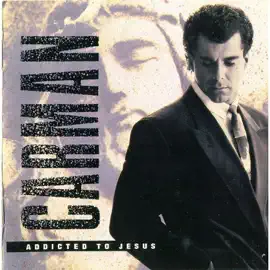
Addicted to Jesus
Apple Music subscribers: Sign in above to hear the full album.
Released in 1991, Addicted to Jesus found Carman pushing his already unconventional approach to Christian music even further. The album became his second No. 1 Christian album and was certified Gold, cementing the remarkable momentum he had built during the previous few years. It also earned a Grammy nomination and was recognized by Billboard as the Contemporary Christian Album of the Year.
Musically, Addicted to Jesus may be one of the best demonstrations of just how unwilling Carman was to stay inside a single genre. The nine-track album moves through rock, hip-hop, gospel, country, contemporary pop, and even extended radio-drama storytelling. “Our Turn Now” features Petra, “Come Into This House” features Commissioned, and the title track features the young dc Talk, giving the album an impressive cross-section of Christian music’s different sounds and generations.
The title track is naturally the centerpiece. “Addicted to Jesus” takes the language of addiction—something associated with drugs and destructive behavior—and completely redirects it toward devotion to Christ. Carman and dc Talk’s collaboration gave the song a contemporary hip-hop flavor that was particularly effective in reaching younger listeners. The accompanying video leaned into that same approach, incorporating breakdancing and other elements of youth culture while delivering an unmistakably Christian message.
But the album is much more than its title track. “Satan, Bite the Dust!” turns spiritual warfare into a Western-style showdown, “1955” combines country, gospel, and rap, “Holy Ghost Hop” brings a playful hip-hop approach to the record, and “Hunger for Holiness” provides a more reflective contrast. Even the closing “The Third Heaven” returns to Carman’s love of dramatic storytelling. The variety could have made the album feel scattered, but somehow it remains recognizably Carman from beginning to end.
What makes Addicted to Jesus particularly important in Carman’s catalog is that he wasn’t simply trying to keep up with the changing Christian music scene—he was actively reaching into it. He could stand alongside Petra, Commissioned, and dc Talk while still sounding completely like himself. The result is one of the quintessential Carman albums of the early 1990s: bold, creative, theatrical, sometimes wonderfully outrageous, and always focused on taking the Gospel to as many people as possible.
🐟
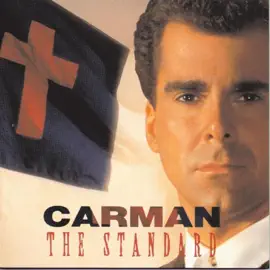
The Standard
Apple Music subscribers: Sign in above to hear the full album.
Released in 1993, The Standard stands as one of the defining albums of Carman’s career—and ultimately became his best-selling studio album. It reached No. 1 on the Christian Albums chart, becoming Carman’s third album to reach the top of the chart, and was eventually certified Platinum by the RIAA. The album arrived at a point when Carman’s popularity was reaching extraordinary levels, and The Standard would become the centerpiece of one of the biggest eras of his career.
The album also demonstrates how broad Carman’s musical palette had become. “Who’s in the House” brings hip-hop and call-and-response energy, “Great God” delivers straightforward praise, “The River” takes a more contemporary worship approach, and “Sunday School Rock” turns Christian education into another unmistakably Carman production. The album also includes “Holdin’ On,” a duet with Margaret Becker, and the passionate “America Again,” which became one of the most serious and discussed songs of his career.
But The Standard was more than a collection of successful songs. Carman was increasingly using his music as a platform for a broader evangelistic and cultural message. The album’s title itself reflected his desire to challenge Christians to establish their lives around the standards of Scripture rather than simply following the values of the surrounding culture. That theme comes through particularly strongly in “America Again,” while songs such as “Who’s in the House” and “Great God” approach the same mission from a more celebratory perspective.
The success of the album extended well beyond its audio recording. Carman created a companion The Standard video featuring music videos for songs from the album, while Raising the Standard Live captured the massive live production that followed. Both became successful releases, with The Standard video ultimately achieving Platinum status. The album’s success also helped set the stage for Carman’s enormous 1994 Standard World Tour, including his legendary Texas Stadium concert.
For anyone exploring Carman’s music, The Standard may be the single best album to hear after The Champion. The Champion introduced the world to Carman’s theatrical evangelism; The Standard shows that concept fully matured. It is energetic, diverse, ambitious, occasionally outrageous, and completely committed to its message—and it captures Carman at the height of his influence as a Christian recording artist and live performer.
🐟
R.I.O.T. (Righteous Invasion of Truth)
Apple Music subscribers: Sign in above to hear the full album.
Released in 1995, R.I.O.T. (Righteous Invasion of Truth) found Carman once again taking a familiar word and turning it into a declaration of Christian purpose. The title stands for “Righteous Invasion of Truth,” reflecting Carman’s desire to see Christians actively bring the truth of the Gospel into their homes, schools, communities, and culture. It was a natural progression from the ideas behind Radically Saved and Addicted to Jesus, continuing his habit of transforming words normally associated with something negative into expressions of faith and spiritual commitment.
Musically, R.I.O.T. is one of the more eclectic albums in Carman’s catalog. The ten-song collection moves from the driving title track to the dramatic nine-minute “Whiter Than Snow,” the big-band-flavored “7 Ways 2 Praise,” the country-influenced “Step of Faith,” and the extended sermon-song “There Is a God.” Ricky Skaggs lends his talents to “Step of Faith,” while the album also incorporates gospel, contemporary Christian, rock, and pop influences.
The album’s concept extended beyond the music itself. Carman starred in R.I.O.T. — The Movie as Vic Pizzo, a Chicago police officer who moves his family to rural Oklahoma while attempting to escape the violence and problems of his former life. The film incorporated music videos from the album and gave Carman another opportunity to combine his music with the dramatic storytelling that had become such a defining part of his ministry.
R.I.O.T. became another major commercial success for Carman. It reached No. 1 on the Christian Albums chart, became his first album to reach the Billboard 200, where it peaked at No. 45, and was certified Gold by the RIAA. The title song also won the GMA Dove Award for Rap/Hip-Hop Song of the Year, while R.I.O.T. — The Movie earned Gold certification as well.
For a Carman retrospective, R.I.O.T. is an important album because it shows him continuing to expand the definition of what a Christian music project could be. It wasn’t simply an album—it was a musical statement, a movie, a concert concept, and a ministry campaign all wrapped around one idea: Christians should not retreat from the culture around them, but boldly bring the truth of Christ into it.
🐟
Mission 3:16
Apple Music subscribers: Sign in above to hear the full album.
Released in 1998, Mission 3:16 was one of the most ambitious projects of the later part of Carman’s career. Taking its title from John 3:16, the album centers on the idea that Christians have been given a mission: to take the message of God’s love and salvation to the world. True to Carman’s style, he doesn’t present that idea quietly. Instead, he wraps it in action-movie drama, humor, musical variety, and the kind of theatrical storytelling that had become his trademark.
The title track sets the tone with a spy-movie concept, sounding like something straight out of a James Bond or Mission: Impossible soundtrack. From there, Carman moves through a remarkably eclectic collection of styles and ideas. “People of God” is a rousing call to believers, “The Courtroom” returns to the extended story-song format that had produced “The Champion,” while “We Are Not Ashamed,” “Slam,” and “The Prayer Anthem” each approach the album’s central message from different musical directions. The 15-track album even finds room for a Cajun-flavored children’s song, Italian-inspired material, and a surf-music take on the album’s central theme.
Mission 3:16 also marked an important moment in Carman’s continuing use of music as ministry rather than simply music as entertainment. The album reached No. 94 on the Billboard 200 and No. 2 on the Christian Albums chart, and it earned a Grammy nomination for Best Pop/Contemporary Gospel Album. The title song was also released as an enhanced CD single, complete with multiple versions and multimedia content—another example of Carman’s willingness to experiment with new ways of presenting his message.
But the album’s greatest significance may be what Mission 3:16 represented outside the recording studio. The project became the centerpiece of a major evangelistic campaign, culminating in Carman’s October 31, 1998 event, where more than 75,000 people responded to his Gospel invitation. That event remains one of the most remarkable moments in the history of Christian music and evangelistic concerts.
For a Carman retrospective, Mission 3:16 is an essential album because it demonstrates that even after more than a decade of success, Carman was still thinking bigger. He could take a Scripture verse, turn it into a mission statement, build an entire album around it, and then carry that message onto a massive stage. It is quintessential late-era Carman: creative, theatrical, eclectic, occasionally wonderfully outrageous, and ultimately focused on one purpose—getting the Gospel message in front of as many people as possible.
🐟
📖Carman Hymns
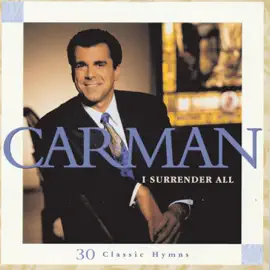
I Surrender All – 30 Classic Hymns
Apple Music subscribers: Sign in above to hear the full album.
Released in 1997, I Surrender All – 30 Classic Hymns revealed a side of Carman that could sometimes get lost beneath the costumes, choreography, elaborate productions, and larger-than-life concert presentations. Here, Carman turned his attention almost entirely toward the traditional hymns of the Christian faith, bringing his own contemporary gospel and country-influenced style to a collection of songs that had been sung by generations of believers. The album contains 15 tracks incorporating 30 classic hymns, with several presented as medleys.
The song selection reads almost like a journey through the hymnbook: “The Old Rugged Cross,” “Jesus, Keep Me Near the Cross,” “Grace Greater Than Our Sin,” “Jesus Paid It All,” “Leaning on the Everlasting Arms,” “Nothing But the Blood,” “My Jesus I Love Thee,” “When the Roll Is Called Up Yonder,” “I Surrender All,” and “’Tis So Sweet to Trust in Jesus” are among the familiar treasures included. Carman also brings his energetic personality to the arrangements without losing sight of the songs themselves.
One of the things Carman and our FishWorship founder were always in 100% agreement on was the importance of preserving and enhancing the value of traditional hymns. That’s an especially meaningful connection for FishWorship. These songs aren’t merely pieces of Christian music history—they are part of the vocabulary through which generations of Christians learned about faith, salvation, grace, the cross, trust, and worship. Carman understood that honoring those songs didn’t mean leaving them frozen in the past. They could be presented with fresh arrangements and new energy while still retaining the truths that made them endure.
And that may be what makes this album such a fitting addition to Carman’s legacy. After years of creating some of Christian music’s most elaborate productions, Carman could strip everything back to the songs themselves and the timeless messages they carried. I Surrender All became a Gold-certified recording and also received the Power and Glory Award for Favorite Inspirational Album, demonstrating that his audience was more than willing to follow him into this very different musical territory.
For FishWorship, I Surrender All – 30 Classic Hymns deserves a special place in Carman’s story. It reminds us that the man who could fill stadiums with spectacular evangelistic productions also understood the enduring power of a congregation singing an old hymn together. Sometimes the most powerful presentation isn’t the biggest one—it is simply a great hymn, sung again so another generation can hear it.
🐟