



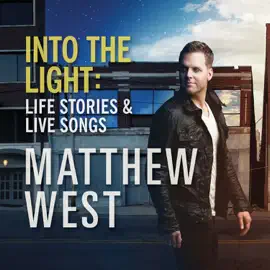


Matthew West has built a remarkable career around one simple idea: our stories matter. As a Christian singer, songwriter, and storyteller, West has spent more than two decades turning real-life struggles, victories, questions, and moments of faith into songs that connect deeply with listeners. His music often feels conversational and personal, inviting listeners to recognize pieces of their own stories in the words he sings.
From songs of encouragement and redemption to powerful reminders of God’s presence in difficult seasons, West has developed a catalog that speaks to people wherever they may be in their faith journey. Songs such as “Hello, My Name Is,” “Do Something,” “Forgiveness,” and “I’m Not Strong Enough” have demonstrated his ability to address difficult subjects without losing sight of hope. His songwriting frequently reminds us that our failures do not define us, our circumstances do not have the final word, and God’s grace is always bigger than our mistakes.
West’s music also reflects his gift for making the personal universal. Whether he is singing about forgiveness, finding purpose, overcoming insecurity, serving others, or simply trusting God one day at a time, his songs have a way of sounding like conversations many of us have already had with ourselves. That authenticity has helped make Matthew West one of the most recognizable voices in contemporary Christian music—and one whose songs continue to encourage listeners to live their faith beyond the walls of the church.
For FishWorship, Matthew West represents an important part of what Christian music can do at its best: tell honest stories that point people back toward God. His catalog contains songs for celebration, songs for difficult days, songs that challenge us to act, and songs that simply remind us that we are loved. Whether you’re discovering Matthew West for the first time or returning to familiar favorites, there is plenty in his music to explore.
🐟
🎤 See Matthew West Live: Concert Tickets | Official Events Calendar
🐟
🎬Featured Video
“Don’t Stop Praying”
Apple Music subscribers: Sign in above to hear the full song.
Matthew West’s “Don’t Stop Praying” is more than a song about prayer—it is a reminder not to give up when the answer seems far away. West was inspired in part by fans who shared stories of prayers they had been carrying for years, often asking him to pray with them for a breakthrough. The result is an encouraging anthem for anyone who has ever wondered whether they should keep praying when nothing seems to be changing.
The song acknowledges the reality of those moments when we are tired, discouraged, and running out of words. Rather than offering a simplistic promise that every prayer will be answered exactly as we hope, West points listeners back to the character of God—the God who hears, who is near to the brokenhearted, and who remains faithful even when we cannot yet see what He is doing. That makes “Don’t Stop Praying” especially powerful for seasons of uncertainty, grief, family struggles, illness, addiction, or simply waiting for a breakthrough.
The official music video takes that message beyond the song itself. Filmed in Nashville, West and his band create and display signs carrying the song’s central message, turning the phrase into a visible declaration of faith and encouragement. It is a fitting visual representation of a song that was ultimately designed to become a reminder for people everywhere: whatever you’re praying about, don’t give up talking to God.
“Don’t Stop Praying” ultimately captures one of the most important themes in Matthew West’s music: faith is not about pretending that life is easy. It is about continuing to trust God in the middle of the hard places. Sometimes the most important prayer is simply the one we choose to pray one more time.
🐟
🎵Essential Songs
“Hello, My Name Is”
Apple Music subscribers: Sign in above to hear the full song.
Matthew West’s “Hello, My Name Is” is a powerful song about identity, redemption, and learning to see ourselves through God’s eyes rather than through the labels created by our past. Released on his 2012 album Into the Light, the song begins by giving a voice to the things that so often define how we see ourselves—regret, defeat, failure, and shame. But those voices do not get the final word.
The song was inspired by the true story of Jordan, a young man whose struggle with drug addiction had threatened to become his identity. His story ultimately became one of restoration, and West transformed it into a broader message for anyone who has ever felt trapped by something in their past. The song’s central message is that what we have done, what has happened to us, or where we have failed does not have to determine who we are.
That shift in identity is what makes “Hello, My Name Is” so uplifting. Instead of allowing regret or defeat to introduce us, West points toward a new identity rooted in God’s grace. The song celebrates the freedom that comes from understanding that we are not defined by the wreckage behind us, but by the God who restores and makes all things new. This theme became so important to West that he later expanded it into his book Hello, My Name Is: Discovering Your True Identity.
“Hello, My Name Is” became one of West’s defining songs. It spent 17 weeks at No. 1 and earned a GMA Song of the Year nomination as well as the Billboard Music Award for Top Christian Song. But its lasting impact goes beyond charts and awards. It speaks directly to anyone carrying a label they wish they could remove—and offers the hopeful reminder that our past may be part of our story, but it does not have to be our identity.
🐟
“The Motions”
Apple Music subscribers: Sign in above to hear the full song.
Matthew West’s “The Motions” is a powerful challenge to anyone who has ever found themselves simply going through the motions of faith. Released on his 2008 album Something to Say, the song confronts the danger of settling into a comfortable, routine Christianity where we may still attend church, sing the songs, and say the right things while our hearts have quietly grown distant. West has described the song as coming from his own desire to break free from a lukewarm faith and live with greater purpose.
The song’s message became especially meaningful for West during a difficult season in which he temporarily lost his ability to speak and sing because of problems with his vocal cords. That unexpected period of silence forced him to reconsider what really mattered and gave him a deeper understanding of the songs he had already written. In that sense, “The Motions” became more than a song about avoiding spiritual complacency—it became part of West’s own story of discovering renewed purpose through hardship.
What makes “The Motions” so effective is that its challenge is both uncomfortable and hopeful. It doesn’t simply criticize spiritual routine; it asks us to examine whether our relationship with God is actually alive and meaningful. The song encourages listeners to stop settling for an ordinary, lukewarm faith and instead allow God to transform the way they live, love, serve, and worship.
The message clearly resonated with listeners. “The Motions” became a major Christian radio hit, spending 15 consecutive weeks at No. 1 according to West’s official site, and its impact inspired a movement in which listeners publicly committed themselves to avoiding the trap of simply going through the motions.
More than a decade after its release, “The Motions” remains remarkably relevant. It asks a question every Christian periodically needs to ask: Am I merely doing the things associated with faith, or am I actually living a life surrendered to God? That honest challenge is what makes the song one of Matthew West’s essential recordings—and one that continues to invite listeners to move beyond routine and into a deeper, more purposeful faith.
🐟
“Forgiveness”
Apple Music subscribers: Sign in above to hear the full song.
Matthew West’s “Forgiveness” is one of the most powerful songs in his catalog because it tackles something that can feel almost impossible: choosing to forgive when the hurt is real and the person who caused it may seem completely undeserving. Released on his 2012 album Into the Light, the song grew out of a remarkable true story that West encountered while collecting stories for the album.
That story belonged to Renee Napier, whose 20-year-old daughter Meagan was killed by a drunk driver. In the aftermath of that devastating loss, Renee eventually chose to forgive the man responsible, Eric Smallridge, and an extraordinary relationship developed between the two. West has said that hearing Renee’s story forced him to examine his own understanding of forgiveness and ask whether he could extend forgiveness in circumstances that seemed beyond human ability.
What makes the song so compelling is that West doesn’t present forgiveness as easy or natural. Instead, he acknowledges the anger, pride, and pain that can make forgiveness seem impossible. The Christian message at the heart of the song is that forgiveness is ultimately rooted in the mercy we have received from God. It isn’t about pretending that an offense didn’t happen or declaring that the consequences don’t matter; it is about refusing to allow bitterness and resentment to have the final word.
The song’s most profound idea is that forgiveness can bring freedom not only to the person being forgiven, but also to the person doing the forgiving. That theme is reflected in West’s own description of Renee’s story: forgiveness became a way of releasing the burden of what had happened rather than continuing to be imprisoned by it.
“Forgiveness” became a centerpiece of Into the Light, an album built around real stories of pain, redemption, and grace. It remains one of Matthew West’s defining songs because it doesn’t offer an easy answer to an incredibly difficult question. Instead, it points listeners toward the God whose grace makes possible what we sometimes cannot accomplish on our own—and asks us to consider what freedom might be waiting on the other side of forgiveness.
🐟
“More”
Apple Music subscribers: Sign in above to hear the full song.
Matthew West’s “More” is a beautiful expression of God’s immeasurable love, and it holds a special place in West’s career as the song that introduced him to Christian radio on a national level. Released on his 2003 debut major-label album Happy, “More” became West’s breakthrough single and established the heartfelt, personal songwriting style that would become one of the defining characteristics of his music.
The inspiration for “More” came from an unexpectedly simple and intimate moment. West has explained that the song was inspired by a four-year-old boy, the adopted son of a friend, and the playful relationship between the child and his father. That small picture of a child’s affection became the starting point for a much bigger reflection on God’s love for His children.
Musically, the song uses images of mountains, oceans, stars, and deserts to illustrate something that ultimately cannot be measured. The grandeur of creation becomes a backdrop for a deeply personal message: God’s love is not distant or abstract. It is personal, persistent, and greater than anything we can fully comprehend. That combination of enormous imagery and intimate emotion helped make “More” immediately relatable to listeners.
The song also became a remarkable early success for West. “More” spent nine weeks at No. 1 on the Radio & Records Christian Adult Contemporary chart in 2004, making it one of the biggest Christian radio songs of that year. In an unexpected footnote to its story, the song was later selected as a wake-up song for the crew of the Space Shuttle Atlantis in July 2011.
More than two decades after its release, “More” remains an important part of Matthew West’s catalog because its message has never really gone out of date. Before West was writing songs about forgiveness, redemption, identity, prayer, and finding purpose, he was already reminding listeners of one of the simplest and most profound truths of the Christian faith: God’s love for us is greater than we can imagine.
🐟
“My Own Little World”
Apple Music subscribers: Sign in above to hear the full song.
Matthew West’s “My Own Little World” is a thoughtful challenge to the tendency to become so absorbed in our own lives that we fail to notice the people and needs around us. Released as the lead single from his 2010 album The Story of Your Life, the song asks listeners to look beyond their own circumstances and consider the bigger picture of what God might be calling them to do.
The song grew directly out of the unusual process behind The Story of Your Life. West invited people to send him their personal stories, and nearly 10,000 stories poured in. He then spent two months in a Tennessee cabin reading those stories and writing songs inspired by them. As he encountered stories of adoption, cancer, abuse, broken families, and other struggles, West realized how sheltered his own perspective had become.
That experience became the heart of “My Own Little World.” West described his starting point as a world with “population me”—a comfortable life focused primarily on his own needs and experiences. But the stories he read began to change the way he viewed the world around him. The song becomes a prayer for God to open his eyes, give him compassion, and help him see people the way God sees them.
What makes the song especially effective is that its challenge isn’t aimed at obviously selfish or uncaring people. It’s aimed at ordinary Christians who may be comfortable, busy, and well-intentioned while still missing opportunities to serve others. “My Own Little World” asks us to consider what might happen if we allowed God to interrupt our comfortable routines and make us more attentive to the people hurting just outside our own doors.
In many ways, the song serves as the perfect introduction to The Story of Your Life. West’s thousands of listeners gave him their stories, and those stories changed his story. “My Own Little World” is his response—and a reminder that following Christ means looking beyond ourselves. Sometimes the first step toward making a difference in someone else’s life is simply opening our eyes and realizing that our own little world is not about us.
🐟
“Do Something”
Apple Music subscribers: Sign in above to hear the full song.
Matthew West’s “Do Something” is one of the most direct calls to action in his catalog. Released on his 2012 album Into the Light, the song challenges Christians to move beyond simply recognizing the problems around them and actually become part of the solution. Rather than asking why God doesn’t step in to fix the world’s suffering, West turns the question around: What if God has already chosen to work through us?
The song was inspired by the remarkable story of a college student named Andrea, who traveled to Uganda to study micro-financing and encountered an orphanage where children were being neglected and abused. Instead of walking away, she took action. She ultimately helped bring the situation to the attention of Ugandan authorities, and the children were moved to safety. Her response to the situation was remarkably simple: she didn’t know exactly what she was doing, but she knew she had to do something.
That story gives the song its central message. West begins from the perspective of someone looking at injustice, poverty, suffering, and brokenness and wondering why God doesn’t do something about it. The answer is a challenging one: God has already done something—He created us. The responsibility doesn’t necessarily begin with waiting for someone else to act; it begins with being willing to let God use us where we are. West has specifically described the song as a call to action that first challenges him personally before asking anything of his listeners.
What makes “Do Something” especially effective is that it doesn’t suggest that one person can solve every problem in the world. Instead, it asks what might happen if ordinary people stopped assuming that someone else would take responsibility. Serving a neighbor, helping someone in need, standing up for someone who has no voice, or simply responding to an opportunity right in front of us can all become expressions of Christian faith.
Ultimately, “Do Something” is a reminder that faith isn’t meant to remain merely something we talk about. If Christians are called to be the hands and feet of Christ, then eventually those hands and feet have to move. Matthew West’s challenge is simple, uncomfortable, and inspiring: when we see something that needs to change, perhaps the question isn’t “Why doesn’t somebody do something?” Perhaps the better question is “What can I do?”
🐟
“Grace Wins”
Apple Music subscribers: Sign in above to hear the full song.
Matthew West’s “Grace Wins” is a triumphant song about redemption, second chances, and the transforming power of God’s grace. Released on his 2015 album Live Forever, the song takes the familiar Christian message of grace and gives it a deeply personal dimension: our mistakes, failures, and darkest moments do not get the final word. As West puts it, we may be far from perfect, but we can become living proof that grace wins every time.
The song has a particularly powerful connection to West’s earlier hit “Hello, My Name Is.” After telling the story of Jordan, a young man who was overcoming addiction, West received a letter from another young man named Robert. Robert had attended one of West’s concerts while struggling with heroin addiction and was deeply affected by hearing Jordan’s story. He reached out for help, and West and his father helped connect him with a Christian recovery program. Robert’s journey toward recovery and faith became the inspiration for “Grace Wins.”
That connection gives the song its remarkable sense of continuity. Jordan’s story inspired “Hello, My Name Is”; Robert heard Jordan’s story and found the courage to begin writing a new chapter of his own. West has described “Grace Wins” as a kind of chain-reaction story, demonstrating how one person’s testimony can give another person hope. Robert eventually completed his recovery program and went on to help others who were fighting addiction.
At its heart, “Grace Wins” is about the battle between guilt and grace. The song recognizes the shame and condemnation that can make us believe our failures have permanently defined us, then answers those voices with the promise of redemption. It doesn’t pretend that mistakes don’t matter; instead, it points toward a God whose grace is greater than our mistakes and whose invitation to begin again remains open.
The song became West’s seventh No. 1 radio single, reaching No. 1 on both the Billboard Christian Airplay and AC Indicator charts. But its greatest significance may be the story behind it. “Grace Wins” isn’t merely a song about second chances—it was born from a real second chance. And that makes its central declaration all the more powerful: no matter how dark the story has become, God’s grace can still write what comes next.
🐟
“The God Who Stays”
Apple Music subscribers: Sign in above to hear the full song.
Matthew West’s “The God Who Stays” is a deeply personal song about grace, acceptance, and the unwavering presence of God. Released on his 2019 album Brand New, the song begins with an honest admission: when we look at our own failures, shortcomings, and mistakes, we can easily convince ourselves that God must eventually give up on us. West turns that fear into a powerful declaration of faith—the God we serve is not the God who walks away when we fail. He is the God who stays.
West has explained that he wrote the song for himself. Despite his success as a Christian artist, he found himself wrestling with the question of whether God might eventually be finished with him because of his own shortcomings. That vulnerability is at the heart of the song. Instead of presenting himself as someone who has everything figured out, West writes from the perspective of someone who needs the same reminder that many of his listeners need: God’s love isn’t dependent upon our ability to live a perfect life.
The song’s central message is especially powerful because it addresses the shame that can cause people to hide from God. West describes the temptation to believe that our past, our guilt, our scars, or our failures have made us unworthy of God’s presence. But the song turns that thinking upside down. God doesn’t respond to our brokenness by walking away; He moves toward us with open arms. That picture of God as the One who remains when everyone else has left makes the song an especially meaningful reminder of grace.
“The God Who Stays” also became more than just a song for West. Its message eventually inspired his book The God Who Stays, in which he explores the biblical truth that God is “God with us”—the One who remains present through seasons of uncertainty, loss, disappointment, and isolation. The song’s message therefore sits at the center of a much larger theme in West’s ministry: no matter how far we think we’ve wandered, God has not wandered away from us.
Ultimately, “The God Who Stays” is a song for anyone who has ever wondered whether they’ve messed up too badly for God to still want them. Its answer is wonderfully simple: God’s grace is bigger than our failures, and His love doesn’t walk away when we do. Sometimes, when we need to hear that truth most, the greatest comfort is simply knowing that He is still there.
🐟
“Truth Be Told”
Apple Music subscribers: Sign in above to hear the full song.
Matthew West’s “Truth Be Told” is one of his most vulnerable and honest songs, confronting the pressure many people feel to appear as though they have everything together. Released on his 2020 album Brand New, the song asks what happens when we stop hiding our struggles behind a smile and finally admit that we are not always okay. West has described the song as deeply autobiographical, drawing from his own experience of learning to put on a polished face while growing up as a preacher’s kid and later becoming a Christian artist in the public eye.
At the heart of “Truth Be Told” is the uncomfortable realization that authenticity can be much harder to live than it is to talk about. We may tell people we’re fine because we don’t want to be judged, pitied, or perceived as weak. We may keep our wounds and failures hidden because we’re afraid that letting people see the real version of us will change how they see us. West turns that struggle into a confession, reminding listeners that pretending everything is under control doesn’t make the underlying pain disappear.
The song also takes that message directly into the church. West challenges the idea that Christians should arrive with polished lives and perfect answers, instead presenting the church as a place where the broken, wounded, struggling, and spiritually lost should be able to find safety. That makes “Truth Be Told” more than a song about personal honesty; it is also a challenge to Christian communities to become places where people can be honest about what they’re carrying.
Perhaps the most powerful part of the song is the realization that God already knows the truth. There is no secret struggle, failure, sin, or wound that can surprise Him. West’s message is that if God already sees every part of us and still loves us, perhaps we can finally stop pretending that we need to hide. As West has explained, there is tremendous freedom in knowing that God sees the good, the bad, and the ugly and remains faithful anyway.
“Truth Be Told” ultimately offers a different definition of strength. Strength isn’t pretending that we’re fine when we’re falling apart; sometimes it is having the courage to say, “This is where I really am.” And once the truth is finally spoken, healing, community, forgiveness, and grace have room to begin. That combination of vulnerability and hope makes “Truth Be Told” one of the standout songs in Matthew West’s catalog—and a particularly fitting song for anyone who has ever smiled on the outside while struggling on the inside.
🐟
“Nobody”
Apple Music subscribers: Sign in above to hear the full song.
Matthew West’s “Nobody” is a celebration of humility, purpose, and the extraordinary things God can accomplish through ordinary people. Originally recorded by Casting Crowns with West providing featured vocals, the song appeared on Casting Crowns’ 2018 album Only Jesus. West also co-wrote the song with Mark Hall and Bernie Herms.
At the heart of “Nobody” is the realization that we don’t have to be famous, talented, influential, or seemingly important to have a purpose in God’s kingdom. The song points to biblical examples such as Moses, David, and the twelve disciples—people who, from a human perspective, might not have been the obvious choices to change the world. Yet God repeatedly works through people who are willing to trust Him and step into the purpose He has given them.
That message makes the song particularly encouraging for anyone who has ever felt inadequate or overlooked. Instead of allowing insecurity to ask, “Who do you think you are?”, “Nobody” redirects the focus away from ourselves and toward Jesus. Our significance doesn’t come from making sure people remember our names; it comes from being faithful with the opportunities God gives us. The goal isn’t to make ourselves the center of attention, but to point beyond ourselves to the One who saved us.
The song’s message also fits beautifully with Matthew West’s broader emphasis on storytelling and testimony. West has spent much of his career reminding listeners that ordinary people’s stories can become powerful testimonies of God’s grace. “Nobody” takes that idea one step further: you don’t have to be somebody important to tell somebody about Jesus. In fact, recognizing that we’re simply ordinary people who have been rescued by an extraordinary God can be the beginning of a very powerful testimony.
“Nobody” ultimately offers a refreshing definition of success for the Christian life. It isn’t about how many people know our name or how prominently we are remembered. It’s about whether our lives point people toward Christ. And if, at the end of our story, people remember Jesus more than they remember us, then perhaps we’ve accomplished exactly what we were meant to do.
🐟
“Don’t Stop Praying”
Apple Music subscribers: Sign in above to hear the full song.
Matthew West’s “Don’t Stop Praying” is an encouraging anthem for anyone who has ever wondered whether they should keep praying when the answer seems to be taking too long. Released in January 2024 as the title track of his album Don’t Stop Praying, the song is built around a simple but powerful message: keep knocking on Heaven’s door, keep believing, and don’t give up talking to God.
West has described the song as an encouragement and a challenge to himself to be persistent in prayer. That personal dimension gives the song an especially genuine quality. It isn’t written from the perspective of someone who has figured out all the answers; instead, it comes from someone reminding himself—and the listener—that prayer remains important even when circumstances are difficult and the breakthrough hasn’t arrived. West’s hope is that listeners will remember that God is listening when they call on His name.
The song also became part of something larger than a recording. The response from listeners inspired West and his team to create a Prayer Wall, where people could share their prayer requests and invite others to pray alongside them. That response reflects the heart of the song itself: prayer isn’t merely a private activity. It can become a way for a community of believers to carry one another’s burdens and continue believing together.
“Don’t Stop Praying” recognizes that our prayers can take many forms. Sometimes we pray for a miracle or a breakthrough. Sometimes we pray for strength because we don’t know how we’re going to make it through the day. Sometimes we pray for direction, purpose, healing, or simply the ability to keep going. West later described the entire album as an exploration of these different kinds of prayers, with the title song serving as its central reminder that God hears us through all of them.
Ultimately, “Don’t Stop Praying” isn’t a promise that every prayer will be answered in exactly the way we hope. It is a reminder of something deeper: God is still listening, God is still present, and the story isn’t finished. For anyone standing in a season of waiting, the song offers a simple invitation to take one more step of faith, say one more prayer, and keep trusting the God who hears.
🐟
“Good”
Apple Music subscribers: Sign in above to hear the full song.
Matthew West’s “Good” is a deeply personal reflection on grace and the realization that God’s love isn’t something we can earn. Released in 2026 as the first single from West’s upcoming album Jesus Is King, the song looks back on a lifelong struggle to understand what grace really means. West describes how he once viewed grace almost like a ladder—something he had to climb by doing enough good things to become worthy of God’s love.
That realization becomes the heart of the song. Grace isn’t a reward for getting everything right; it is a gift. West contrasts his own tendency to fall short with God’s unwavering goodness, creating a beautiful picture of the difference between who we are and who God is. The message is especially powerful because it doesn’t come from pretending that our failures don’t matter. Instead, it acknowledges our inability to earn God’s love and celebrates the fact that we don’t have to.
“Good” also fits naturally alongside some of West’s most meaningful songs. Where “Hello, My Name Is” explores finding a new identity beyond our past, “The God Who Stays” reminds us that God doesn’t abandon us in our failures, and “Grace Wins” celebrates redemption, “Good” takes those themes back to their foundation: God is good, and His grace is freely given. West’s own description of the song makes clear that this isn’t simply an idea he wrote about—it is a truth that has changed the way he understands his own life.
The timing of the song makes it particularly significant in West’s catalog. “Good” marks the beginning of a new creative era leading into Jesus Is King, while still sounding unmistakably like the Matthew West who has spent his career turning honest questions about faith into songs of hope. His official biography describes the song as reflecting his continued focus on faith, humility, and grace.
Ultimately, “Good” is a song about taking the pressure off ourselves. We don’t have to become good enough to deserve God’s love. We don’t have to climb high enough to reach Him. We can simply receive the grace He has already offered. And when we finally understand that, the focus shifts away from our own shortcomings and toward the One whose goodness never fails.
🐟
💿Essential Albums
Happy
Apple Music subscribers: Sign in above to hear the full album.
Matthew West’s Happy is where the story of one of contemporary Christian music’s most recognizable singer-songwriters really begins. Released in December 2003, it was West’s first major-label studio album and introduced listeners to the pop-rock sound, conversational songwriting, and faith-centered optimism that would become hallmarks of his career. The album established a foundation that West would build upon throughout the following decades.
The album’s breakout song, “More,” became an immediate Christian radio success, spending nine weeks at No. 1 on the Radio & Records Christian Adult Contemporary chart in 2004. Its message of God’s immeasurable love provided a perfect introduction to West’s songwriting: accessible, melodic, and filled with imagery that takes a profound Christian truth and makes it feel personal. “More” was ultimately named the 2004 Christian Song of the Year by ASCAP, and years later it even became the wake-up song selected by the crew of the Space Shuttle Atlantis.
But Happy is more than simply the album that gave West his first hit. Across its 11 tracks, West explores God’s love, the reality of difficult circumstances, the need for grace, and the hope that comes from trusting God. Songs such as “The Turnaround,” “I Can’t Hear You,” “You Know Where to Find Me,” and “The End” demonstrate that the album’s optimism isn’t based on pretending life is always easy. Instead, it comes from the conviction that God remains present even when life doesn’t go according to plan.
The title Happy reflects that central perspective. West’s happiness isn’t presented simply as a temporary emotion produced by favorable circumstances; it is rooted in the joy that comes from knowing God and recognizing His love. Contemporary reviews noted the album’s mixture of upbeat pop-rock songs and more reflective material, while praising the personality and heart West brought to his debut.
Looking back, Happy is fascinating because it contains many of the ingredients that would eventually define Matthew West’s career: honest stories, memorable melodies, accessible Christian messages, and an emphasis on God’s grace and love. It may sound like the beginning of the Matthew West story, but listening to it today, you can already hear the songwriter who would eventually give Christian music songs like “Hello, My Name Is,” “Forgiveness,” “The God Who Stays,” and “Don’t Stop Praying.” Happy isn’t merely an important album in West’s discography—it is where the journey began.
🐟
The Story of Your Life
Apple Music subscribers: Sign in above to hear the full album.
Matthew West’s The Story of Your Life is one of the most distinctive albums in his catalog—and one of the clearest examples of how deeply he sees his music as a ministry of storytelling. Released in 2010, the album was born from an unusual invitation: instead of simply writing songs about his own experiences, West asked his listeners to send him the stories of their lives. More than 10,000 letters and emails poured in, filled with stories of heartbreak, abuse, divorce, adoption, cancer, family struggles, redemption, and hope.
West spent two months in a cabin outside Nashville reading those stories and turning them into songs. The result is an album that feels remarkably personal despite being inspired by the experiences of so many different people. Songs such as “My Own Little World,” “Strong Enough,” “One Less,” “Family Tree,” “Broken Girl,” and “The Healing Has Begun” tackle subjects that can be painful and difficult to discuss, but West consistently looks for the thread of hope running through each story. He has described the finished album as perhaps the most hopeful record he had ever made, even though many of the stories behind it were heartbreaking.
What makes The Story of Your Life especially powerful is that West doesn’t try to sanitize the human experience. “Broken Girl” confronts the devastating reality of abuse, while “Family Tree” speaks to the possibility of finding a new identity and legacy through Christ. “One Less” celebrates adoption and the joy of a child finding a home. And “My Own Little World” turns the spotlight back toward the listener, challenging us to look beyond our comfortable lives and recognize the needs of people around us.
The album’s title ultimately becomes more than the name of a collection of songs. West’s listeners discovered that their stories had value—not because every story was easy or happy, but because God could work through even the most painful chapters. That idea became so important that West later co-wrote a devotional with Angela Thomas, allowing dozens more of the submitted stories to be shared beyond the album itself.
The Story of Your Life remains an essential Matthew West album because it captures something at the very heart of his career: people connect with stories, and God can use those stories to bring hope to someone who desperately needs it. West didn’t simply ask his audience to listen to his story. For this album, he turned the microphone around—and in doing so, created one of Christian music’s most memorable collections of ordinary people discovering that God was still writing their stories.
🐟
Into the Light
Apple Music subscribers: Sign in above to hear the full album.
Matthew West’s Into the Light, released in 2012, is one of the defining albums of his career and a natural companion to The Story of Your Life. After inviting listeners to share their personal stories for that earlier album, West continued receiving stories from people around the world. More than 20,000 stories ultimately helped inspire Into the Light, giving the album the same storytelling foundation while moving its central message toward hope, healing, freedom, and redemption.
The album opens with its title track, “Into the Light,” which establishes the record’s central theme: leaving behind darkness, fear, shame, and circumstances that have held us captive and stepping toward the freedom found in Christ. From there, the album moves through a remarkably diverse collection of real-life struggles. “Hello, My Name Is” addresses identity and the freedom of no longer being defined by the past; “Forgiveness” explores the extraordinary power of extending grace; and “Do Something” challenges Christians to respond to suffering and injustice rather than simply waiting for someone else to act.
One of the album’s greatest strengths is the way West balances difficult subjects with an unmistakable sense of hope. “We Are the Broken” acknowledges the reality of human brokenness while pointing toward acceptance and freedom in Christ. “Unchangeable” offers reassurance about God’s constant love, while “Wonderfully Made” speaks directly to questions of identity and self-worth. Other songs, including “Waitin’ on a Miracle,” “Restored,” “Love Stands Waiting,” and “The Power of a Prayer,” continue exploring what it means to trust God when life is painful, uncertain, or unfinished.
The album also produced some of West’s most enduring songs. “Hello, My Name Is” eventually spent 17 weeks at No. 1 and won the Billboard Music Award for Top Christian Song, while “Forgiveness” became another major Christian radio success. Together, those songs demonstrate why Into the Light remains such an important part of West’s catalog: he takes deeply personal stories and turns them into songs that allow listeners to see pieces of their own lives reflected back at them.
Ultimately, Into the Light is an album about what happens when we stop allowing darkness to define our stories. Its songs don’t deny pain, failure, shame, brokenness, or injustice. Instead, they point toward the possibility of something beyond those things—grace, forgiveness, restoration, identity, purpose, and freedom. For Matthew West, the stories behind the songs were real; and for the millions who have connected with this album, the message remains just as real: no matter how dark the chapter may be, there is always an invitation to step into the light.
🐟
Live Forever
Apple Music subscribers: Sign in above to hear the full album.
Matthew West’s Live Forever, released in 2015, continues the storytelling tradition that had become one of the defining characteristics of his music. Following The Story of Your Life and Into the Light, the album represents another collection of songs shaped by the real-life stories of West’s listeners. By this point, West and his team had received more than 40,000 stories, giving the album an unusually broad foundation of experiences involving faith, failure, redemption, courage, and second chances.
The album’s title track sets an appropriately joyful tone. “Live Forever” is an upbeat celebration of the eternal hope found in Christ, while “Day One” focuses on the possibility of starting over. Inspired by the story of a man who found a second chance working at a pizza restaurant after being released from prison, “Day One” became an anthem for anyone who understands that God’s grace gives us the opportunity to begin again.
That theme of redemption continues throughout the album. “Grace Wins” became one of West’s signature songs, transforming the idea of grace into a declaration of victory over shame, failure, and condemnation. “Mended” speaks to restoration, while “Anything Is Possible” encourages listeners to trust God beyond the limitations they place on themselves. Even the more reflective songs, including “Oh, Me of Little Faith” and “Heaven Is the Hope,” reinforce the album’s central message of trusting God when circumstances seem bigger than our faith.
Live Forever also marked a significant career achievement for West. The album gave him his first No. 1 on Billboard’s Top Christian Albums chart, while “Grace Wins” became his seventh No. 1 Christian radio single, spending three weeks at No. 1 on the Billboard Christian Airplay chart.
Ultimately, Live Forever is an album about the joy that can be found on the other side of redemption. Its songs acknowledge mistakes, uncertainty, brokenness, and moments of doubt, but they refuse to let those things have the final word. From the fresh beginning celebrated in “Day One” to the triumphant declaration that “Grace Wins,” Matthew West keeps pointing listeners toward the same hope: God’s grace can restore what is broken, give us a new beginning, and remind us that this life is not the end of the story.
🐟
All In
Apple Music subscribers: Sign in above to hear the full album.
Matthew West’s All In, released in 2017, represents a significant turn in his career. After two albums largely shaped by the stories of his listeners, West turned the songwriting lens inward and created what he described as his most personal album to that point. The songs explore his own journey of faith, marriage, fatherhood, career, and the challenge of giving every part of his life completely to God.
The title track, “All In,” establishes the album’s central theme with a challenge to stop living in the comfortable middle ground and surrender fully to Christ. West described the idea as applying to every area of life—faith, relationships, marriage, and family. Rather than settling for a safe or halfhearted faith, the song calls listeners to step forward despite fear and trust God completely.
One of the album’s most memorable songs is “Broken Things,” which became a No. 1 Christian radio hit. Its message fits naturally with West’s broader catalog, celebrating the fact that God can use imperfect people and redeem the broken places in their lives. Other songs reveal even more of West’s personal story. “Something Greater” reflects on his journey from a young man dreaming of a career in music to discovering that God’s plans were larger than his own ambitions, while “The Beautiful Things We Miss” wrestles honestly with the challenge of balancing a demanding career with being fully present as a husband and father.
West’s family is woven directly into the album as well. “Becoming Me” features vocals from his daughter Lulu and reflects on the people who have helped shape who he has become. Meanwhile, songs such as “Never Ever Give Up,” “Power Love Sound Mind,” and “Dream Again” continue West’s tradition of telling other people’s stories, including stories involving cancer, recovery, loss, and the struggle to find hope again. In that sense, All In didn’t abandon the storytelling approach that had defined his previous albums—it simply placed West’s own story alongside the stories of others.
Ultimately, All In is an album about surrender, priorities, and living intentionally. West asks what it really means to give ourselves completely to God—not just in Sunday worship, but in our marriages, families, careers, relationships, dreams, failures, and everyday decisions. It is an unusually transparent album from an artist who had spent years telling the stories of other people, and it gives listeners an opportunity to hear the story behind the storyteller himself.
🐟
Don’t Stop Praying
Apple Music subscribers: Sign in above to hear the full album.
Matthew West’s Don’t Stop Praying, released in 2024, is an album built around one of the most fundamental—and sometimes most difficult—practices of the Christian life: continuing to pray even when the answer hasn’t come yet. The album is West’s 13th studio album and grew out of a desire to capture the many different kinds of prayers people offer throughout their lives. Rather than focusing on prayer as a single experience, West explores prayers of desperation, gratitude, surrender, hope, healing, and perseverance.
The title track provides the album’s central message. “Don’t Stop Praying” encourages listeners to keep bringing their impossible situations, unanswered questions, and deepest needs before God. The song’s enormous success—West’s biggest streaming single debut in his 20-year career and a two-week No. 1 radio hit—helped turn that message into something much larger than a song. Listeners began sharing their own prayer requests, eventually inspiring West and his team to establish a Prayer Wall where people could ask others to join them in prayer.
The album expands that idea across a remarkably varied collection of songs. “Last Page of the Bible,” “Chosen,” “Unashamed,” “My Why,” “18 Summers,” “Life Is Good,” “Goodbye Yesterday,” “The Place Only We Know,” “God’s Hand,” “Breakthrough’s Coming,” and “To Be With Jesus” each approach faith from a different perspective. The result is an album that moves between celebration and vulnerability, reminding listeners that prayer isn’t reserved for moments of crisis. We pray when we need strength, when we need direction, when we’re thankful, when we’re grieving, and when we simply don’t know what else to do.
That variety is ultimately what makes Don’t Stop Praying feel so personal. West isn’t suggesting that every prayer will be answered in exactly the way we want. Instead, the album repeatedly points listeners toward the God who hears us in every circumstance. His own description of the record emphasizes the conviction that even in our darkest days, God hears us, God answers, and God is still working.
For Matthew West, Don’t Stop Praying is more than another collection of Christian songs. It became part of a larger ministry of encouraging people to bring their real lives before God. The album’s message is beautifully simple: when you’ve run out of answers, when you’ve run out of strength, and even when you’ve run out of words, don’t give up on prayer. Keep talking to God. Keep trusting. Keep believing. And, as West reminds us, don’t stop praying.
🐟
🎶New Releases
Jesus Is King
Released: September 25, 2026
Apple Music subscribers: Sign in above to hear the full album.
Matthew West’s 14th studio album, Jesus Is King, centers on a simple but powerful declaration: Jesus remains King regardless of the circumstances surrounding us. Released September 25, 2026, the 12-song album explores faith, failure, surrender, redemption, and hope, with West drawing from personal experiences and the questions that have shaped his own walk with Christ.
The album is built around the recurring idea of completing the statement “Jesus is ____,” with each song offering another glimpse of who Christ is. Songs such as “Don’t Give Up on Me,” “Good,” “Back to Jesus,” “The Good Fight,” and “Shame Is Not My Story” speak to God’s faithfulness, grace, redemption, and strength in the midst of life’s struggles. The title track opens the album, while “Jesus Is King (Reprise)” brings it full circle with the same central declaration.
Following West’s 2024 album Don’t Stop Praying, Jesus Is King continues his long-standing emphasis on turning personal stories and everyday struggles into songs of faith and encouragement. The result is an album focused less on the noise and uncertainty of the world and more on the unchanging truth at its center: Jesus is King.
🐟