There’s something timeless about the great hymns of the Christian faith. Though many were written generations ago, their words continue to speak to the heart, proclaim the truth of Scripture, and lead us into worship. Hymn of the Week is for everyone who believes these beloved hymns should always have a place in modern worship. Each week, we’ll take a moment to revisit one of these enduring songs of faith and celebrate the message, story, and music that have helped generations of believers worship God.
“Come Thou Fount” – Caleb & Kelsey
Apple Music subscribers: Sign in above to hear the full song.
Come Thou Fount of Every Blessing – A Hymn That Has Stood the Test of Time
Some hymns are more than songs. They are prayers that have been passed from one generation of believers to another, carrying timeless reminders of God’s goodness, faithfulness, and unending grace. Few hymns illustrate that better than Come Thou Fount of Every Blessing. Written more than 250 years ago, this beautiful expression of worship continues to find its way into churches, concert halls, and the hearts of believers around the world.
This week, we’re featuring a wonderful interpretation by Caleb & Kelsey, the husband-and-wife musical duo also associated with Christian vocal group Anthem Lights. Their voices come together in a beautiful performance that gives this beloved hymn a fresh, contemporary presentation without losing the reverence and heartfelt devotion that have made it so special for generations. There is something particularly fitting about hearing two voices join together in a song that is, at its heart, a personal invitation to draw closer to God.
A Hymn Born From a Life Changed by Grace
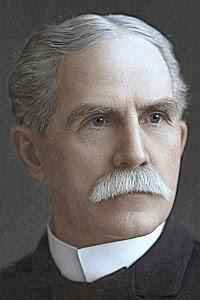
The story of Come Thou Fount of Every Blessing begins in eighteenth-century England with its author, Robert Robinson (1735–1790). Robinson’s journey to faith was not a conventional one. As a young man, he attended a preaching service led by the influential evangelist George Whitefield, initially with little interest in the message. But Whitefield’s preaching eventually made a profound impression on him, and Robinson became a Christian in 1755.
Just three years later, in 1758, Robinson wrote the words to what would become one of Christianity’s most treasured hymns. The hymn first appeared in print in 1759, and its message reflected a deep appreciation for the grace that had transformed his own life.
Perhaps the most remarkable thing about Robinson’s writing is its honesty. This isn’t simply a celebration of God’s blessings. It is also an acknowledgment of our human weaknesses and our continual need for God’s guidance. Robinson understood that faith isn’t a declaration that we have everything figured out. It is a recognition that we need God every step of the way.
The Meaning Behind the Words
The opening verse is an invitation for God to shape our hearts and direct our worship:
“Come, Thou Fount of every blessing, tune my heart to sing Thy grace.”
That is a beautiful thought. We aren’t simply asking God to give us something to sing about. We’re asking Him to prepare our hearts so that our lives become an expression of gratitude and praise.
The second verse contains another fascinating biblical reference: “Here I raise my Ebenezer.” The word Ebenezer comes from the Old Testament account in 1 Samuel 7:12. Following a victory over the Philistines, the prophet Samuel raised a stone as a reminder of God’s help, declaring, “Thus far the Lord has helped us.”
In other words, Robinson is looking back over the journey of faith and recognizing that every step forward has been made possible by God’s grace. It is a reminder worth carrying into our own lives. Whatever challenges we have faced, whatever roads we have traveled, and whatever victories we have experienced, we have reason to remember the One who brought us through them.
But perhaps the most deeply personal words come in the third verse:
“Prone to wander, Lord, I feel it, prone to leave the God I love.”
There is a remarkable vulnerability in those words. Robinson doesn’t pretend that believers are immune to doubt, distraction, or temptation. Instead, he acknowledges the human tendency to drift away from the very God who loves us. And then comes the beautiful conclusion: “Here’s my heart, O take and seal it, seal it for Thy courts above.”
It is a prayer of surrender. Not just for today, but for a lifetime.
A Musical Legacy Spanning Centuries
Although Robert Robinson wrote the words in 1758, the familiar melody most of us associate with the hymn came later. Known as NETTLETON, the tune first appeared in John Wyeth’s Repository of Sacred Music, Part Second, published in 1813. Its original composer is unknown, although the melody has sometimes been attributed to Wyeth or evangelist Asahel Nettleton.
Over the centuries, the hymn found a permanent place in Christian worship. Its combination of biblical imagery, personal confession, and joyful praise made it especially suited to congregational singing. Generations of Christians have sung it in churches, revival meetings, and gatherings of believers, and it has appeared in thousands of hymnbook editions.
One interesting detail is that Robinson originally wrote four verses. The fourth, which is less commonly included in modern hymnals, looks forward to the day when believers will be freed from sin and stand in the presence of God, singing His praises forever. It gives the hymn an especially beautiful conclusion: the grace we celebrate today is the same grace that will carry us into eternity.
A Hymn That Still Speaks to Today’s Church
It’s easy to think of traditional hymns as music belonging to another era. But Come Thou Fount of Every Blessing reminds us why some songs never really grow old. Its message is not tied to a particular generation, musical style, or church tradition. Every generation needs to be reminded of God’s grace. Every generation struggles with the temptation to wander. And every generation has reason to celebrate the never-ending stream of God’s mercy.
That’s why this hymn continues to find new life through contemporary Christian artists. From traditional four-part congregational arrangements to modern worship recordings and intimate acoustic performances, its message remains remarkably adaptable. The musical presentation may change, but the prayer at the heart of the song remains the same.
And perhaps that’s the greatest legacy of Come Thou Fount of Every Blessing. More than two and a half centuries after Robert Robinson put pen to paper, Christians are still singing his words, still recognizing themselves in his confession, and still asking God to keep their hearts close to Him.
This week, take a few moments to enjoy Caleb & Kelsey’s beautiful presentation of this timeless hymn, both in their live performance and song recording. And as you listen, consider making its closing prayer your own: Here’s my heart, Lord. Take it, hold it, and keep it close to You.
There’s something timeless about the great hymns of the Christian faith. Though many were written generations ago, their words continue to speak to the heart, proclaim the truth of Scripture, and lead us into worship. Hymn of the Week is for everyone who believes these beloved hymns should always have a place in modern worship. Each week, we’ll take a moment to revisit one of these enduring songs of faith and celebrate the message, story, and music that have helped generations of believers worship God.
Battle Hymn of the Republic: Have We Become a Nation That Has Forgotten How to Sacrifice for Something Bigger Than Ourselves?
FishWorship Hymn of the Week | David Phelps – Hymnal
There are songs that entertain us, songs that inspire us, and songs that remind us of who we are and what we stand for. And then there are songs that seem to reach beyond the moment, connecting us to something much larger than ourselves. This week’s Hymn of the Week is one of those songs: “Battle Hymn of the Republic,” as performed by David Phelps on hisHymnalalbum.
Few songs in American history carry the combination of religious conviction, national identity, historical significance, and sheer musical grandeur found in this beloved hymn. Its unmistakable melody and stirring words have accompanied generations of Americans, becoming part of the musical vocabulary of our nation’s patriotism.
But the story behind the song is considerably more complicated than its familiar place in American musical life might suggest. Born during one of the most divisive and consequential periods in our nation’s history, the hymn was written in support of one side of a devastating military conflict. Its imagery invokes divine judgment, apocalyptic warfare, and the conviction that the struggle unfolding before the country was part of God’s greater purposes.
That history raises some fascinating questions, not only about the song itself, but about patriotism, faith, national responsibility, and our willingness to make sacrifices for something bigger than ourselves.
And perhaps there’s no better time to ask one of those questions:
Have we become a nation that has forgotten how to sacrifice for something bigger than ourselves?
The Birth of a Song During America’s Greatest National Crisis
To understand “Battle Hymn of the Republic,” we need to return to 1861, when America was descending into the Civil War.
The country was coming apart. Southern states had seceded, the Union was fighting for its survival, and the question of slavery had become inseparable from the future of the nation. Families, communities, and entire regions were divided over what America should become.
The song’s musical roots actually predate the lyrics most Americans know today. Its melody was associated with the religious camp-meeting song “Say, Brothers, Will You Meet Us,” and subsequently became associated with “John Brown’s Body,” a marching song popular among Union soldiers.
John Brown, of course, was the abolitionist whose 1859 raid on Harpers Ferry sought to initiate an armed uprising against slavery. He was captured and executed, becoming a controversial martyr to many abolitionists. Union soldiers adapted songs and verses about Brown, eventually developing the familiar marching melody.
Enter Julia Ward Howe.
Howe was an abolitionist, writer, and social reformer who traveled to Washington, D.C., during the Civil War. In November 1861, she visited a Union Army encampment with her husband, Samuel Gridley Howe, and other members of their party. During the visit, she heard soldiers singing “John Brown’s Body.”
The story goes that Reverend James Freeman Clarke, who was accompanying the group, suggested that Howe write more appropriate lyrics for the familiar melody.
She reportedly awoke in the early morning hours of November 19, 1861, with words taking shape in her mind. She wrote them down, and the result was a poem that would become one of America’s most recognizable songs.
The poem was published in The Atlantic Monthly in February 1862, under the title “Battle Hymn of the Republic.”
What began as a new set of lyrics for a familiar marching tune quickly became something much bigger.
A Hymn of Faith, Warfare, and Divine Judgment
One reason “Battle Hymn of the Republic” has endured is that it doesn’t approach the Civil War as merely a political disagreement or a military confrontation. Its lyrics frame the conflict in intensely religious terms.
The imagery is unmistakably biblical and apocalyptic. The song invokes divine judgment, the coming of the Lord, the sounding of the trumpet, and the idea that God’s truth is advancing through the events unfolding in America.
Its central message is that righteousness will ultimately prevail and that the struggle against slavery is part of a greater moral reckoning.
This was not simply a song encouraging soldiers to march forward. It was a declaration of faith that the conflict had profound moral and spiritual significance.
And therein lies one of the hymn’s most interesting controversies.
Howe was writing from the Union and abolitionist perspective. Her lyrics connected the Union cause with God’s judgment and the eventual triumph of righteousness. In doing so, the song effectively presented one side of a political and military conflict as being aligned with divine purposes.
That raises an important theological question: When does patriotism become an attempt to claim God for our own political cause?
There is a danger in assuming that God automatically endorses our nation’s military objectives, our political leaders, or even our understanding of what righteousness requires. History offers plenty of examples of people invoking divine authority to justify actions that deserve serious moral scrutiny.
And yet, we shouldn’t overlook the historical context of Howe’s convictions, while also recognizing that the subject of human servitude is considerably more complicated than a simple confrontation between good and evil. Systems of slavery, servanthood, and social hierarchy existed across civilizations long before the founding of America, and throughout much of human history, societies established different classes of people with vastly different rights, responsibilities, and privileges. Even Scripture acknowledges the existence of masters and servants, providing instruction concerning their treatment without explicitly calling for the wholesale dismantling of those established social structures. America’s own experience with slavery became one of the defining controversies of its history, and the Civil War ultimately transformed the nation’s understanding of freedom, citizenship, and human rights. But the historical journey that brought us here deserves more than a simplified interpretation in which one side represents absolute righteousness and the other absolute evil. Much like the hymn itself, the way we remember and interpret that struggle has been shaped by powerful moral and political narratives. We can recognize the profound consequences of emancipation and the transformation of American society while still acknowledging that humanity’s historical understanding of servitude, freedom, and the responsibilities of those who hold power is a far more complicated subject than we sometimes allow.
The hymn’s religious imagery reflected a conviction that this was a struggle with consequences far beyond the battlefield.
We can appreciate that conviction while still recognizing the theological dangers of declaring that God is exclusively on our side.
That distinction is important. Faith should inform our understanding of patriotism, but patriotism should never presume to own God.
From a Civil War Battle Song to an American Patriotic Treasure
One of the most fascinating things about “Battle Hymn of the Republic” is how dramatically its identity has evolved.
When Julia Ward Howe wrote those words, she wasn’t attempting to create a universal American patriotic anthem. She was writing a song rooted in the Union cause, the abolitionist movement, and the belief that the Civil War represented a profound moral confrontation.
Yet over the generations, the song gradually transcended its original political and military circumstances.
Today, it occupies a place in American musical life alongside songs such as “God Bless America” and “America the Beautiful.” Each has a different history and a different message, but all three have become familiar expressions of American identity, gratitude, and national pride.
The transformation of “Battle Hymn” is particularly remarkable because its original lyrics never abandoned their religious conviction or their imagery of judgment. Instead, Americans increasingly found broader meaning in the song’s themes of perseverance, sacrifice, justice, freedom, and national purpose.
Its music has been used in presidential ceremonies, national commemorations, military observances, and moments of profound historical significance. Its words have even been embraced by people pursuing causes that extend well beyond the original Union-versus-Confederacy conflict.
Dr. Martin Luther King Jr., for example, drew upon the hymn in his final sermon in Memphis in April 1968, invoking its opening words as he spoke about the struggle for justice and the future of America.
Of course, whether invoking the hymn’s powerful religious imagery was an appropriate way for Dr. King to frame his own cause is also a matter worthy of discussion. His struggle for civil rights was rooted in a specific historical conflict, and his public message was central to his approach. Nevertheless, his use of the hymn illustrates a broader point: throughout history, people have drawn upon religious language and imagery to give their causes a sense of divine purpose and moral certainty. Whether that is appropriate, and where the line should be drawn between genuine faith and the human tendency to portray our own causes as instruments of God’s will, are questions worth considering.
That is quite a journey for a song originally written to accompany the cause of one side in a Civil War.
And perhaps that journey tells us something important.
A song can begin with a very specific historical purpose and eventually become something larger. Its meaning can evolve as successive generations discover new reasons to embrace its message.
We believe that’s precisely what has happened with “Battle Hymn of the Republic.”
We don’t have to ignore its origins, overlook its controversies, or pretend that every interpretation of its lyrics has been appropriate to appreciate what it has become.
In fact, understanding its history makes us appreciate it even more.
Because at its heart is a message that remains extraordinarily powerful: that there are things worth fighting for, principles worth defending, and purposes worth pursuing even when doing so requires something of us.
And that brings us to a subject that we believe deserves considerably more attention in America today.
Have We Become a Nation That Has Forgotten How to Sacrifice for Something Bigger Than Ourselves?
There is something remarkable about the generation of Americans who lived through the Civil War.
At the same time, we should resist reducing an entire historical period to a single narrative, recognizing that the lives, experiences, and social realities of those who lived through it were often far more complicated than popular portrayals suggest. Even so, the country was deeply divided, many Americans opposed the war, some actively resisted military service, and the human suffering was almost unimaginable.
But the country was confronted with a defining national crisis, one whose outcome would determine the future of the United States and the lives of generations yet unborn.
Americans were forced to confront questions that extended far beyond their immediate personal circumstances.
What kind of country would America become? Would the Union survive? Would slavery continue? What would the nation stand for when the conflict was finally over?
These weren’t abstract philosophical questions. They were questions with very real consequences, and answering them required enormous sacrifices.
Families lost loved ones. Businesses and communities suffered. Soldiers endured terrible conditions, and ordinary Americans experienced hardships that most of us today can scarcely imagine.
Yet the nation persevered.
And while Americans disagreed profoundly about the war, millions ultimately participated in, supported, or endured a national undertaking whose consequences would reshape the country.
We can’t help but wonder whether our generation possesses that same willingness to look beyond ourselves.
Consider the contemporary American political environment. Economic concerns, particularly the cost of gasoline and groceries, have become powerful influences on how Americans evaluate their government and choose their political leaders.
To be clear, we understand why people care about these things. Providing for our families is important. Financial security matters. Nobody should be expected to pretend that rising expenses are inconsequential, particularly when household budgets are already stretched.
But we believe there’s a larger question that deserves consideration.
Should the immediate cost of living become the overriding consideration in determining the direction of our country?
What happens when accomplishing something worthwhile requires an investment? What happens when rebuilding domestic industries, strengthening national security, changing our international trade relationships, or reducing long-term dependencies requires some temporary economic discomfort?
What happens when the right long-term decision isn’t necessarily the easiest short-term decision?
Are we still capable of looking beyond our own immediate circumstances?
We recognize that Americans can reasonably disagree about whether particular policies are worthwhile, whether the anticipated benefits justify their costs, and whether the people proposing those policies have the right approach. No president should be exempt from scrutiny, and no political movement should be entitled to unquestioning loyalty.
But we worry that our political culture increasingly rewards immediate gratification over thoughtful consideration of the future.
We see political decisions increasingly filtered through partisan resentment, personal economic circumstances, and emotional reactions to the personalities involved.
And we wonder whether something important has been lost along the way.
A nation cannot accomplish much if its citizens demand that every worthwhile undertaking make their individual circumstances better immediately. Some of the most important things a country can do require patience, investment, perseverance, and a willingness to accept that the benefits might not be immediately apparent.
Consider the generations who built America’s infrastructure, expanded its industrial capacity, fought its wars, and invested in institutions that their children and grandchildren would inherit.
They weren’t simply asking what America could do for them.
They were helping determine what America could become.
That’s an important distinction.
We don’t believe that every economic sacrifice is automatically justified by invoking patriotism. Nor do we believe that supporting a particular president is a test of whether someone loves their country.
But we do believe that Americans have a responsibility to consider more than their own immediate interests when making decisions about the nation’s future.
And that responsibility extends to every political party and every generation.
“Not If It Affects Me Negatively in Any Way”
There’s a line from the television comedy Will & Grace that seems particularly appropriate here.
Grace, expressing an attitude toward something she doesn’t want to do, responds:
“Not if it affects me negatively in any way.”
It’s a funny line in the context of a sitcom. But we find ourselves wondering how much of that philosophy has found its way into the American electorate.
Imagine approaching every national decision with that attitude.
Not if it makes gasoline more expensive.
Not if it makes groceries more expensive.
Not if it requires me to change something about my lifestyle.
Not if it means accepting some inconvenience today for a potential benefit tomorrow.
Not if it requires me to put the interests of my country ahead of my own immediate preferences.
Of course, none of those concerns is inherently unreasonable.
But when they become the overriding consideration in every decision, we have a problem.
Because sometimes the right thing to do isn’t the easiest thing to do.
Sometimes protecting something valuable requires an investment. Sometimes accomplishing a worthwhile objective requires patience. Sometimes the benefits of a decision won’t be fully realized until years after the people who made it have left the scene.
And sometimes doing what is best for the greater good means accepting that our own circumstances might not improve immediately.
We think that’s a particularly important consideration in today’s political environment.
It’s entirely reasonable to question Donald Trump’s policies, disagree with his economic approach, or believe that another political vision would better serve the country. But we should also be willing to evaluate individual proposals on their merits rather than automatically rejecting them because of the person proposing them.
Political opposition is healthy. Blind partisan hostility is not.
Likewise, supporting a president shouldn’t mean abandoning independent judgment or excusing every decision.
We need an electorate capable of distinguishing between a genuinely bad policy and a potentially worthwhile national undertaking that involves difficult adjustments.
And we need citizens willing to consider the consequences of the alternatives, not simply the immediate satisfaction of voting against something they dislike.
Voting is not merely an exercise in expressing personal satisfaction or dissatisfaction. It is an exercise in making decisions about the future of an entire country.
That responsibility deserves more consideration than simply asking which candidate promises to make our individual lives more comfortable.
Patriotism Is About Something Bigger Than Politics
We want to be clear about something: patriotism isn’t blind loyalty to a president, a political party, or even every decision our government makes.
A genuinely patriotic American should be able to criticize their government, challenge its leaders, and advocate for a different direction when they believe the country is headed down the wrong path.
That’s part of what makes America worth loving.
But patriotism should also mean recognizing that we share something larger than our individual political preferences.
We share a country. We share a history. We share responsibilities to our fellow citizens. And we share an obligation to consider what kind of nation we’re leaving to those who come after us.
We can disagree about how to accomplish that objective without losing sight of the objective itself.
And perhaps that’s one of the most important lessons we can take from the evolution of “Battle Hymn of the Republic.”
A song that began as a declaration of one side’s convictions during America’s bloodiest internal conflict eventually became a musical expression of American identity that could be embraced by generations of Americans with very different political beliefs.
Its enduring appeal isn’t simply that it celebrates military victory. It’s that it speaks to the conviction that some things are worth pursuing beyond our own individual interests.
We believe that kind of all-in patriotism is something America needs more of, not less.
Not unquestioning patriotism. Not patriotism that demands everyone think alike. Not patriotism that mistakes political loyalty for love of country.
But patriotism that recognizes our responsibilities to one another and our obligation to something greater than ourselves.
And perhaps most importantly, patriotism that understands that the future of our country is worth caring about even when the work required to secure that future isn’t particularly comfortable.
A Christian Perspective: Sacrifice, Service, and the Greater Good
There’s another reason we think this conversation belongs in FishWorship.
The Christian faith itself challenges us to look beyond our own immediate interests.
Jesus didn’t teach that we should serve others only when doing so is convenient. He didn’t suggest that loving our neighbors should be conditional upon whether it benefits us personally.
Quite the opposite.
Christianity places enormous emphasis on selflessness, service, humility, and sacrifice. Jesus gave His life for others. He called His followers to love their neighbors, care for those in need, and put their faith into action.
The idea that we should occasionally accept personal costs for the benefit of others isn’t foreign to Christianity. It’s fundamental to it.
And while we should never confuse our political preferences with God’s will, we can certainly apply Christian principles when considering our responsibilities as citizens.
What would happen if more Americans approached their citizenship with that same spirit?
What if we spent less time asking what our country owes us and more time considering what we owe one another?
What if we were willing to accept some personal inconvenience when doing so served a worthwhile purpose?
What if we thought more about the America our grandchildren will inherit than the price of our next tank of gasoline?
Those aren’t Republican questions or Democratic questions. They’re questions about character, responsibility, and the kind of people we want to be.
And they’re questions worth asking.
His Truth Is Marching On
There’s a reason “Battle Hymn of the Republic” has survived for more than 160 years.
Its origins are complicated. Its religious imagery is intense. Its original political and military associations remain subjects worth examining. And its history reminds us that even a beloved patriotic song can carry difficult questions about faith, power, and the use of God’s name in human conflicts.
But we believe its journey from a Civil War marching song to a treasured American hymn is something worth celebrating.
Today, we can hear it as a reminder of the ideals that have shaped our country, the sacrifices that have helped preserve it, and the responsibility each generation has to determine what America will become.
We don’t have to agree on every political question to agree that our country is worth caring about.
We don’t have to support every government policy to recognize that some national objectives are worth pursuing even when the path is difficult.
And we don’t have to live in the 1860s to appreciate the importance of believing in something bigger than ourselves.
Perhaps that’s the message we need to hear today.
Not that America needs to return to some imagined era when everyone agreed about everything. That era never existed.
But that we need to rediscover the willingness to look beyond our individual circumstances, recognize our responsibilities to one another, and understand that the future of our nation is something we all have a stake in.
Have we become a nation that has forgotten how to sacrifice for something bigger than ourselves?
We hope not.
And we hope songs like “Battle Hymn of the Republic” can continue reminding us that patriotism, faith, and a commitment to something greater than ourselves are worth holding onto.
As the hymn so powerfully declares:
His truth is marching on.
Now, after considering the history and meaning behind this remarkable hymn, take a few minutes to enjoy David Phelps’s performance. And there’s something especially sweet about this one: David is joined on stage by his wife, Lori, and their two daughters. Off stage, these ladies are every bit as sweet, genuine, and down-to-earth as you could hope to meet—truly salt-of-the-earth people. David, of course, has a long history in gospel music, having first joined the legendary Gaither Vocal Band in 1997. Over the years, his extraordinary tenor voice became a familiar favorite among Gaither fans, and it’s wonderful to see him sharing this musical moment with his family. There’s something special about a family coming together to lift up a song of faith.
Apple Music subscribers: Sign in above to hear the full song.
God bless America, and may we never forget that the greatest things in life are rarely accomplished by thinking only of ourselves.
There’s something timeless about the great hymns of the Christian faith. Though many were written generations ago, their words continue to speak to the heart, proclaim the truth of Scripture, and lead us into worship. Hymn of the Week is for everyone who believes these beloved hymns should always have a place in modern worship. Each week, we’ll take a moment to revisit one of these enduring songs of faith and celebrate the message, story, and music that have helped generations of believers worship God.
“Marching to Zion” – Fountainview Academy
Apple Music subscribers: Sign in above to hear the full song.
Marching to Zion – A Song of Joy, Promise, and the Children of the King
Some hymns invite us to worship. Others invite us to sing a little louder. And then there are hymns like “Marching to Zion,” which seem to suggest that if we’re going to heaven, we might as well make a joyful noise along the way!
This week’s Hymn of the Week is one of those timeless favorites that has been encouraging Christians for generations. Our featured presentation comes from Fountainview Academy, whose beautiful outdoor performances have a way of combining wonderful music with some breathtaking scenery. This is another opportunity to sit back, enjoy the surroundings, and appreciate a group of talented young musicians sharing their faith through song.
And this particular hymn has a message worth exploring beyond its wonderfully memorable chorus.
A Verse That Says More Than You Might Think
While the familiar refrain is probably what most people remember, I’d like to spend some time with the second verse:
Let those refuse to sing who never knew our God But children of the Heavenly King, but children of the Heavenly King May speak their joys abroad, may speak their joys abroad.
There is something wonderfully confident about those words. Isaac Watts wasn’t suggesting that Christians should keep their faith to themselves, wait for permission to express their joy, or apologize for believing what they believe. Quite the opposite! Those who know God have every reason to let the world hear about it.
But there’s another dimension to this verse that has always interested me.
Throughout human history, there has been a recurring division between those who recognize and honor God’s promises concerning the children of Israel and those who oppose them. That story goes all the way back to the Abrahamic Covenant, when God made His promises to Abraham:
“I will bless them that bless thee, and curse him that curseth thee.” (Genesis 12:3, KJV)
The descendants of Abraham would become a people through whom God would carry forward His promises, and the history of Israel has been intertwined with that divine promise ever since.
The conflict surrounding Israel is certainly nothing new. Across thousands of years, the Jewish people have experienced extraordinary opposition, persecution, displacement, and attempts to deny their place in history. The modern headlines may change, the political arguments may evolve, and the alliances may shift, but the underlying historical story is remarkably persistent.
As Christians, we can recognize that this is a complicated world, with real human suffering on multiple sides of today’s conflicts. We can pray for peace, compassion, and the protection of innocent lives without abandoning our understanding of God’s promises.
And personally, I think there’s a pretty straightforward way to express where I stand:
“I will bless them that bless thee” is good enough for me!
That doesn’t mean we have to agree with every political decision made by any government. It means that God’s promises deserve our respect, and that we shouldn’t be embarrassed to acknowledge the biblical foundation of our faith.
And that brings us right back to the hymn. The children of the Heavenly King have something to sing about. We have a reason for our joy, a reason for our hope, and a reason to make that joy known.
The Story Behind Marching to Zion
One of the interesting things about this hymn is that it actually began its life with a different title.
Isaac Watts (1674–1748), one of the most influential hymn writers in Christian history, originally published the words in 1707 in his collection Hymns and Spiritual Songs. The hymn was titled “Heavenly Joy on Earth” and originally contained ten stanzas.
Watts had a particular gift for taking biblical truths and expressing them in language that ordinary believers could understand and sing. His hymns weren’t simply songs to fill a worship service. They were expressions of theology, biblical instruction, and personal devotion.
In this case, Watts was describing the joy of belonging to God, both in our present lives and in anticipation of the eternal life to come.
The familiar version we sing today, however, owes much of its musical identity to Robert Lowry (1826–1899).
Lowry was an American Baptist minister, professor, and prolific hymn writer and composer. In 1867, he supplied the familiar music and the wonderfully memorable refrain:
We’re marching to Zion, beautiful, beautiful Zion; we’re marching upward to Zion, the beautiful city of God.
That addition transformed the hymn into something especially memorable for congregational singing. The original words of Watts were given a new musical life, and the result has endured for more than 150 years.
The Zion described in this hymn is the heavenly destination of God’s people. It represents the eternal home promised to believers, the place where sorrow gives way to joy and where we will finally experience the fullness of God’s presence.
And if you’ve ever sung this hymn in a church full of enthusiastic believers, you know that the refrain almost sings itself!
From the Hymnal to the Southern Gospel Stage
There is another reason this hymn has remained so recognizable, particularly in Southern Gospel circles.
Southern Gospel has always had a special appreciation for traditional hymns, especially those with strong melodies, memorable refrains, and opportunities for wonderful four-part harmony. “Marching to Zion” checks all those boxes.
Its energetic melody and repeated chorus make it particularly well suited to quartet singing. The words are familiar, the message is unmistakable, and the music practically invites an audience to join in.
It’s also a natural companion to another great processional hymn: “Onward, Christian Soldiers.”
Interestingly, the two hymns came from different generations and different circumstances. “Marching to Zion” began with Isaac Watts in 1707, with Robert Lowry’s familiar musical setting arriving in 1867. “Onward, Christian Soldiers” was written by Sabine Baring-Gould in 1864 for children participating in a church procession in England. Arthur Sullivan, of Gilbert and Sullivan fame, supplied its now-famous “St. Gertrude” melody in 1871.
Both hymns have a strong sense of movement and purpose. One celebrates the Christian journey toward our eternal home, while the other portrays believers moving forward together in their service to Christ.
It’s easy to see why Southern Gospel performers have enjoyed bringing these two songs together.
In fact, Bill and Gloria Gaither have presented a live medley of “Onward, Christian Soldiers” and “We’re Marching to Zion,” featuring Dean Hopper, Ann Downing, and Kim Hopper. It’s a wonderful example of how these two traditional hymns complement each other.
For those who enjoy the traditional Southern Gospel sound, I’ve included an opportunity below to enjoy that performance through Apple Music.
Apple Music subscribers: Sign in above to see the complete video.
It’s a different musical treatment from our Fountainview Academy presentation, but that’s part of the fun of exploring the history of Christian music. The same timeless message can be expressed in so many different ways.
One Destination, One Wonderful Promise
There’s a reason this hymn has survived for more than three centuries.
The world has changed dramatically since Isaac Watts first put these words on paper. Nations have risen and fallen. Political boundaries have shifted. Generations have come and gone. And yet the central promise of the hymn remains just as relevant today.
For Christians, Zion represents something greater than any earthly destination. It is the promise of eternity with God.
And that is something worth celebrating!
Whether you prefer the beautiful outdoor performance from Fountainview Academy, a traditional church congregation singing at full volume, or a Southern Gospel quartet bringing those harmonies to life, the message is the same.
We have a reason to sing. We have a reason to rejoice. And we have a destination toward which we’re all looking.
One final thought about today’s world: With all the disagreements surrounding Israel and Palestine, the Middle East, and the meaning of Zion, perhaps we have finally found something that both sides can agree on.
Marching to Zion!
Of course, they might have somewhat different ideas about the destination, but hey, we’ll let them work that out!
Until then, let’s keep singing, keep sharing the good news, and keep our eyes on the beautiful city of God.
There’s something timeless about the great hymns of the Christian faith. Though many were written generations ago, their words continue to speak to the heart, proclaim the truth of Scripture, and lead us into worship. Hymn of the Week is for everyone who believes these beloved hymns should always have a place in modern worship. Each week, we’ll take a moment to revisit one of these enduring songs of faith and celebrate the message, story, and music that have helped generations of believers worship God.
“At the Cross” – Tommy Walker
Apple Music subscribers: Sign in above to hear the full song.
When we think about hymns, we often think about songs that have been sung for generations, carrying the same familiar words and melodies from one church service to the next. And there is something beautiful about that continuity. But what happens when we take one of those treasured hymns and add something new—not to replace the original message, but to give us another way to experience it? Today’s Hymn of the Week, “At the Cross,” performed by Tommy Walker fromGeneration Hymns 3, is a wonderful example of how traditional hymns can find new life in contemporary worship. In this live performance, Walker brings the familiar hymn into a modern worship setting while introducing a newly written bridge that expands upon the song’s central message of salvation, forgiveness, and the sacrifice Jesus made for us.
One of the things we appreciate about this arrangement is that it doesn’t treat the original hymn as something that needs to be discarded or completely rewritten to appeal to a modern audience. Instead, it recognizes the strength of the words that have endured for centuries and builds upon them. The familiar verses and refrain remain at the heart of the song, reminding us of the wonder of Christ’s sacrifice and the personal transformation that comes through faith. Then comes the bridge, with its contemporary worship language: “At the cross where my sins were washed away, at the cross where my penalty was paid.” These words may be new to the hymn, but the truth they express is not new at all. They bring the listener back to the very heart of the original message: Jesus took upon Himself the penalty for our sins, making forgiveness and reconciliation with God possible.
And that is what makes this such an interesting example of how hymns can be adapted thoughtfully. In music, a bridge is a section that introduces a fresh musical or lyrical idea, often providing a change of perspective before returning to the familiar material. (We’re talking about the musical kind of bridge here, not the imaginary one built by the Judds!) In a worship song, a bridge can also give the congregation an opportunity to linger over a particular truth, repeating and reflecting upon it in a way that deepens the worship experience. Walker’s added lyrics do precisely that. Rather than distracting from the hymn’s original message, they reinforce its central theme of redemption and invite us to consider what the cross means personally. The new section gives us additional words with which to express our gratitude for the same grace that Isaac Watts sought to communicate more than three hundred years ago.
This is the kind of adaptation that can help bridge generations in the church, too. Someone who grew up singing “At the Cross” from a hymnal can recognize the words and meaning, while someone more accustomed to contemporary worship music can connect with the arrangement and the added bridge. Neither listener has to leave their musical world behind to participate. The hymn becomes a meeting place between the familiar and the new, between the faith expressed by earlier generations and the faith being expressed today. That is the vision behind Generation Hymns 3, Tommy Walker’s 2022 project featuring eleven treatments of well-known hymns, incorporating new arrangements, bridges, and adaptations to encourage intergenerational worship. The album was recorded live in the studio at Bethesda Community Church in Fort Worth, Texas. Walker’s stated goal for the project is to make these songs accessible to congregations across generations while continuing to teach the promises of God and the foundations of our faith.
And the important thing is that adding something new does not automatically mean changing the meaning of something old. Of course, not every adaptation succeeds in preserving the intent of the original. A new verse or bridge can sometimes take a song in a direction its author never intended. That is why the words matter as much as the music. In this case, the added bridge directs our attention to the same sacrifice that stands at the center of the hymn. The cross is not merely a symbol of suffering or an illustration of religious devotion; it is the place where Christ gave Himself for sinners. The bridge’s emphasis on sins being washed away and the penalty being paid is consistent with the hymn’s original message of grace, gratitude, and the believer’s response to Christ’s sacrifice.
To understand why this matters, we need to look back to the origins of the hymn itself. The words we know today as “At the Cross” began with English hymn writer Isaac Watts, who published the hymn in 1707 under the title “Godly Sorrow Arising from the Sufferings of Christ.” Watts lived from 1674 to 1748 and is widely regarded as one of the most influential hymn writers in the English-speaking Christian tradition. At a time when congregational singing in many churches relied heavily on metrical versions of the Psalms, Watts helped broaden the language of Christian hymnody, writing songs that expressed Christian faith and devotion in direct, personal terms. Rather than simply repeating biblical language, he wrote poetry that encouraged worshippers to reflect on the meaning of Scripture and respond to it with their hearts.
The opening words of this hymn immediately reveal that personal approach: “Alas! and did my Savior bleed? And did my Sovereign die?” These are not detached observations about an event in history. They are questions that bring the singer face to face with the significance of the crucifixion. Why would the sovereign Lord give Himself for sinners? Why would the One who possesses all authority submit to such suffering? And what does that sacrifice mean for someone like me? Watts moves from the wonder of Christ’s suffering to the astonishing love and grace revealed through it. The hymn asks us to recognize the seriousness of our sin while marveling at the depth of God’s mercy.
One of the most striking ideas in the original hymn is that Christ’s sacrifice inspires a response that no amount of human effort could ever repay. Watts writes of the debt of love he owes and concludes with the familiar declaration, “Here, Lord, I give myself away; ’tis all that I can do.” The point is not that we can somehow earn our salvation by offering ourselves to God. Rather, our response of gratitude flows from recognizing what Christ has already done for us. The cross reveals both our need for a Savior and the immeasurable love of the Savior who gave Himself for us. That is why the hymn remains so powerful: it moves from the question of what Christ suffered to the question of how we should respond to His grace.
The familiar refrain that gave the hymn its popular title came later. In 1885, American gospel songwriter and publisher Ralph E. Hudson published a version that paired Watts’s text with the refrain beginning, “At the cross, at the cross, where I first saw the light.” Hudson, who lived from 1843 to 1901, helped establish the version that generations of Christians would come to know simply as “At the Cross.” The refrain brings a personal testimony to Watts’s reflections on Christ’s suffering. Where Watts asks us to contemplate the sacrifice, the refrain celebrates the moment of spiritual awakening and the burden of sin rolling away. The hymn thus brings together the historical reality of the cross and the personal experience of redemption through faith.
That combination helps explain why “At the Cross” has endured for so long. Its message is rooted in the unchanging truth of Christ’s sacrifice, yet its words invite each generation to make that truth personal. The hymn does not merely ask us to remember what happened at Calvary; it asks us to consider what that event means for our own lives. The familiar refrain celebrates the joy of discovering forgiveness, while Watts’s closing verse reminds us that our appropriate response is one of gratitude and surrender.
More than three centuries after Watts first published his hymn, Tommy Walker’s version demonstrates that this message still speaks to us today. The added bridge does not need to replace the original verses or compete with the familiar refrain. Instead, it offers another opportunity to reflect on the sacrifice of Christ and to express our gratitude for the forgiveness made possible through Him. The music may evolve, new words may be added, and arrangements may change, but the central message remains the same.
Perhaps that is one of the most valuable things we can learn from this version of “At the Cross.” Preserving a hymn’s legacy does not always mean performing it exactly as it was first written. Sometimes, it means understanding its message so well that we can find new ways to express that same truth without losing sight of its origins. When a contemporary bridge reinforces the original hymn’s meaning, it can become more than an addition to a familiar song. It can become another invitation to worship, another opportunity to reflect on God’s grace, and another way for a new generation to discover the enduring power of an old hymn.
This week, as we listen to Tommy Walker’s live performance of “At the Cross,” we invite you to appreciate both the familiar words that have carried this hymn through generations and the new expression that brings its message into today’s worship. The bridge may be new, but the reason we sing remains unchanged: At the cross, we see the depth of our need, the greatness of God’s love, and the hope of redemption through Jesus Christ.
There’s something timeless about the great hymns of the Christian faith. Though many were written generations ago, their words continue to speak to the heart, proclaim the truth of Scripture, and lead us into worship. Hymn of the Week is for everyone who believes these beloved hymns should always have a place in modern worship. Each week, we’ll take a moment to revisit one of these enduring songs of faith and celebrate the message, story, and music that have helped generations of believers worship God.
“Are You Washed In The Blood” – Joey+Rory
Apple Music subscribers: Sign in above to see the complete video.
Apple Music subscribers: Sign in above to hear the full song.
Some hymns seem to reach beyond the walls of a church, carrying a message that speaks to the deepest parts of the human heart. “Are You Washed in the Blood” is one of those timeless gospel hymns. With its unmistakable question of faith, its joyful melody, and its powerful message of redemption through Jesus Christ, this beloved hymn has been sung in churches, at revival meetings, around family gatherings, and by generations of Christians who find comfort in its reminder of the saving grace of our Lord.
For this week’s Hymn of the Week, we are featuring the beautiful rendition by country and gospel music duo Joey+Rory. We invite you to enjoy both the video performance and the audio version as we revisit a hymn that has been proclaiming its message for nearly 150 years. Hearing Joey and Rory perform this song is especially meaningful because their music was so closely connected to their faith, their family, and their willingness to share the joys and sorrows of life with their audience. In the voice of this beloved husband-and-wife duo, an old hymn becomes more than a piece of musical history. It becomes a reminder of the faith that sustains us, the hope that carries us through difficult days, and the promise of eternal life that stands at the heart of the Christian message.
The History Behind a Timeless Gospel Hymn
Elisha Albright Hoffman
“Are You Washed in the Blood” dates to 1878 and was written by Elisha Albright Hoffman, a Christian minister and prolific gospel songwriter. Born in Pennsylvania in 1839, Hoffman devoted much of his life to ministry, hymn writing, and the publication of Christian songs. Over his lifetime, he wrote more than 2,000 gospel songs, leaving behind a remarkable musical legacy that includes another enduring favorite, “Leaning on the Everlasting Arms.” His contributions helped shape the tradition of American gospel singing during the nineteenth century, when hymns were an essential part of church services, evangelistic gatherings, and the everyday spiritual lives of believers.
The hymn appeared in Spiritual Songs for Gospel Meetings and the Sunday School, a collection published in Cleveland, Ohio, in 1878. Its original purpose reflected the importance of congregational singing and evangelistic music during that era. Gospel songs were often written to communicate Christian teachings in language people could understand, with memorable melodies and recurring refrains that allowed entire congregations to participate. Hoffman’s hymn accomplished precisely that. Its direct questions, familiar biblical imagery, and repeated refrain made it easy to learn, remember, and sing together. The hymn subsequently found its way into hundreds of hymnals and became a familiar part of Christian worship.
At the center of the hymn is a question that is both personal and universal: Have you experienced the cleansing power of Jesus Christ? Rather than simply describing the Christian faith from a distance, the song asks each listener to consider their own relationship with the Savior. It challenges us to look inward, examine our hearts, and reflect on the meaning of salvation.
The language of being washed in the blood of the Lamb comes directly from the imagery of the Bible. In Christian theology, the blood of Jesus represents His sacrifice on the cross and the redemption made possible through His death and resurrection. First John 1:7 teaches that the blood of Jesus Christ cleanses us from all sin, while Revelation 7:14 describes the redeemed as having washed their robes and made them white in the blood of the Lamb. These images may initially seem paradoxical: How can something red make something white? Yet that very contrast communicates the hymn’s central message. Through Christ’s sacrifice, sinners can be forgiven, cleansed, and made new.
The hymn also draws our attention to the way we live after coming to faith. It asks whether we are walking daily with the Savior and trusting in His grace. In doing so, it reminds us that Christianity is not merely about remembering a moment of conversion or attending church on Sunday. It is about an ongoing relationship with Jesus, a daily reliance on His mercy, and a desire to live according to His teachings.
Another important theme is the promise of Christ’s return and the hope of heaven. The hymn encourages believers to consider their spiritual readiness and to look beyond the struggles of this present life toward the eternal promises of God. Its closing verse extends an invitation to those who have not yet accepted that promise, reminding them that forgiveness and spiritual renewal remain available through Christ.
That combination of conviction, invitation, and hope explains much of the hymn’s enduring appeal. It is not simply a song about the past, nor is it only a song about the future. It asks what we believe today, how we live today, and where we place our trust when we think about eternity.
A Hymn That Has Crossed Generations
One of the remarkable things about traditional gospel hymns is their ability to survive changing musical fashions. The world of popular music has transformed countless times since Hoffman wrote “Are You Washed in the Blood.” Instruments, recording technology, vocal styles, and the ways audiences discover music have all changed dramatically. Yet the message of this hymn remains recognizable to people who first learned it in a small country church, those who sang it in a large congregation, and younger listeners encountering it through recordings and online videos.
The hymn’s history is also part of a much larger American gospel tradition. Songs of redemption, forgiveness, the cross, and the promise of heaven have long provided the foundation for gospel music. They have been performed by church choirs, family singing groups, country artists, bluegrass musicians, and some of the most recognizable voices in American music. “Are You Washed in the Blood” has been recorded by numerous performers, demonstrating how naturally its message lends itself to different musical traditions.
Its straightforward question and memorable refrain are particularly suited to country and bluegrass gospel, where expressive vocals and an uncomplicated arrangement can give the words room to speak for themselves. The music does not need to be elaborate to make its point. Sometimes a familiar melody, a sincere voice, and a message grounded in Scripture are enough.
That is one reason Joey+Rory make such a fitting choice for our Hymn of the Week. Their musical identity was deeply rooted in traditional country sounds, family values, and Christian faith. They understood the appeal of songs that had been passed from one generation to another, and their performances helped introduce traditional country and gospel music to listeners who might not otherwise have sought it out.
There’s something timeless about the great hymns of the Christian faith. Though many were written generations ago, their words continue to speak to the heart, proclaim the truth of Scripture, and lead us into worship. Hymn of the Week is for everyone who believes these beloved hymns should always have a place in modern worship. Each week, we’ll take a moment to revisit one of these enduring songs of faith and celebrate the message, story, and music that have helped generations of believers worship God.
Apple Music subscribers: Sign in above to hear the full song.
Few hymns capture the sheer joy of praising God quite like “All Creatures of Our God and King.” With its triumphant melody, uplifting harmonies, and repeated declaration of “Alleluia,” this beloved hymn invites the entire created world to join in worship of its Creator. From the warmth of the sun and the gentle glow of the moon to the rushing wind, flowing water, and the people of God themselves, every part of creation has a reason to praise the Lord. This week on FishWorship, we are celebrating this timeless hymn through a beautiful contemporary arrangement by Anthem Lights, a group known for bringing fresh musical life to familiar Christian songs while preserving the faith and message at their heart.
The story of this hymn reaches back more than 800 years to St. Francis of Assisi, the Italian friar and Christian teacher who lived from approximately 1181 or 1182 until 1226. Francis is remembered for his devotion to Christ, his commitment to a life of humility, and his deep appreciation for God’s creation. Around 1225, during the final period of his life, he composed a poem commonly known as the Canticle of the Sun, also called the Canticle of the Creatures. Written in an early form of the Italian language, the poem expresses gratitude and praise to God for the wonders of creation. Its central message is beautifully simple: the world does not exist merely for our enjoyment or benefit; it points beyond itself to the goodness, majesty, and glory of the One who made it. Francis’s poem reflects the biblical vision found especially in Psalm 148, which calls the heavens, the earth, the animals, and all living things to praise the Lord.
What makes Francis’s original work particularly remarkable is that it presents creation not as something separate from worship, but as a chorus of praise to God. The sun, moon, stars, wind, water, and earth all become part of a magnificent picture of God’s handiwork. Francis famously referred to elements of creation as brothers and sisters, reflecting his conviction that everything owes its existence to the same loving Creator. His poem also reaches beyond the beauty of nature to consider forgiveness, suffering, and even death. This is an important reminder that Christian praise is not reserved for moments when life is easy or circumstances are pleasant. We worship God because He is worthy, even amid hardship and uncertainty. Although modern hymnals often omit or adapt some of the original poem’s verses, its central call to recognize and praise God in all things continues to shine through the hymn we sing today.
The familiar English hymn came centuries later through the work of William Henry Draper (1855–1933), an English clergyman in the Church of England. Rather than producing a strictly word-for-word translation of Francis’s poem, Draper created an English paraphrase that made its central message accessible to congregations. He prepared the text for a children’s Whitsuntide festival, the traditional English observance of Pentecost, while serving as a clergyman in Adel, near Leeds. Although the precise year in which he wrote it is uncertain, the hymn was published in the Public School Hymn Book in 1919. Draper’s words transformed Francis’s meditation into a joyful invitation for all creation to sing together: “All creatures of our God and King, lift up your voice and with us sing.” The hymn’s familiar refrain then brings the entire congregation into one united declaration of praise.
The music is another fascinating part of the hymn’s history. The tune most commonly associated with “All Creatures of Our God and King” is known as LASST UNS ERFREUEN, a German melody published in 1623. Its name can be translated roughly as “Let Us Rejoice.” The tune became widely associated with Draper’s text through an influential harmonization by English composer Ralph Vaughan Williams, published in the early twentieth century. Its bright, rising phrases and emphatic cadence provide the perfect musical setting for a hymn filled with alleluias. The melody has endured across generations, allowing congregations around the world to sing these words with the same unmistakable sense of celebration. The hymn is now found in hundreds of hymnals, a testament to its lasting place in Christian worship.
At the heart of the hymn is a message that remains just as relevant today as it was in Francis’s thirteenth-century world. We live in a culture that can easily turn our attention toward our own achievements, anxieties, ambitions, and struggles. “All Creatures of Our God and King” invites us to lift our eyes beyond ourselves and remember the One who holds all creation in His hands. The rising sun reminds us of His faithfulness; the changing seasons point toward His sustaining power; and the beauty of the natural world gives us countless opportunities to reflect on His wisdom and creativity. Yet the hymn does not stop with the natural world. It also calls people to participate in this praise, including those who carry sorrow, those who have experienced pain, and those who are called to forgive others. In doing so, it connects the majesty of creation with the everyday life of faith. Our praise is not simply a response to beautiful scenery. It is a response to the goodness of God Himself.
That message becomes especially powerful in the hymn’s closing emphasis on the Father, the Son, and the Holy Spirit. The final verse directs our worship toward the Triune God, reminding us that Christian praise is not an impersonal celebration of nature but worship of the living God revealed in Scripture. Creation points us toward its Creator, and our songs ultimately belong to Him. The repeated “Alleluia” is more than a catchy musical refrain; it is a declaration of praise, thanksgiving, and reverence. Every time we sing it, we join a tradition of believers who have lifted their voices to honor God across centuries and cultures. Whether sung by a congregation accompanied by organ and brass or by a contemporary vocal group, the hymn carries the same enduring invitation: let everything that God has made bring glory to His name.
Our featured version comes from Anthem Lights, the contemporary Christian vocal group whose music blends polished vocal arrangements with a modern pop sensibility. The group has become well known for its original Christian music, creative covers, medleys, and mashups, often introducing familiar songs to listeners who might not otherwise encounter them. Their recording of “All Creatures of Our God and King” was released on March 30, 2018, as part of their album Hymns, Vol. II. The official music video followed on May 18, 2018, bringing the group’s interpretation of this historic hymn to a wider online audience. The recording was produced by Joey Stamper, with Rob Hawkins credited as the producer of the official video.
Anthem Lights brings its signature vocal approach to this centuries-old hymn, offering a fresh presentation without losing the recognizable words or the central message of praise. Their arrangement features the group’s layered vocal harmonies and a contemporary musical style that gives the familiar melody a renewed sense of energy. One particularly enjoyable element is the way the voices reinforce portions of the lyrics, adding emphasis and momentum to the invitation for all creation to worship the Lord. Rather than treating the hymn as merely a historical piece to be preserved, Anthem Lights presents it as a living expression of faith—one that can speak just as clearly to today’s listeners as it did to Christians in earlier generations. Their version also preserves the hymn’s progression from the wonders of the natural world to the call for people to praise God and, finally, to the declaration of praise to the Father, Son, and Holy Spirit.
There is something especially fitting about hearing a group of contemporary singers perform a hymn whose message transcends generations. St. Francis of Assisi wrote his original poem in a very different world, and William Draper later adapted its message for English-speaking congregations. The familiar German melody then helped carry the hymn into churches around the world. Now, Anthem Lights adds another chapter to that history, demonstrating how traditional hymns can be presented in new musical settings while continuing to communicate the same biblical truths. The instruments and vocal styles may change, but the reason for singing remains unchanged: God is worthy of our praise.
As you listen to this week’s Hymn of the Week on FishWorship, we invite you to consider the many ways God’s creation points us toward His glory. Think about the beauty of a sunrise, the power of a storm, the quiet peace of an evening sky, or the simple wonder of the world around you. Then remember that the Creator who made all these things also knows you personally and invites you into a relationship with Him through Jesus Christ. The God we praise is not distant from His creation; He is the One who sustains it, and He is worthy of our trust in every season of life.
May this week’s selection remind us that worship is more than a song we sing on Sunday. It is a way of recognizing God’s goodness, giving thanks for His blessings, and honoring Him through our words, our choices, and our lives. Whether we are experiencing a season of joy or walking through a time of difficulty, we can still lift our voices in praise. So join Anthem Lights in celebrating this beloved hymn, and let its timeless invitation become our own: all creatures of our God and King, lift up your voice and sing. O praise Him! O praise Him! Alleluia! Alleluia! Alleluia!
There’s something timeless about the great hymns of the Christian faith. Though many were written generations ago, their words continue to speak to the heart, proclaim the truth of Scripture, and lead us into worship. Hymn of the Week is for everyone who believes these beloved hymns should always have a place in modern worship. Each week, we’ll take a moment to revisit one of these enduring songs of faith and celebrate the message, story, and music that have helped generations of believers worship God.
“Jesus Saves” – Fountainview Academy
Apple Music subscribers: Sign in above to hear the full song.
There are some hymns that quietly invite us to reflect, and there are others that seem to call us to action. “Jesus Saves” is unmistakably the latter. Written in 1882 by Priscilla J. Owens, with music by William J. Kirkpatrick, the hymn has carried its simple but powerful message of salvation for more than 140 years. The opening declaration says everything: “We have heard the joyful sound: Jesus saves!” From there, the hymn becomes a worldwide proclamation, calling us to “spread the tidings all around” and carry the good news “to every land.”
The history of the hymn is especially fitting for its message. Owens wrote the text for a Sunday school setting in Baltimore, and Kirkpatrick provided the memorable tune that has become inseparable from the words. The result was a hymn with an unmistakable sense of movement and enthusiasm. Rather than simply telling us that Jesus saves, every verse seems to urge us to tell somebody else. The imagery moves across oceans, nations, hills and valleys, ultimately reaching the triumphant declaration, “This our song of victory: Jesus saves!”
Once again, this week’s Hymn of the Week comes to us through Fountainview Academy, one of the artists and ministries we have frequently turned to when presenting the great hymns of the Christian faith. There is something particularly special about the way Fountainview brings these songs into the present. Their performances combine young musicians, beautiful voices and stunning outdoor settings, allowing hymns that may have been written generations ago to feel fresh and alive. We have featured Fountainview performances before because they remind us that these aren’t simply old songs preserved in a hymnal—they are songs that still have something important to say. Their performances also give us an opportunity to introduce these timeless songs to listeners who may be encountering them for the first time, helping keep the rich heritage of Christian hymnody alive for another generation.
And “Jesus Saves” may be one of the clearest examples of why we keep coming back to these performances. The hymn’s message is not confined to one generation, one denomination or one period of Christian music. It is the central Gospel declaration that has remained unchanged: Jesus saves. The song begins with a joyful sound, moves outward with a missionary call, speaks into moments of darkness and struggle, and ends in victory. That progression makes this Fountainview performance more than a beautiful rendition of a historic hymn. It becomes a reminder of the reason the song was written in the first place—to proclaim the good news of salvation.
That is also why “Jesus Saves” is such a fitting choice for this week’s Hymn of the Week. We can appreciate the history, the melody and the musicianship, but ultimately the hymn points beyond all of those things. It points us to Jesus Christ and to the message that has been the foundation of Christian worship for generations. As Fountainview Academy gives this beloved hymn a new voice, we are reminded that the joyful sound is still worth spreading: Jesus saves.
There’s something timeless about the great hymns of the Christian faith. Though many were written generations ago, their words continue to speak to the heart, proclaim the truth of Scripture, and lead us into worship. Hymn of the Week is for everyone who believes these beloved hymns should always have a place in modern worship. Each week, we’ll take a moment to revisit one of these enduring songs of faith and celebrate the message, story, and music that have helped generations of believers worship God.
This week’s Hymn of the Week is “Blessed Assurance,” given a heartfelt contemporary treatment by Third Day that brings the timeless confidence of this beloved hymn into modern worship.
Third Day – “Blessed Assurance”
Apple Music subscribers: Sign in above to hear the full song.
Few hymns have managed to remain as immediately recognizable across generations as “Blessed Assurance.” Written in 1873, the hymn brought together two remarkable women: blind hymn writer Fanny Crosby, who supplied the words, and composer Phoebe Palmer Knapp, who supplied the music. The story of their collaboration has become part of hymn history. Knapp played a newly composed melody for Crosby and asked what the music seemed to say. Crosby’s response was essentially the opening line of the hymn: “Blessed assurance, Jesus is mine!” From that musical prompt came one of the most enduring expressions of Christian confidence ever put into song.
The hymn was published remarkably quickly. In fact, “Blessed Assurance” appeared in three different publications during 1873, including John R. Sweney’s Gems of Praise No. 1, Guide to Holiness, and Bible School Songs. Its popularity accelerated in the following years, particularly through the gospel-song collections associated with evangelist Ira D. Sankey and the Moody-Sankey revival movement. By the late nineteenth century, it had crossed denominational boundaries and was becoming a standard part of Christian congregational singing.
And “standard” is hardly an exaggeration. Hymnary’s current database lists 1,290 hymnal appearances for the hymn. That number represents indexed hymnal instances rather than every edition, printing, translation, or church songbook in which the hymn has ever appeared, so the true historical footprint is considerably broader. It has appeared in Methodist, Baptist, Presbyterian, Disciples of Christ, African American, and other denominational hymnals, as well as general-purpose collections. It has also continued to appear in modern hymnals, including The United Methodist Hymnal, The Celebration Hymnal, The New Century Hymnal, and many others.
Part of the hymn’s enduring appeal is the way Crosby turns Christian assurance into a personal testimony. The first stanza celebrates salvation; the second moves into communion, joy, and the anticipation of heaven; and the third expresses a life of peaceful submission, watching and waiting for what lies ahead. Then comes the refrain: “This is my story, this is my song.” The hymn isn’t simply telling us what Christians believe—it invites the singer to claim that faith personally. That testimonial quality is one reason “Blessed Assurance” has worked so naturally in both traditional hymn singing and contemporary worship.
That brings us to Third Day and their live performance from Atlanta. Recorded in 2006 and released on Chronology, Volume Two: 2001–2006 in 2007, the performance takes this familiar hymn and places it firmly inside the musical vocabulary of a contemporary Christian rock band. The recording is just over four minutes long, and Third Day retains the familiar words and melody while surrounding them with a much more modern acoustic-rock treatment.
What is especially interesting about Third Day’s arrangement is the way it changes our perception of the meter. Phoebe Knapp’s original tune is written in triple meter, giving the hymn its characteristic gentle, lilting motion. Third Day doesn’t simply discard that underlying structure; instead, the band reshapes the rhythmic feel through its guitar-driven accompaniment, accents, phrasing, and performance energy. Some transcriptions of the live arrangement continue to identify it as 3/4, which suggests that what we hear as a more straightforward 4/4 rock feel is better understood as an arrangement and groove change rather than a literal rewriting of the meter.
And that’s an important distinction because it demonstrates exactly why an old hymn can still work so well in modern worship. Third Day didn’t need to rewrite Crosby’s words or replace Knapp’s melody to make “Blessed Assurance” sound contemporary. They changed the musical environment around it. The result is still unmistakably the hymn people have sung for more than 150 years, but it sounds like something a modern worship band could actually play on a concert stage—or in a church today.
There is also something fitting about Third Day being the group to give this particular hymn that treatment. The band has always occupied a space where rock music, contemporary Christian music, and traditional Christian themes could meet. Their Atlanta performance lets listeners who grew up singing “Blessed Assurance” hear it with fresh ears, while someone encountering the hymn for the first time can hear it without necessarily associating it with an old-fashioned hymnbook.
More than 150 years after Crosby heard Knapp’s melody and immediately heard the words “Blessed assurance, Jesus is mine,” the song is still doing exactly what a great hymn should do: giving believers words to express what they believe, while leaving enough musical room for every generation to make the song its own. Third Day’s performance is a wonderful example of that continuing life—a 19th-century hymn that hasn’t merely survived modern worship, but has found a new musical voice within it.
Every Sunday here at FishWorship, we take a moment to revisit one of the great hymns of our faith through our Hymn of the Week series. These are songs that have carried words of worship, comfort, and hope through generations, and yet somehow continue to sound just as powerful today. This week, we’re featuring a breathtaking performance of one of the most beloved hymns of all time: “How Great Thou Art” by Carrie Underwood. It’s a beautiful reminder that some songs never really grow old—they simply find new voices to help us hear them again.
Apple Music subscribers: Sign in above to hear the full song.
There are hymns that we sing because we know them, and then there are hymns that seem to make us stop and remember exactly why we sing. “How Great Thou Art” is certainly one of the latter. Originally written as a Swedish poem by Carl Boberg in 1885, the hymn eventually found its way into English through missionary Stuart K. Hine and became one of the most beloved expressions of awe and worship in Christian music. Its simple progression—from looking at the majesty of creation to contemplating Christ’s sacrifice and ultimately anticipating His return—gives the song a remarkable ability to feel both deeply personal and wonderfully enormous at the same time. Generations of Christians have sung it in churches, crusades, concerts, and around living-room pianos, and somehow those words still have the power to make a familiar song feel new.
Few artists have put their own unmistakable stamp on the hymn quite like Carrie Underwood. Faith has been a visible part of Carrie’s public life throughout her career, from the breakthrough of “Jesus Take the Wheel” to the many occasions on which she has spoken openly about the importance of her Christian faith. Rather than treating gospel music as something separate from her identity as an artist, Carrie has repeatedly described the hymns she grew up singing as foundational to who she is. When she created My Savior, that connection was at the heart of the project. Released in March 2021, the album brought together 13 traditional gospel hymns—including “How Great Thou Art,” “Amazing Grace,” “Because He Lives,” “The Old Rugged Cross,” and “Victory in Jesus”—in arrangements that blended country, folk, bluegrass, and gospel. Carrie co-produced and arranged the project with Grammy-winning producer David Garcia, assembling an extraordinary collection of Nashville musicians to help bring those songs to life.
And this was no ordinary studio project. The musicians involved read like a who’s-who of Nashville session talent: Southern gospel and harmonica legend Buddy Greene, ten-time CMA Musician of the Year Mac McAnally, gospel piano virtuoso Gordon Mote, guitarist Derek Wells, guitarist Tom Bukovac, drummer Fred Eltringham, acoustic guitarist and mandolin player Bryan Sutton, keyboardist Charlie Judge, bassist Jimmie Lee Sloas, and several other elite Nashville players contributed to the album. The result is an instrumental foundation that never tries to overpower the hymns. Instead, the arrangements give Carrie room to sing—and when that voice arrives, there is absolutely no mistaking who is in control of the room.
The performance we’re featuring this week came together in an especially memorable way. My Savior: Live From the Ryman was filmed at Nashville’s legendary Ryman Auditorium, appropriately known as the “Mother Church of Country Music,” and was presented as a virtual Easter concert on April 4, 2021. With live audiences largely absent because of the pandemic, Carrie brought the music to people around the world from one of Nashville’s most historic stages. The event included appearances by CeCe Winans on “Great Is Thy Faithfulness,” Bear Rinehart of NEEDTOBREATHE on “Nothing But the Blood of Jesus,” as well as Buddy Greene and Mac McAnally. Donations connected with the livestream raised more than $112,000 for Save the Children.
Then comes “How Great Thou Art.” There is something almost perfectly appropriate about Carrie standing in the Ryman and singing a hymn this old, in a building with so much musical history behind it. She doesn’t need a complicated production to make the moment work. The arrangement gradually builds, Carrie starts with restraint, and then that enormous voice opens up on the chorus. By the time she reaches the climactic passages, the song has moved far beyond being a showcase for vocal ability. It sounds like worship. And that distinction matters, because the greatest versions of “How Great Thou Art” aren’t merely impressive—they make you want to stop listening to the singer and start thinking about the One they’re singing about.
Of course, whenever someone delivers a truly great version of “How Great Thou Art,” there is one name that inevitably comes up: Elvis Presley. Elvis’s 1967 recording became one of the definitive versions of the hymn, and his performance earned him a Grammy for Best Sacred Performance. That is an incredibly high bar. But here at FishWorship, we’re willing to say something a little more personal: we think Carrie Underwood’s Ryman performance not only rivals Elvis’s legendary rendition—it surpasses it. Elvis brought tremendous power, emotion, and reverence to the hymn, but Carrie brings something uniquely her own: the voice of a modern country superstar, the musical instincts of a Nashville artist, and the unmistakable sincerity of someone singing a song that has been part of her faith since childhood. Whether someone agrees with our comparison is another matter, but after hearing Carrie reach that final chorus, we completely understand why this performance has become one of our favorite versions of “How Great Thou Art.”
And perhaps that’s the greatest compliment we can give it. More than a century after Boberg first wrote the words, more than half a century after Elvis put his unforgettable stamp on them, Carrie Underwood walked onto the stage of the Ryman Auditorium and sang them again. The hymn didn’t need to be reinvented. It simply needed to be sung—and Carrie sang it with the kind of voice that reminds us why “How Great Thou Art” has endured for generations.
Each week, FishWorship highlights a beloved hymn that continues to inspire and encourage believers today.
Apple Music subscribers: Sign in above to hear the full song.
This week’s Hymn of the Week is the beloved Christian classic “Because He Lives,” performed by Caleb & Kelsey. Caleb Grimm is perhaps best known as a member of the contemporary Christian vocal group Anthem Lights, but he and his wife, Kelsey, have also become well known as Caleb & Kelsey for their arrangements of hymns, worship songs, and other Christian favorites. Their 2019 recording of “Because He Lives” gives this familiar hymn a fresh, intimate treatment, with the couple singing together from a church pew. The official video was released by Anthem Lights on April 18, 2019.
The performance is particularly fitting because Caleb & Kelsey have made a specialty of bringing older Christian songs to a new generation through their own arrangements. Rather than treating “Because He Lives” simply as a traditional congregational hymn, they approach it as a husband-and-wife duet, allowing their two voices to complement one another while keeping the central message of the hymn intact. Their version was also released as an official Caleb & Kelsey arrangement, with the recording listed as a 2019 arrangement of the song originally composed by William J. Gaither and Gloria Gaither.
“Because He Lives” itself dates back to 1971, when Bill and Gloria Gaither wrote the song during a particularly uncertain period in their lives. They were preparing for the birth of their son Benjamin while facing the troubling social climate of the early 1970s. The song grew out of their realization that, despite everything happening around them, their faith in the risen Christ gave them confidence to face the future. The song was released by the Bill Gaither Trio in October 1971 and quickly became one of the Gaithers’ best-known compositions.
The song soon moved beyond the Gaithers’ recordings and into congregational worship. Its first appearance as a congregational hymn was in the 1975 edition of the Baptist Hymnal, where it was hymn #448, under the title “Because He Lives” and with the tune identified as RESURRECTION, composed by Bill Gaither. And its reach has gone far beyond that first hymnal appearance: Hymnary.org currently lists “Because He Lives” in 82 hymnals. That is quite a remarkable journey for a song that was written only in 1971.
More than five decades after it was written, “Because He Lives” continues to express one of the most fundamental assurances of the Christian faith: because Jesus Christ conquered death, Christians can face the future without fear. That enduring message is what makes this hymn such a natural choice for FishWorship—and Caleb & Kelsey’s heartfelt rendition gives us another opportunity to hear a familiar hymn with fresh ears.