
Monday Memories is where we take a look back at the people, music, moments and memories that have helped shape our musical lives. Sometimes that means revisiting a favorite song or artist, while other times it means telling a story from our own past. This week, I’d like to do the latter and share a part of my own musical journey — a story that surprisingly few people know, because my focus has always been on the music itself and the message it carries—nothing more.
Evolution of The Piano Man
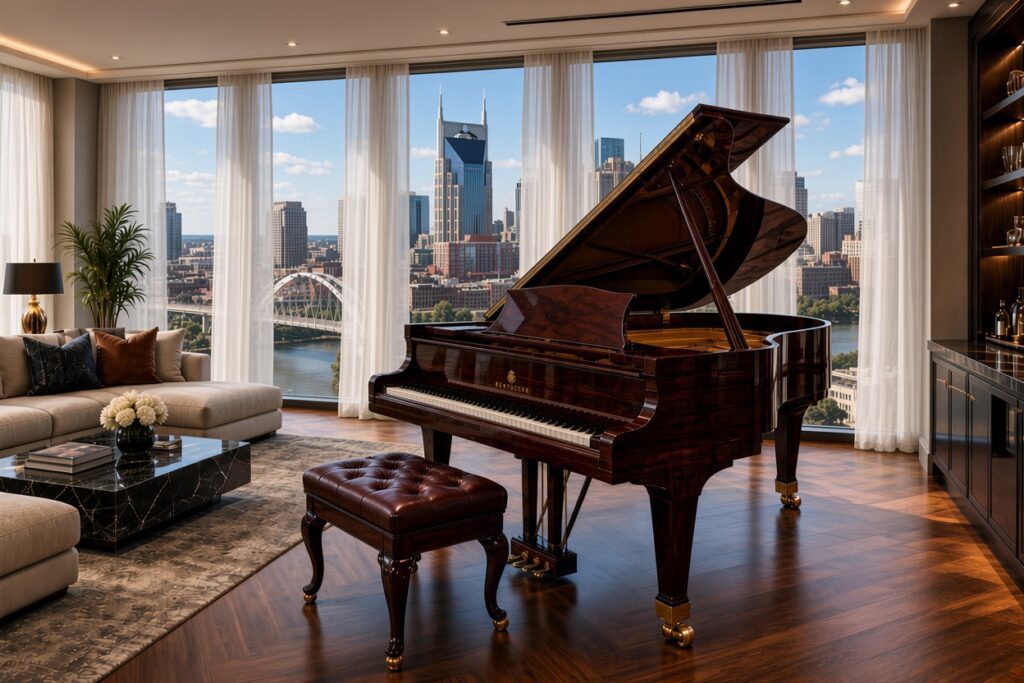
When I look back at my musical journey, it’s almost hard to believe how far it took me — from sitting at a piano as a child and playing This Little Light of Mine in Children’s Church, to eventually performing live on keyboards alongside Grammy-winning artists. In between those two moments were decades of church music, hymns, gospel songs, contemporary Christian music, countless hours at the piano, and eventually the discovery of what I could do with synthesizers, sequencers and programmable keyboards. It was a journey of discovering not only the music I loved, but also the instruments through which I could best express it.
The First Performance
“This Little Light of Mine”
My first “public performance” actually happened when I was just four years old, when I played This Little Light of Mine in Children’s Church. I shared a little more about that experience in a previous Monday Memories post. Needless to say, my four-year-old rendition was considerably less elaborate than the version you’re about to hear! Mark Burnell’s arrangement is a little more fancy than what I was playing back then. 😄 But in its own little way, that simple song at a Children’s Church piano was the beginning of a musical journey that would eventually take me from playing hymns to programming keyboards and performing live alongside Grammy-winning artists.
Apple Music subscribers: Sign in above to hear the full song.
🐟
The Hymn Years
My childhood and early teenage years were largely spent at the piano playing the great hymns of the church. As my playing developed, I began adding more dynamics, flourishes and dramatic touches, eventually developing the kind of big, expressive style that I loved hearing from piano virtuoso Dino Kartsonakis. Before long, I was patterning some of my own arrangements after his style and trying to recreate that same sense of excitement at the piano. Those fortunate enough to hear me perform during those years would have heard arrangements not too unlike these:
Apple Music subscribers: Sign in above to hear the full song.
Apple Music subscribers: Sign in above to hear the full song.
Apple Music subscribers: Sign in above to hear the full song.
During those hymn-playing years, I also started becoming friends with people connected to the Gaither world, which opened up another musical influence for me. Some of the songs associated with the Gaithers and the Southern Gospel tradition were showing up in the hymnals, too — songs like Soon and Very Soon. That gave me a wonderfully convenient rule for expanding my repertoire: if the newer music was also in the hymnal, then it was fair game! So I began incorporating some of those newer gospel songs alongside the traditional hymns I had been playing, gradually broadening my musical vocabulary without straying too far from the music I already knew and loved. As was often the case, my arrangement was heavily influenced by Dino’s.
Apple Music subscribers: Sign in above to hear the full song.
🐟
Breaking Out of the Hymnal
Then, at age 16, I finally broke the rules — at least my own rules! I added How Majestic Is Your Name to my piano repertoire. Written by Michael W. Smith and recorded by Sandi Patty, the song was something completely different from the hymns and gospel songs that had made up most of my performance repertoire to that point. And unlike Soon and Very Soon, it wasn’t something I had discovered because I found it in a hymnal. This time, I was deliberately reaching beyond the hymnal.
How Majestic Is Your Name was the very first “non-hymn” song I added to the set list for my piano performances, and in retrospect, it was a pretty significant moment in my musical development. I was beginning to realize that Christian music didn’t have to fit neatly between the covers of a hymnal for me to want to play it. There was a whole new world of contemporary Christian music emerging, and I was ready to start exploring it.
As my musical style continued to develop, some of my pastor friends would occasionally introduce me with a description that always made me smile: “A cross between Dino Kartsonakis and Michael W. Smith.” Looking back, that’s actually a pretty good description of the two musical worlds I was bringing together — Dino’s influence on my instrumental playing and arranging, and Michael W. Smith’s influence on the contemporary Christian music I was beginning to incorporate into my repertoire.
At 16, of course, I wasn’t thinking about any of that. I simply heard a song I loved, learned how to play it, and put it on my set list. Looking back now, I can see that I had just opened the door to an entirely new chapter.
Here’s Dino’s take—surprisingly similar to my own—on Michael W. Smith’s song.
Apple Music subscribers: Sign in above to hear the full song.
🐟
The Piano Goes International
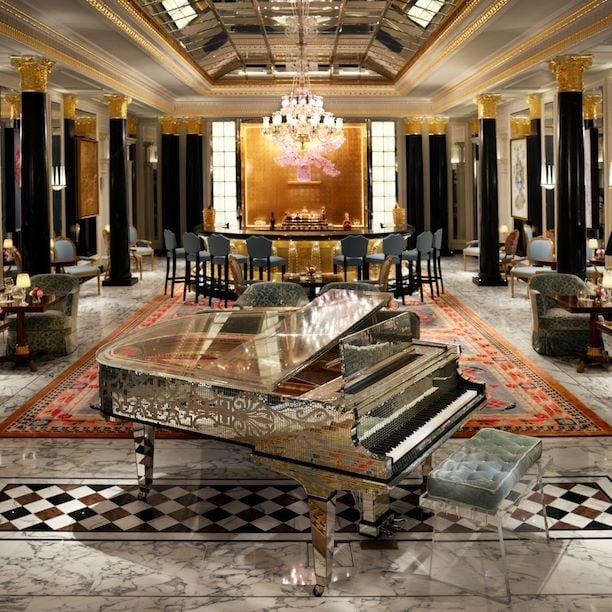
There was another rather unexpected chapter in my musical journey that happened while I was still in high school. One summer, when I was seventeen, I took a family trip to the United Kingdom, and that trip turned into an opportunity to do something I certainly never expected to be doing as a teenager: I ended up playing at the piano bars of several hotels in England and Scotland.
Here is Moscow’s own Gamazda performing piano versions of a few of the songs that became favorites of mine that summer as I played in those piano bars.
Apple Music subscribers: Sign in above to hear the full song.
Apple Music subscribers: Sign in above to hear the full song.
Apple Music subscribers: Sign in above to hear the full song.
Of course, me being me, I would always make sure to work a few songs into the evening that gave everyone a little idea of the kind of music I usually played. I would introduce that part of the evening by saying something like, “Let me share the kind of stuff I usually play,” and then, “This is currently a really big hit back home.” The first song I would start with was Amy Grant’s “Sing Your Praise to the Lord,” which had reached #1 on the Christian music charts. I would then launch into my own piano version, including that great opening piano passage that always gave me a chance to really play. Some people in the room were familiar with it, while others clearly weren’t, but it was always well received—and it was a little way of bringing a piece of the music that meant so much to me into that piano-bar setting. My version is long gone, of course, so for the sake of this post, I’ll let Amy Grant herself provide the soundtrack. The original recording brings back exactly what I was trying to share with those audiences all those years ago.
Apple Music subscribers: Sign in above to hear the full song.
I also often took the opportunity to share what I called “the first song I ever performed in public” and play a somewhat elaborate version of “This Little Light of Mine.” By this time, my performance of the song had evolved into something very much like the version I present today through Mark Burnell. As I recall, once people recognized what I was playing, the song was always well received, and many would sing along.
Apple Music subscribers: Sign in above to hear the full song.

One of the places where I played was the Carlton Highland Hotel in Edinburgh, Scotland. At the time, it was known as the Carlton Highland, and being able to sit down at a piano and play in a hotel in Edinburgh was a pretty remarkable experience for a kid who had grown up playing hymns in church.
It was a completely different musical environment from what I was accustomed to back home. I wasn’t sitting at my church piano playing hymns or contemporary Christian songs; I was suddenly playing in piano bars in another country, adapting to the setting and entertaining people who had no idea who I was or where I had come from.
Looking back, that experience was another little glimpse of where music would eventually take me. I was still years away from the sophisticated keyboard programming and sequencing that would become such a big part of my musical life, but I was already discovering that a piano could open doors to places I never expected to go.
And as it turned out, that wouldn’t be the last time music would take me around the world.
🐟
Bringing Bible Study to the Piano
Once I had taken that first step beyond the hymnal with How Majestic Is Your Name, I began to realize that there was a lot more music from my own church experiences that could become part of my piano repertoire. Some of that music came from my years of attending various Bible studies, where I heard songs that were very different from the traditional hymns I had grown up playing.
I began adding some of those songs to my piano performances. I had heard these songs so many times in Bible Study that I already knew the music well. Now I was taking those familiar songs and finding ways to turn them into piano arrangements of my own.
There was something especially enjoyable about that process. I wasn’t simply playing the songs the way I had heard them at Bible Study; I was beginning to think more like an arranger. I would listen to the instrumental parts and rhythms I had heard, figure out what worked at the piano, and then try to recreate some of that musical energy with two hands and a piano.
Looking back, this was another important step in the evolution of my musical style. How Majestic Is Your Name had opened the door to contemporary Christian music, and these Bible Study songs helped push that door a little farther open. My repertoire was no longer limited to the traditional hymns I had grown up playing. I was discovering that the music I was hearing around me — in church, at Bible Study, and through the Christian artists I admired — could all find a place in my piano performances.
Here are a few examples of those Bible Study songs, as performed by Dino, that I incorporated into my piano playing during that era:
Apple Music subscribers: Sign in above to hear the full song.
Apple Music subscribers: Sign in above to hear the full song.
Apple Music subscribers: Sign in above to hear the full song.
🐟
When the Piano Became the Keyboard
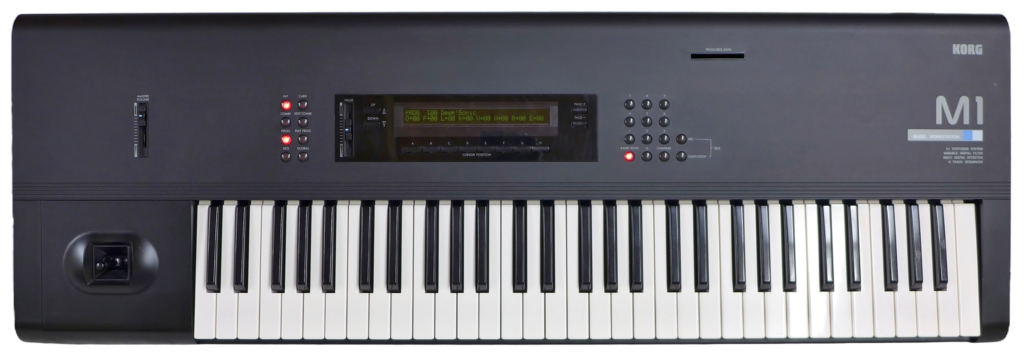
As my musical repertoire continued to expand beyond traditional hymns into contemporary Christian music and other music that was popular in the church, my instrument began to change as well. I moved from simply playing the piano to programming keyboards, and that opened up an entirely new world of possibilities. Instead of playing a song with just two hands and a piano, I could program an entire arrangement — strings, brass, synthesizers, drums, bass and other instrumental parts — and then leave myself a piano or keyboard part to perform live. My piano performances gradually migrated into keyboard performances, and I found myself spending as much time creating the arrangement as I did learning how to play it.
This was where I really began to develop my own instrumental prowess. I became fascinated with the process of taking a piece of music and figuring out how to recreate an entire orchestration on a keyboard. Each instrument had to have its own part, its own entrance and its own place in the arrangement, while I still had to have something meaningful to play myself. The keyboard wasn’t just an instrument anymore; it had become an entire band and orchestra under my fingertips.
Here’s a good example of the kind of music I was programming during this period. I had heard arrangements by Dino Kartsonakis that inspired me, and I began developing my own versions using the same basic philosophy: take a familiar melody, surround it with a much larger instrumental arrangement, and turn it into something that could be performed by one person on a keyboard. This was the point where I was no longer simply trying to sound like a piano player. I was becoming a keyboard arranger and programmer.
Here is a perfect example. I took Dino’s dynamic, fully orchestrated version of this American classic and recreated every instrument, every note, and every nuance on a single keyboard. And I had an absolute blast doing it!
Apple Music subscribers: Sign in above to hear the full song.
What started with a Korg M1 keyboard all those years ago has progressed exponentially as both keyboard technology and my own skillsets have grown. These days, my keyboard of choice is a Korg XE20 88-key powerhouse, complete with piano-weighted keys, amazing piano sounds, and hundreds of exceptional instrument and drum sounds. Unless I’m playing someone else’s keyboard or piano, of course!
🐟
The Joy of Sandi Patty
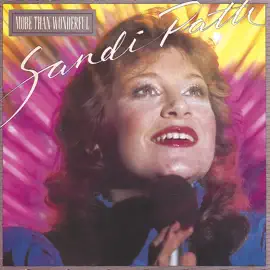
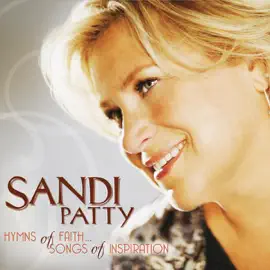
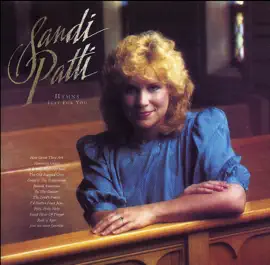
Another important musical influence came through a dear friend who loved performing Sandi Patty songs. Through that friendship, I began discovering just how much of Sandi’s repertoire could lend itself to the kind of keyboard arrangements I was developing. Before long, I was adding some of those songs to my own set lists.
Songs like Majesty and Let There Be Praise gave me another opportunity to stretch what I could do with the keyboard. Sandi’s music had the kind of sweeping melodies and dramatic arrangements that gave me plenty of room to build something substantial around them. I could program the orchestration, create the instrumental layers and then sit down at the keyboard and become the live performer within the arrangement.
Looking back, I realize how much my repertoire had changed by this point. I had started with the traditional hymns I knew as a child, cautiously ventured beyond the hymnal with How Majestic Is Your Name, and then discovered that the possibilities were almost limitless once I had a keyboard capable of becoming an entire ensemble. Sandi Patty’s music became another important piece of that musical evolution — and a reminder that sometimes the people we meet along the way introduce us to music that becomes part of our own story.
Here again is Dino, performing three Sandi Patty songs in arrangements that I replicated on the keyboard.
Apple Music subscribers: Sign in above to hear the full song.
Apple Music subscribers: Sign in above to hear the full song.
Apple Music subscribers: Sign in above to hear the full song.
🐟
Taking the Keys to the Next Level
As my programming, arranging and sequencing skills continued to develop, the music I was creating kept reaching higher and higher levels of complexity. This was the period when I began programming and arranging some of the most impressive Christian arrangements I had ever attempted, but my work with the keyboard wasn’t limited to Christian music. I also began working with Top 40 cover bands in the Atlanta area, arranging, sequencing and programming music for those bands as well. The same skills I had developed recreating elaborate Christian arrangements suddenly had an entirely different application: I could take the music people were hearing on the radio and build the keyboard parts and sequences needed to reproduce it on stage.
That became something of a recurring theme throughout my musical life. Over the years, I was fortunate to encounter more and more opportunities to arrange, program, and sequence keyboard music for increasingly high-profile musical projects, spanning a wide range of artists, styles and musical settings. It seemed that just about every year brought another opportunity to learn something new, tackle more complicated arrangements, or find another way to make a keyboard sound like an entire musical ensemble.
But during my Christian performance years, there were two particular arrangements that represented just how far I had come in trying to emulate my greatest keyboard influence, Dino Kartsonakis: How Excellent Is Thy Name and Proclaim The Glory Of The Lord. These were among the arrangements where I really felt like I had captured the Dino sound I had been chasing for years.
As with so many of Dino’s recordings that inspired me, my goal wasn’t simply to play the melody or approximate the arrangement. I wanted to recreate the entire production on the keyboard — programming and sequencing the individual instrumental parts so that, when I performed the songs live, the result sounded like the recording I had studied so carefully. People who saw me perform during the late 1980s or early-to-mid 1990s would have heard arrangements like these. In many ways, these two songs represent the culmination of the musical journey that began with a little boy playing hymns at the piano and eventually led me to becoming a keyboard programmer and arranger.
Apple Music subscribers: Sign in above to hear the full song.
Apple Music subscribers: Sign in above to hear the full song.
🐟
International Recording Artist
By the early 1990s, the programming, arranging, and sequencing work I had been doing had reached a point where it took on a life of its own. A pastor friend of mine organized a very special project in which I recorded an instrumental Christian keyboard album featuring dynamic, fully orchestrated versions of the kinds of songs I had been developing over the years.
What made the project especially memorable was what happened with the finished album. A copy was sent to every missionary serving with the Southern Baptist Foreign Mission Board at the time. The albums contained a dozen praise songs that could easily be sung along with in a worship service, so these weren’t simply recordings to listen to—they could actually be used as part of worship. Those albums went out all over the world, finding their way into the hands of missionaries serving in countries and places I would never have imagined reaching with my music. The thought that something I had recorded in my own home could become part of a worship service somewhere halfway around the world was pretty amazing.
And that is how I became an “international recording artist.” 😄 The album may have been recorded on my keyboards in the early 1990s, but thanks to those missionary copies, the music really did make its way around the world. And these missionaries weren’t just listening to the songs—they were actually using those praise songs in their worship services. So somewhere out there, people were singing songs I had recorded as part of their worship. That, at least in my book, definitely qualifies as international.

There was something pretty amazing about knowing that the music I had spent so many hours arranging, sequencing and recording had traveled far beyond the places where I had personally performed it. In a very real sense, the keyboard had allowed me to make music that could go places I couldn’t.
🐟
From the Keys to the Stage
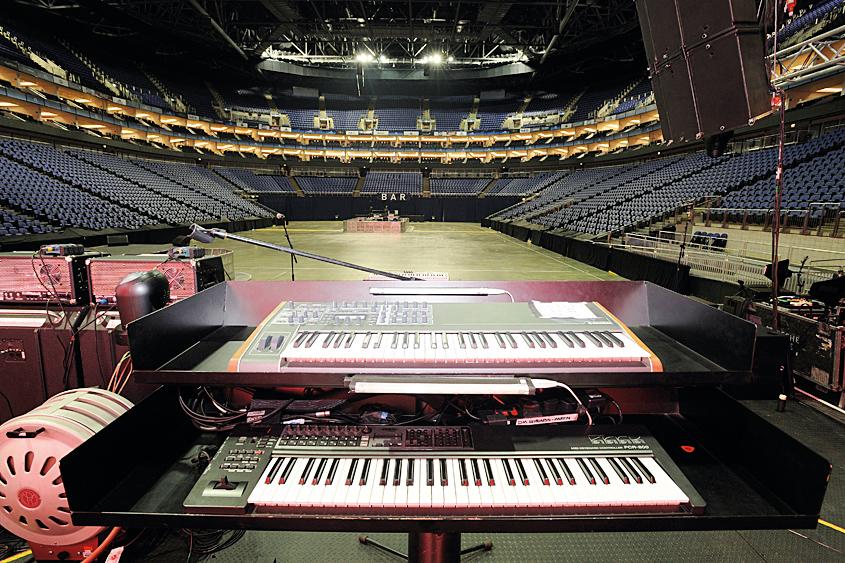
Over the years, my continued work with programming and sequencing opened the door to some of the most amazing opportunities of my life: actually performing live on stage with professional artists. I can tell you that the opportunity to stand on those stages and contribute musically to performances by artists I had admired for years has been one of the great privileges of my life.
And music has often given me a reason to travel. I’ve had the opportunity to combine the two things I love — seeing the world and making music. I’ve played in London, England; Edinburgh, Scotland; Dublin, Ireland; and several other cities around the world, as well as here in Nashville and a number of cities here in the United States.
When I think about that list, it still amazes me a little. The journey that began with a four-year-old sitting at a piano in Children’s Church eventually took me to stages and musical settings thousands of miles from home.
And in many ways, those experiences brought the whole journey full circle. The little boy who started by playing hymns eventually discovered contemporary Christian music, learned to arrange and sequence entire instrumental productions, and spent years studying the sounds of musicians like Dino Kartsonakis. All of that time behind the keyboard ultimately became preparation for stepping onto a stage and actually performing live with Grammy-winning artists.
Even today, the journey isn’t over. I continue to arrange and sequence music for high-profile projects whenever the opportunity comes along, and whenever time permits, I still love the opportunity to step onto a stage and play. The technology has changed, the music has changed, and my own musical journey has taken me places I never could have imagined as that four-year-old at the piano. But the basic joy is still the same: sitting behind the keys and making music.
From This Little Light of Mine in Children’s Church to performing live alongside professional artists — and eventually taking those same keys around the world — it’s been quite a ride. And when I look back at all those years, I realize that the piano wasn’t simply an instrument I learned to play. The keyboard became the way I found my musical voice.
🐟