
Remembering Carman
🐟
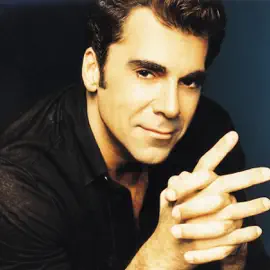
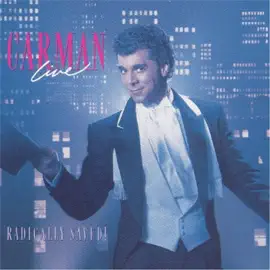
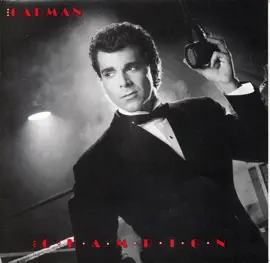
The first time I met Carman was in 1998, at the very first AtlantaFest, held at what was then called Atlanta International Speedway. I would have the opportunity to cross paths with him many times over the years, and eventually I came to know not simply the entertainer who stood on enormous stages in front of enormous crowds, but a very solid Christian who was never afraid to speak his mind. He also respected those who were willing to do the same. But this isn’t really a story about my friendship with Carman, or even about what I may have gained from knowing him. This is a story about Carman himself—the man, the music, and the ministry that made him one of the most remarkable figures Christian music has ever produced.
Carman passed away on February 16, 2021, at the age of 65, following a battle with cancer. By then, the man who had spent decades filling stadiums, challenging the Christian music industry to think bigger, and telling millions of people about Jesus had already left behind a legacy that could not be measured simply in record sales or concert attendance. The official Carman legacy describes him as a man whose greatest achievement was winning souls to Christ—and perhaps that is the most fitting way to remember him. Carman is no longer here to take the stage himself, but the music, the ministry, and the memories remain.
Even his name was uniquely Carman.
His full name was Carman Domenic Licciardello—pronounced, roughly, lee-chee-ar-DEL-lo. But you rarely heard him introduce himself that way. I once heard Carman explain why: “I never tell people my last name because I don’t want people trying to prophesy on my name!” That was Carman—quick with a joke, completely comfortable being himself, and never particularly interested in fitting somebody else’s definition of what a Christian artist was supposed to look or sound like.
And that may be the best place to begin when remembering him.
Carman was never merely a Christian recording artist. He was an event.
Long before Christian music had the enormous infrastructure it has today, Carman understood something that few others seemed to grasp: if you wanted to reach people, you had to go where people were. And so he went everywhere.
He appeared on stages at Christian festivals and concerts, but he also took the Gospel into places where a Christian artist might not have been expected to belong. During Spring Break in Daytona Beach, Carman would set up his ministry right in the middle of one of the most unlikely environments imaginable—between Playboy and MTV. He wasn’t waiting for people to come looking for Christian music. He was taking Christian music to them.
Then there were the stadiums.
Carman became the Christian artist who could fill venues normally associated with the biggest names in popular music. He performed before tens of thousands in Johannesburg, South Africa, and later drew 71,132 people to a free concert at Texas Stadium in 1994. Another Carman event in Chattanooga drew an estimated 80,000 people. His official ministry describes him as holding the world record for the largest audience to see a single Christian artist, while contemporary accounts have likewise described his Texas Stadium event as the largest Christian concert of its time.
And yet, for all the numbers, Carman himself understood that the numbers weren’t the point.
The stadiums were the platform. The songs were the vehicle. The spectacle got people’s attention. But the ministry was about something much bigger: introducing people to Jesus Christ.
Perhaps nowhere was that more evident than in South Africa. In August 1993, more than 50,000 people gathered in Johannesburg for Carman’s Music for Peace crusade. He regarded that event as one of the most significant concerts of his career, and it represented something bigger than simply another entry on an impressive list of attendance records. Carman had taken his particular brand of music, evangelism, drama and celebration halfway around the world—and thousands of people showed up to hear the message.
That was Carman.
He could sing. He could rap. He could preach. He could act. He could make you laugh. He could put on a production unlike anything else happening in Christian music. He could stand before a stadium full of people and command their attention—and then turn that attention toward Christ.
And perhaps more than anything else, Carman refused to apologize for any of it.
To understand why Carman mattered, we have to look beyond the costumes, the choreography, the music videos, the stadiums and the sheer spectacle. We have to go back to where his story began, examine the music he created, and understand the ministry behind the man.
Because Carman wasn’t simply one of the biggest names in Christian music.
For a time, he was Christian music’s biggest stage.
🐟
🎬Featured Videos
“God In America Again”
Apple Music subscribers: Sign in above to hear the full song.
We could have started our remembrance of Carman with any number of songs. There are the songs that filled arenas, the songs that introduced an entire generation to Carman’s unique blend of music and ministry, and the songs that became synonymous with the enormous Christian concerts he created. But we have chosen to begin with “God in America Again” for a very specific reason. This song represents something that remained deeply important to Carman throughout his ministry—and, especially toward the end of his life, one of his most important wishes: that God would once again be elevated to His rightful place in American culture and, more importantly, in the lives of the American people.
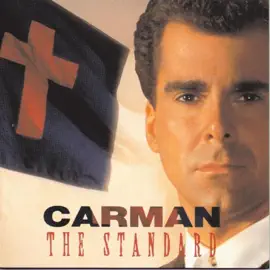
Originally released in 1993 on The Standard, “God in America Again” was unmistakably Carman. It was part song, part sermon, part history lesson and part call to action. Carman looked at what he believed was happening to America and asked a question that became the central message of the song: What happens to a nation when it removes God from the center of its life? The song was never intended to be subtle. Carman rarely was. He believed the Church needed to speak boldly, and he believed the answer to America’s problems was ultimately not political, but spiritual. The song repeatedly points back to Jesus as the only hope for the country.
More than three decades later, Carman’s message remains as direct as it was when he first delivered it: America needs God again. Carman believed that the answer to America’s deepest problems was not found in politics, government or cultural institutions, but in a return to God and, ultimately, to Jesus Christ. He believed that a nation could change when its people changed—that when hearts turned back to God, families could be strengthened, communities could be transformed and America itself could once again recognize God as the foundation upon which it was built. This wasn’t a political campaign for Carman. It was a spiritual call to a nation he loved.
That is why this is the first Carman video we are sharing.
Carman spent his career standing on enormous stages, but the stage was never the destination. The destination was always the message. He wanted people to know Jesus. He wanted Christians to live their faith boldly. And he wanted a nation that, in his view, had pushed God increasingly toward the margins to remember who God is and what it means to place Him back at the center.
So as we remember Carman, we begin with the message he was still carrying near the end of his life: God belongs at the center—not merely of our churches, not merely of our music, but of our lives.
And perhaps there is no better way to begin remembering Carman than by letting Carman say it himself.
🐟
“Sunday School Rock”
Apple Music subscribers: Sign in above to hear the full song.
After beginning our remembrance with the weight and urgency of “God in America Again,” it seems only appropriate that we lighten things up a little. Because if there was one thing Carman understood, it was that sharing the Gospel didn’t mean Christians had to be serious all the time. Carman had a fun side—and he wasn’t afraid to show it.
“Sunday School Rock,” released on Carman’s 1993 album The Standard, may be one of the best examples. The song takes the familiar language of Sunday school and turns it into a full-blown 1950s rock-and-roll production, complete with Carman playing the role of the swaggering teacher and a music video that deliberately looks like an old television dance show.
And that’s what made Carman so entertaining. He could take something as fundamental as teaching people about the Bible, throw it into a completely unexpected musical setting, and somehow make it stick. “Sunday School Rock” moves through everything from Genesis to Revelation, Christian living and spiritual gifts, but the entire lesson keeps coming back to one wonderfully simple declaration: “I love Jesus.”
There was also a little bit of Carman himself in the humor. He could poke fun at his own tough-guy image, ham it up for the camera, dance, gesture and play the character without ever losing sight of what he was actually trying to communicate. A contemporary review of The Standard even noted that Carman had always loved experimenting with different musical forms—rap, rock, pop, R&B and more.
That was part of Carman’s genius. He didn’t believe Christian music had to be boring to be meaningful. He could preach a serious message in one song and then turn around and make an entire audience laugh in the next. He understood that joy is part of the Christian life, too—and sometimes the best way to get someone to remember a lesson is to make sure they have a really good time learning it.
So after “God in America Again” reminded us of the seriousness of Carman’s calling, let’s have a little fun.
Class is in session. Sunday school is throwing down.
🐟
“Awesome God”
Apple Music subscribers: Sign in above to hear the full song.
And perhaps no song captures Carman’s heart for Jesus more simply than “Awesome God.” In this live performance, beyond the spectacle, the energy, and the unmistakable Carman style, what comes through most clearly is his genuine joy in proclaiming who Jesus is. This is Carman at his most worshipful—completely unashamed, completely engaged, and clearly delighted to be telling a stadium full of people about an awesome God.
🐟
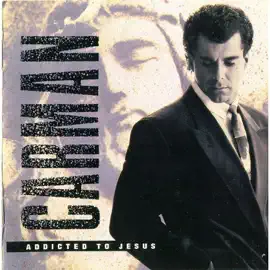
“Addicted to Jesus” – with DC Talk
Apple Music subscribers: Sign in above to hear the full song.
By the 1990s, Carman was already an established superstar in Christian music. But one of the things that makes his legacy so interesting is that he never seemed content to simply repeat what had worked before. He was willing to experiment, to embrace new sounds, and to work with artists who represented the next generation of Christian music. “Addicted to Jesus” is a terrific example of that.
The song features DC Talk, bringing together Carman’s larger-than-life evangelistic style with the energy and hip-hop-influenced sound that was helping redefine contemporary Christian music. Rather than seeing the younger artists as competition, Carman welcomed them onto the same stage. And that says something about the man: he understood that the mission was bigger than any one artist, musical style or generation.
“Addicted to Jesus” also captures something Carman understood exceptionally well—the power of a memorable phrase. The word addicted is deliberately provocative. Carman wasn’t talking about something casual or occasional. He was using the language of addiction to describe an overwhelming desire for Jesus Christ: a life so completely captivated by Christ that following Him becomes more than something we do on Sunday. It becomes who we are.
And then there is the video itself. Carman was always a visual performer, and he understood that a music video could communicate the message in ways that went beyond simply putting a camera in front of a band. Bringing Carman and DC Talk together made the video feel like a meeting of generations—and a reminder that Christian music was changing rapidly while its central message remained the same.
That may be one of the most important things to remember about Carman. He wasn’t afraid of change. He could move from rock and roll to rap, from theatrical productions to contemporary collaborations, and from stadium evangelism to music videos featuring some of the newest names in Christian music. The sound could change. The presentation could change. The audience could change.
But the message didn’t.
Jesus was still the reason.
🐟
“I Love Jesus”
“I Love Jesus” is a great example of how Carman’s performances were about far more than simply standing on a stage and singing songs. He knew how to draw a crowd into the experience, turning the audience from spectators into participants and giving them an opportunity to say, sing, and celebrate the message for themselves. That interaction was a vital part of Carman’s ministry: he wasn’t simply trying to perform a Christian song for the crowd—he was trying to make the message of Jesus resonate with the crowd, until the people in front of him were no longer just hearing the message, but joining in with it.
🐟
“Nothing But The Blood Of Jesus”
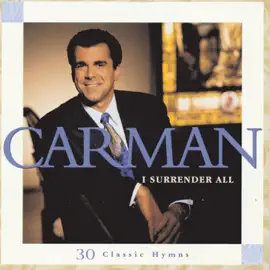
While Carman and I may not have agreed on everything, there was one thing on which we agreed 100 percent: hymns deserved to always have a place in modern worship. Carman never wavered on that conviction, and his dedication to these ancestral masterpieces of faith is evident throughout his many recordings of the great hymns of the Church. He didn’t treat them as relics from another generation, but as living expressions of faith that still had something to say to Christians today. In “Nothing But the Blood of Jesus,” Carman brings together a medley of beloved hymns with the same passion and reverence that characterized so much of his ministry. For Carman, moving Christian music forward never meant leaving its musical heritage behind.
🐟
“Happy Birthday Carman!”
Before we bring our musical remembrance of Carman to a close, we wanted to take just a few seconds to remember the man himself. This brief “Happy Birthday Carman” video begins with Carman as a baby and then moves through photographs and images from the many stages of his life, eventually bringing us to the Carman so many of us remember from the stage. It’s only 30 seconds long, but there is something wonderfully fitting about watching an entire life pass before us in moments. Behind the costumes, the concerts, the music videos, the stadiums and the ministry was simply a man who was born, grew up, found his calling, and spent his life trying to tell people about Jesus. Before we move into “1955” and Carman’s hope for revival, let’s take a moment to simply say: Happy birthday, Carman.
🐟
“1955”
Apple Music subscribers: Sign in above to hear the full song.
For our final Carman video, we return to a subject that was at the very heart of his ministry: revival.
“1955” is more than a song about a particular year. In Carman’s telling, 1955 represents a time when revival was breaking out, when churches were filled, when people were hungry for God, and when the Gospel seemed to be woven into the fabric of everyday American life. But rather than simply sing about those days, Carman turned the song into a story—and the music video brings that story to life.
We watch as Carman comes into town and encounters the pastor of the church where a revival is being held. From there, the story unfolds, taking us into the heart of the revival itself. It’s classic Carman: part music video, part short film, part evangelistic presentation. He wasn’t content simply to stand in front of a microphone and sing about revival. He wanted us to see it.
And there is something particularly fitting about ending our musical remembrance of Carman here. Through these videos, we’ve tried to show more than simply the entertainer who could command a stadium. From Carman’s passionate plea in “God in America Again” to his recollection of revival in “1955,” Carman truly had a heart for turning this country toward Christ. Throughout his ministry, Carman was constantly asking the same question: could revival happen again in America? Carman believed it could. Along the way, these videos have given us glimpses of the many sides of Carman’s ministry—his passion, his creativity, his sense of humor, his willingness to embrace new generations, his love for the musical heritage of the Church, and the man behind it all. Now, with “1955,” we come full circle—looking back toward a time of revival while asking a question that Carman never seemed willing to stop asking: could it happen again?
Carman believed it could.
That belief was woven through virtually everything he did. He believed people could still be reached. He believed churches could still be filled. He believed Christians could still be bold. And he believed that revival wasn’t merely something to read about in the history books—it was something worth praying for, working toward and expecting God to do again.
Perhaps that’s what makes “1955” such an appropriate final chapter in our remembrance of Carman. He wasn’t simply looking backward. He was looking forward. He remembered what revival had looked like because he wanted to see it happen again.
And maybe that’s the greatest thing Carman leaves us with.
Not simply memories of the concerts, the costumes, the songs, the stadiums or the music videos.
A hope for revival.
Visit Carman’s FishWorship Artist Page
🐟