
Remembering DeGarmo & Key 🎸🎹

There are some artists who don’t simply give us great music; they help shape an entire era of Christian music. They challenge expectations, push musical boundaries, and remind us that the message of the Gospel doesn’t have to be confined to one particular sound or style. For me, DeGarmo & Key are one of those names that deserve to be remembered, celebrated, and heard by a new generation of listeners.
So, for this edition of Monday Memories, I want to look back at the remarkable story of DeGarmo & Key, a pioneering Christian rock duo whose influence extended far beyond their own recordings. They helped open doors for Christian rock, took some bold steps when the boundaries between Christian and mainstream music were still being fiercely debated, and remained committed to sharing their faith even when doing so could have cost them opportunities in the music business.
And if you remember Christian music in the late 1970s, the 1980s, and the early 1990s, there’s a good chance their music brings back some memories of your own!
Two Friends from Memphis with a Bigger Purpose
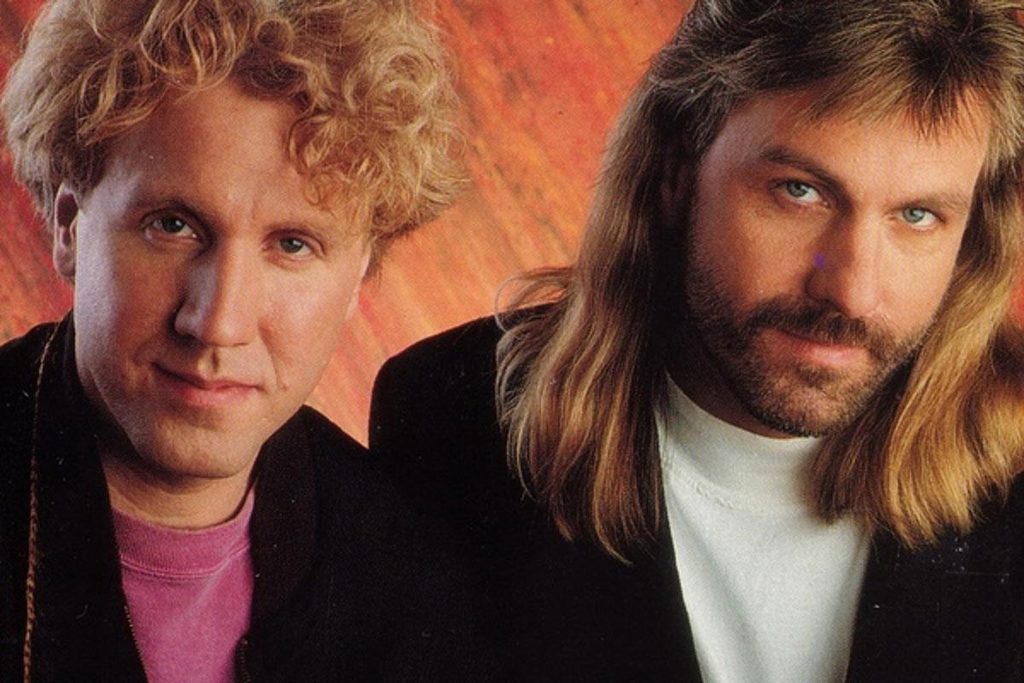
The story begins in Memphis, Tennessee, where Eddie DeGarmo and Dana Key first met as children in the first grade. Growing up in the same neighborhood, the two developed a friendship that would eventually become one of the most important partnerships in the history of contemporary Christian rock.
Music was part of their lives from an early age. Eddie gravitated toward keyboards and piano, while Dana developed into an accomplished guitarist and vocalist. They began playing together in their youth, forming bands and pursuing the dream that many young musicians share: making it in the music business.
During their high school years, they played in a secular rock band called Globe, which secured a recording deal with Hi Records. They were young, talented, and surrounded by the musical culture of Memphis, a city with an extraordinary musical heritage.
But their lives were beginning to take a different direction.
Both became involved with Youth for Christ, and their Christian faith began to reshape how they viewed their musical ambitions. Rather than simply pursuing success as rock musicians, they increasingly felt called to use their talents to share the Gospel.
That decision would ultimately change the course of their careers.
Instead of leaving rock music behind altogether, Eddie and Dana began exploring how they could bring their faith directly into the kind of music they loved. Their goal wasn’t to imitate the sounds of traditional church music. They wanted to play real rock and roll, with the energy, musicianship, and production quality of the best music being made at the time, while keeping the message of Jesus Christ at the center.
By the late 1970s, that vision had become DeGarmo & Key.
Their debut album, This Time Thru, arrived in 1978, establishing the foundation for what would become a groundbreaking career. Although the group was built around Eddie and Dana, DeGarmo & Key also featured other musicians throughout its history, developing into a full rock band capable of delivering a powerful live sound.
Their early music was rooted in blues-influenced rock, driven by electric guitars, keyboards, and Dana’s distinctive vocals. They weren’t afraid to sound like a rock band because, well, they were a rock band!
What made them different was the purpose behind the music.
Pioneers in a Changing Christian Music Scene
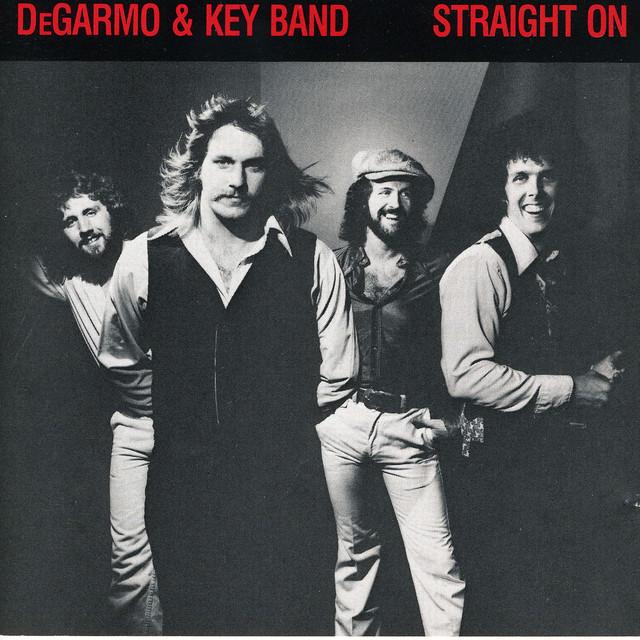
To appreciate the significance of DeGarmo & Key, it’s worth remembering what the Christian music landscape looked like when they began.
Contemporary Christian music was growing, but the idea of playing hard-edged rock music while openly proclaiming Christian faith was still controversial in many circles. Some listeners embraced it enthusiastically, while others questioned whether electric guitars, loud drums, and rock concert performances belonged in Christian ministry at all.
DeGarmo & Key weren’t interested in watering down their sound to satisfy every critic.
They believed rock music could be a legitimate vehicle for communicating the Gospel, and they set out to demonstrate that Christian musicians could compete musically with artists in the mainstream market without abandoning their convictions.
Their 1980 album, This Ain’t Hollywood, became a landmark release, earning recognition as the first Christian rock album nominated for a Grammy Award. That was a significant milestone for a genre that was still fighting for broader recognition.
The achievement wasn’t simply about an award nomination. It helped demonstrate that Christian rock could be taken seriously as music in its own right.
DeGarmo & Key continued recording and touring, building an audience that appreciated both their musical abilities and their unapologetically Christian message. Their concerts weren’t merely performances designed to entertain. Ministry was central to what they were doing, and Dana frequently spoke directly to audiences about faith, salvation, and the importance of a personal relationship with Jesus Christ. Altar calls were often part of their shows.
In other words, they weren’t just putting Christian words into rock songs. They were using rock music to reach people with a message they believed could change lives.
And they were willing to take that message wherever the music could carry them.
Taking Christian Rock onto MTV
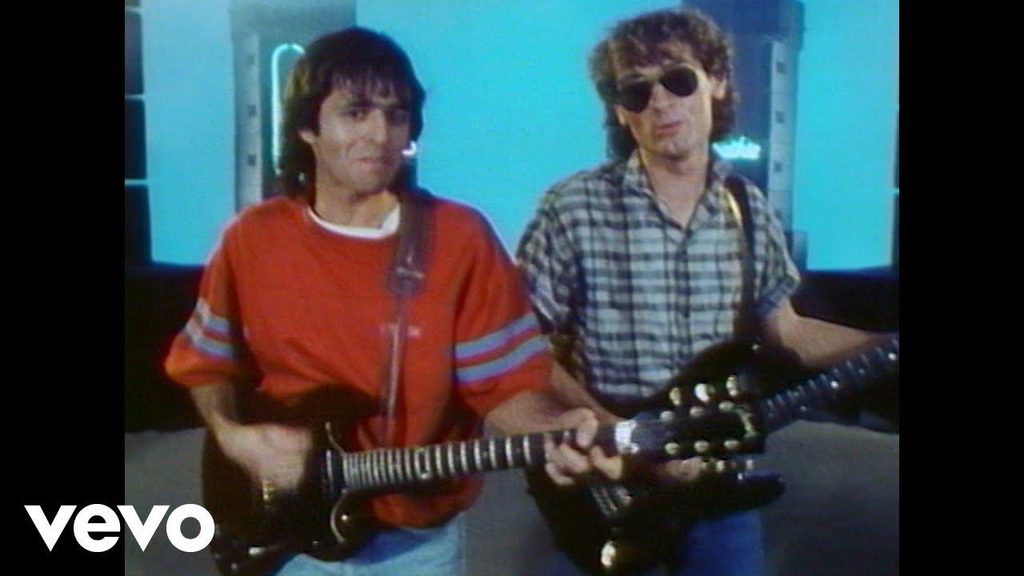
One of the most memorable chapters in the DeGarmo & Key story came during the music-video revolution of the 1980s.
As MTV grew into a major force in popular culture, music videos became an increasingly important way for artists to reach audiences. But Christian musicians faced a particular challenge: Would a mainstream music television network give a Christian rock band a place in its regular rotation?
DeGarmo & Key helped break through that barrier.
Their song “Six, Six, Six,” from the album Communication, became part of a historic moment when its music video entered MTV’s regular rotation in 1985. The band is widely recognized as the first American Christian group to achieve that distinction.
The story wasn’t entirely smooth. The original video drew controversy and was removed from rotation amid concerns about its content. MTV had also misunderstood the song’s message, which was intended as a warning about evil rather than an endorsement of it. The video was subsequently edited, and the revised version helped secure the band’s place in music-video history.
Think about what that meant at the time.
MTV was one of the most influential cultural platforms of the decade. For a Christian rock band to break into that environment was a major accomplishment, particularly when their music dealt openly with spiritual themes that weren’t always comfortable for mainstream audiences.
DeGarmo & Key demonstrated that Christian rock didn’t have to remain isolated from the broader music world. They could enter that world, play by the musical standards of the day, and still stand firmly behind their message.
And they weren’t finished pushing boundaries.
Changing Sounds, Unchanging Convictions
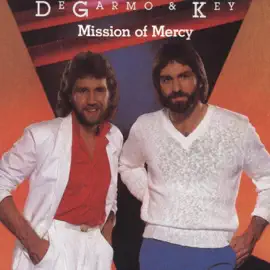
One of the interesting things about DeGarmo & Key is how their music evolved over the years.
Their early recordings leaned heavily into guitar-driven rock, but as the 1980s progressed, they incorporated more keyboards, synthesizers, and contemporary pop-rock production. The result was a sound that could be more accessible to radio audiences while still retaining the band’s identity.
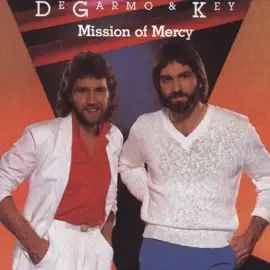
Their 1983 album Mission of Mercy helped mark this period of transition, and the success of “Let the Whole World Sing” brought them greater exposure.
The shift wasn’t without controversy. Some longtime listeners preferred the harder-edged sound of the band’s earlier work, while others welcomed the more polished production and catchy hooks.
But the change reflected a practical reality for working musicians. If they were going to continue supporting themselves and their families through full-time music ministry, they needed to reach audiences and make records that could compete in an increasingly crowded market.
They experimented with different sounds, but their commitment to their Christian message remained consistent.
Albums such as Communication and Commander Sozo and the Charge of the Light Brigade showcased their willingness to embrace the sounds of the decade. Later, with Streetlight in 1986, they returned to a more guitar-forward rock approach.
And that brings us to another revealing chapter in their story.
As the band began attracting interest from the mainstream music industry, they faced opportunities that many artists would have found difficult to resist. A relationship with Capitol Records brought the possibility of reaching an even larger audience.
However, according to the band’s own account of events, that opportunity ultimately ended after executives witnessed the group performing live. Dana continued to preach and give an altar call as he normally did, and the band’s relationship with Capitol was subsequently terminated.
Whether one agrees with every decision involved, the episode illustrates the priority Eddie and Dana placed on their ministry.
They weren’t opposed to reaching a mainstream audience. In fact, they worked hard to do precisely that. But they weren’t willing to separate their music from their faith simply to make themselves more commercially acceptable.
Their position was clear: the music was the vehicle, but the message was the mission.
Songs That Made a Lasting Impression
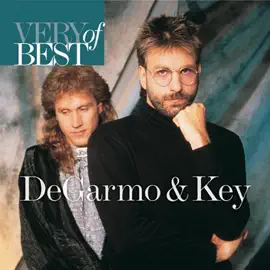
Throughout their career, DeGarmo & Key gave Christian music listeners an impressive catalog of songs that combined strong melodies, energetic performances, and direct spiritual themes.
“Let the Whole World Sing” celebrated the call to proclaim God’s glory. “Every Moment” offered an encouraging reminder of God’s presence in everyday life. “Casual Christian” challenged believers to examine whether their faith was something they genuinely lived or merely something they claimed. And “Boycott Hell” delivered its message with the kind of boldness that made the band so distinctive.
They could write songs that encouraged, songs that challenged, and songs that rocked. Their music wasn’t limited to a single emotional register or musical approach.
Over the years, they released a succession of albums, toured extensively, and helped establish a foundation upon which later generations of Christian rock musicians could build. Their influence extended beyond their own audience, contributing to the wider acceptance of contemporary Christian rock as a serious musical genre.
Their story also intersected with that of other artists who would become major names in Christian music. DeGarmo & Key toured with artists including Amy Grant, and their experience and willingness to support emerging talent helped connect different generations of musicians. They were part of a growing movement that was expanding the possibilities of what Christian music could sound like and where it could be heard.
In 1989, they released The Pledge, an album associated with a campaign encouraging people to read the New International Version of the Bible. It was another example of the way their music and their ministry extended beyond the recording studio.
By the early 1990s, the music industry was changing, Christian rock was evolving, and the duo was approaching the end of its original run. Their final studio album, To Extremes, arrived in 1994, and Eddie and Dana brought DeGarmo & Key’s regular recording career to a close.
They had spent roughly seventeen years building a legacy that went well beyond album sales or chart positions.
In 2007, the pair reunited for special performances, giving longtime fans an opportunity to celebrate the music again. In 2010, DeGarmo & Key were inducted into the Gospel Music Hall of Fame, a fitting recognition of their lasting contribution to the genre.
Sadly, that same year brought the loss of Dana Key, who died on June 6, 2010, at the age of 56, following a pulmonary embolism. His passing was a tremendous loss to his family, friends, fellow musicians, and the many listeners who had been touched by his music and ministry.
Eddie DeGarmo continued his work in Christian music, carrying forward the broader legacy of what they had helped build together.
And that is one reason I think DeGarmo & Key deserve a place in our Monday Memories.
They weren’t simply a band from the 1980s whose songs bring back memories of another time. They were pioneers who helped change the direction of Christian music, challenged assumptions about how the Gospel could be communicated, and demonstrated that artistic excellence and a strong Christian witness could go hand in hand.
Their music still has something to say.
So, let’s turn back the clock and revisit some of those songs. Some of you may remember exactly where you were when you first heard them. Others may be discovering DeGarmo & Key for the first time.
Either way, I hope you’ll join me as we remember two friends from Memphis who took their musical gifts, their faith, and their message to the world—and left a legacy that continues to echo through Christian music today.
Let’s get the music started! 🎸🎹
“Let the Whole World Sing”
Apple Music subscribers: Sign in above to hear the full song.
“Let the Whole World Sing” is one of DeGarmo & Key’s memorable anthems of praise, capturing the duo’s desire to use rock music to spread the message of Jesus Christ. With its energetic arrangement and uplifting message, the song calls believers to lift their voices and proclaim God’s glory beyond the walls of the church. It reflects the heart of Eddie DeGarmo and Dana Key’s ministry: making Christian music that could rock just as hard as anything on the radio while encouraging listeners to share their faith boldly. It’s a fitting reminder that worship can take many musical forms, but its purpose remains the same—to bring glory to God and point others toward Him.
🐟
“Six, Six, Six”
Apple Music subscribers: Sign in above to see the complete video.
Apple Music subscribers: Sign in above to hear the full song.
“Six, Six, Six” is one of the most significant songs in DeGarmo & Key’s history, not only for its bold Christian message but also for the controversy surrounding its music video. Released on their Communication album, the song warned listeners about evil and the dangers of turning away from God. In 1985, its video became a landmark moment when DeGarmo & Key broke into MTV’s regular rotation, helping open the door for other Christian rock artists to reach mainstream audiences. The original video sparked controversy and was subsequently edited for broadcast, but the band had made its mark. Today, we’re fortunate to have the music video itself to revisit—a fascinating piece of Christian rock history that reminds us how Eddie DeGarmo and Dana Key were willing to push boundaries while standing firmly behind their faith.
🐟
“Casual Christian”
Apple Music subscribers: Sign in above to hear the full song.
“Casual Christian” is one of DeGarmo & Key’s most challenging and memorable songs, delivering a pointed message about the difference between simply claiming to follow Jesus and genuinely living out that faith. With their trademark blend of driving rock and direct, uncompromising lyrics, Eddie DeGarmo and Dana Key challenge listeners not to treat Christianity as a convenient label that can be set aside when it becomes uncomfortable. The song calls believers to move beyond Sunday-morning religion and demonstrate their commitment to Christ in their everyday choices, actions, and relationships. It’s a powerful reminder that following Jesus is more than a name we claim—it’s a life we’re called to live.
🐟
“Every Moment”
Apple Music subscribers: Sign in above to hear the full song.
“Every Moment” showcases the heart behind DeGarmo & Key’s music, reminding listeners that our relationship with God isn’t meant to be limited to Sunday services or moments when life gets difficult. Through their signature Christian rock sound, Eddie DeGarmo and Dana Key encourage believers to recognize the importance of walking with the Lord throughout the ordinary moments of everyday life. It’s a fitting reminder that faith is more than something we profess with our words—it’s something we live out in the choices we make, the love we show, and the trust we place in God. Every moment is an opportunity to draw closer to Him and let our lives reflect His presence.
🐟
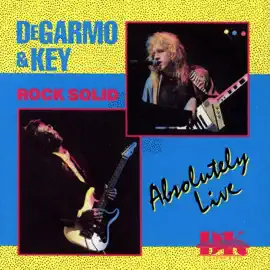
“Rock Solid”
Apple Music subscribers: Sign in above to hear the full song.
“Rock Solid” is a great example of DeGarmo & Key’s ability to combine energetic Christian rock with a message rooted firmly in biblical truth. The song points listeners toward the unshakable foundation found in Jesus Christ, reminding us that when the world around us changes and life brings unexpected challenges, our faith can stand firm because God never changes. Eddie DeGarmo and Dana Key weren’t afraid to deliver that message with powerful guitars and a hard-driving rock sound, proving that music with a strong Christian message could also bring plenty of rock-and-roll energy. “Rock Solid” remains a fitting reminder to build our lives on the One who will never let us down.
🐟
“Boycott Hell”
Apple Music subscribers: Sign in above to hear the full song.
“Boycott Hell” is one of DeGarmo & Key’s most direct and unapologetic declarations of faith, using an attention-grabbing title and their signature rock sound to deliver a serious message about eternity. Eddie DeGarmo and Dana Key challenge listeners to think about the choices they make and the eternal consequences of rejecting God’s offer of salvation through Jesus Christ. Rather than softening the message to make it more comfortable, the duo delivers it with the boldness and conviction that helped define Christian rock in the 1980s. The song is a reminder that the Gospel is about more than making life better here and now—it’s about the eternal hope we have in Christ and the importance of sharing that hope with others.
🐟
After the Music
After the Music: Two Paths, One Lasting Legacy
When DeGarmo & Key announced their retirement in 1994 after the release of To Extremes, it wasn’t the end of their ministry—it was the beginning of a new chapter. After nearly two decades of making music together, childhood friends Eddie DeGarmo and Dana Key continued serving the Christian music community, each in his own way. And in many respects, their influence was only beginning to grow.
Eddie DeGarmo: Helping the Next Generation Find Its Voice
Eddie moved into the business side of Christian music, helping build ForeFront Records into an influential label. He and his colleagues took chances on emerging artists, helping introduce a new generation of Christian musicians to the world. Among the artists associated with ForeFront were dc Talk, Audio Adrenaline, Rebecca St. James, and Stacie Orrico. Many of those artists would go on to become household names in contemporary Christian music.
After ForeFront was sold to EMI, Eddie continued working in music publishing, establishing Meaux Music before eventually leading EMI’s Christian music publishing operation. He later became president of Capitol CMG Publishing, helping shape the songs and artists heard in churches around the world. He retired from that position in 2014, leaving behind a career that extended far beyond his accomplishments as a performer. Eddie had helped open doors for countless musicians who followed in his footsteps.
Dana Key: From Rock Stages to the Pulpit
Dana’s post-band journey took him in a more pastoral direction, although music remained close to his heart. He released solo projects, including The Journey: Walking with Jesus and Part of the Mystery, and became involved with Ardent Records, continuing to encourage and develop Christian artists. He also completed his seminary education and eventually answered a calling to pastoral ministry.
In 2002, Dana founded The Love of Christ Church in the Memphis area, where he served as pastor. His passion for sharing the Gospel extended beyond music and the pulpit into missions and outreach. For Dana, the message had always mattered more than the medium—and now he had another way to share it directly with people.
Tragically, Dana’s story ended far too soon. On June 6, 2010, he died at just 56 years old from a pulmonary embolism, a sudden and devastating loss for his family, friends, church, and the Christian music community. Eddie lost not only his longtime musical partner but also the friend he had known since childhood. The loss was deeply personal, and it marked the end of any possibility of a full DeGarmo & Key reunion with both original partners.
A Legacy That Lives On
There were still moments when the band members reunited to celebrate what they had accomplished. DeGarmo & Key received recognition for their enduring contributions to Christian music, including an ASCAP Christian music honor in 2007 and induction into the Gospel Music Association Hall of Fame in 2010. Eddie, Dana, and fellow band members also performed together on select occasions after their retirement.
Looking back, I think one of the most remarkable things about DeGarmo & Key is that their legacy cannot be measured by album sales, awards, or even the number of songs we still remember. Their influence continued through the artists they encouraged, the listeners they inspired, and the lives touched by a message they never stopped believing in.
Eddie DeGarmo and Dana Key helped prove that rock music and a serious Christian faith could stand together on the same stage. And even after the final notes of DeGarmo & Key had faded, the music—and the mission behind it—continued.
🐟